Search

Ben_Slingerland

The Business of Sports

Category

Uncategorized

The Rise of Branding and Social Media in Sports

A hot topic right now in sports is the power of branding. “Branding” has been a hot topic in the business world for quite some time; however, it is just recently being introduced as a term in the sports industry with more and more organizations learning how to become better and better at it.


So what is branding? Branding can be defined as a distinctive picture and association positioned in the mind of a consumer to a product or service. When applied to sport, this definition can pertain to a league, an event, a professional team or even an individual athlete. The brand gives an impression on its consumers; it stands for a set of values and reputation in our mindset.


Branding simplifies the ability to distinguish products from amongst a wide range of offerings. Sports is becoming an every growing, over-crowded marketplace, where differentiating yourself in the marketplace is becoming more and more important to outperform your competitors.

Manchester United is one of the most widely recognized brands amongst professional sport clubs in the world.


A strong brand can create the transfer of a brand to new products. It is why Tom Brady can start selling a line of Uggs for Men. Furthermore, a strong brand helps create customer loyalty and trust. Think of the brand of Manchester United FC. The Manchester United logo has come to signify an unbelievable tradition of the highest quality of football in the world, and so fans buy season tickets years and years in advance despite perhaps wavering results or momentary crises. Manchester United is an example of an international brand, as they can claim not only to their expected 7.5 million fans from the United Kingdom, but also 14 million fans in Thailand. A strong brand presents proof of competence for its buyers and bestows prestige to its consumers.


In 2014, Manchester United ranked as the 5th among most valuable professional sports teams at $399 billion, only surpassed by the Dallas Cowboys, Barcelona FC, Real Madrid, and the New York Yankees (who are estimated at approximately $521 million). In looking at the most valuable event in brands the top five is: the NCAA Men’s Final Four, the Fifa World Cup, the Winter Olympics, the Summer Olympics and then the Super Bowl ($500 million). The top five business brands in sports included Under Armour, Sky Sports, Adidas, ESPN and then Nike ($19 billion). And lastly the top five athlete brands in 2014 consisted of Mahendra Singh Dhoni, Phil Mickleson, Rodger Federer, Tiger Woods, and Lebron James (leading the way at $37 million). These above mentioned brands all have a huge following over the world and command a significant monetary premium to their rivals due to a combination of their size and profitability.

Nike is the most valuable brand in all of sports, estimated at $19 billion.


In managing a brand, the main objective is to maintain a strong position within the mindset of consumers. In order to do this, you have to do a couple things first. One, what you are good at? Whether you’re a sports league, a club, an agency, or even an athlete yourself, you have to do what your strengths and weaknesses are. Then you need to figure out what it is exactly you want to brand and where you want to market it whether it be regional, national or even international. After this, you want to do an analysis on where your competitors are positioned in this specific market. And lastly you need to figure out where your customers ideally perceive you on this map.


As you can see branding is a process and takes a close self-examination to understand not only your branding image but also your brand awareness (that is, how many people know your brand. If the image (product’s reputation) is clear and the communication (marketing) is effective, the awareness that is consequently created will be of great value for whatever the sports entity we are talking about.


A huge branding tool recently for many leagues, teams, agencies and athletes has been social media (Facebook, Instagram, Twitter, LivingSocial, YouTube, and SnapChat). Dan Reed, Head of Global Sports Partnerships at Facebook, says, “We like to refer to Facebook as the world’s largest stadium, because about half of the 1.35 billion people who use our product declare themselves sports fans.” In fact just six months after Facebook produced personalized auto-play sports video content on their News Feed, they were receiving over one billion views per day. Furthermore, I believe video content will be the best path to digital and social media monetization for sports teams.


Today, with a wider variety of social media platforms than ever, Mary Scott (President, Sports and Experimental Marketing, United Entertainment Group) explains, “The media landscape is rapidly evolving to meet the ever-growing demands of the next-generation sports fans who expect their content to be highly relevant, up to the minute and digitally driven.” In the future I think it can be expected that the term “social media” will transform into “digital media” as sports organizations will begin to focus more on content rather than directly communicating with their consumers.
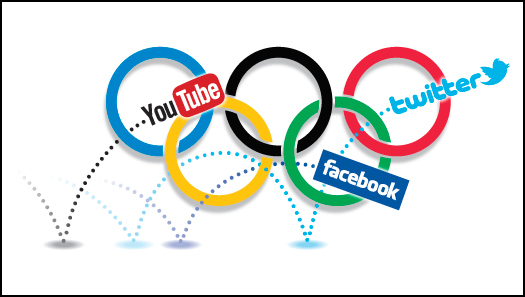
 

The Olympics have already begun using various social media platforms to connect with audiences across the world.

Scott adds, “In order to stay current and break through, leagues, teams, companies and brands must adapt how they tell their story to match the environments in which their consumers consume media.” Today, there are 400 social media platforms worldwide and there are more launching every day; thus, consumer attention span is shrinking, as it is averaged to be a mere 7 seconds. Lia Vakoutis (Senior Digital Marketing Manager, Adidas America) explains Adidas’ strategy in 2015, “As social environments become overloaded with content, Adidas will continue to focus on creating quality stories that are backed by strategic media plans and distribution partners.”


Of the five major sports leagues in the United States, the NFL has gained the most equity in brand value through recent years. The NFL leads in television ratings and gets $3 billion a year in media rights, another $3 billion in licensing, average attendance of nearly 70,000 a game, and leading sponsors like Motorola paying over $20 million a year to simply associate with the League.
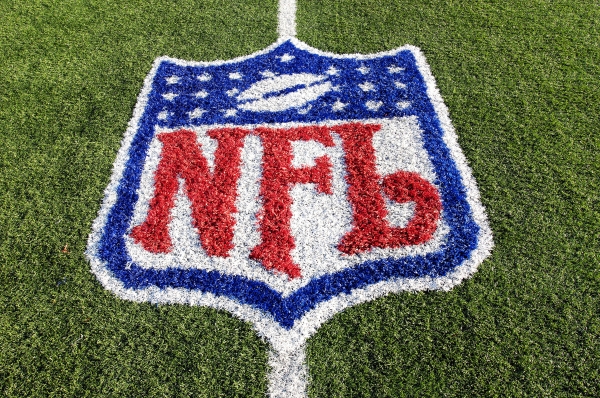
 

The NFL leads all United States professional sports leagues in regards to brand value.

Branding is obviously extremely important in terms of creating value in the sports landscape today. Social, or “digital”, media has become one of the most common ways to help shape that branding. Looking at trending topics in sports business, I believe that using social media to shape brand value will be increasingly important through the next year.

The Bu$ine$$ of College Athletics

Having been a Division 1 college athlete myself in a non-revenue generating sport (men’s soccer), I have an inherent respect for those collegiate sports that are able to generate revenue and consequently support the rest of the school’s athletic department. The only two collegiate sports that produce any sort of revenue, traditionally, are men’s basketball and football. Moreover, the biggest athletic programs among universities in the US are those that can create significant revenue in both of those sports.

The Southeastern Conference (SEC) dominates the top 5 of highest grossing revenue collegiate athletic programs, with Florida at #5, Georgia at #4, Auburn at #3, and Alabama at #2 (all ranging in the $80 million figures). The highest money making program in collegiate athletics comes out of the Big 12 conference, and that is the University of Texas with a combination of $96 million coming from their football program and another $16 million coming from their man’s basketball program for a total of $112 million in total revenue.

The University of Texas is the highest revenue generating collegiate athletic department.

The concept of supply and demand could not be any better illustrated in these two revenue generating college sports. People across the country; whether it’s the students themselves, proud alumni, or simply fans of the teams, love college football and college basketball. “March Madness” and “Bowl Season” have become multi-billion dollar events via sponsorship deals, media right deals, and ticket sales (among various other things). Head Coaches contracts are in the multi-million dollar range, with Urban Meyer being the highest paid college football coach at $5.8 million/year and John Calipari holding the title as the highest paid men’s college basketball coach at $6.4 million a year.

John Calipari is the highest earning men's college basketball coach at $5.8 million a year.
John Calipari is the highest earning men’s college basketball coach at $5.8 million a year.

College education in general has become more of a business in the recent decades. Tuition has risen to the point where you are looking at a quarter of a million dollars to go through college at any top college or university. Similarly, the rate at which college athletic departments have been both generating and spending dollars has dramatically increased.

The NCAA has had to play a more intensive role in their role of regulating athletes, conferences, and institutions. The Power 5 college football conferences (ACC, Big Ten, Big Twelve, Pac-12 and the SEC) have all endorsed the proposal to the NCAA to be able to pass legislation without the support of other Division 1 conferences. Those conferences have endorsed changes that would increase benefits to student-athletes:

  • Funding athletic scholarships that would cover the full cost of tuition
  • Guaranteeing multiyear scholarships for athletes
  • Lifetime scholarship guarantees that would allow former athletes to return to school at any time and complete their degrees
  • Providing long term health care and insurance to former athletes.

As they say, “the rich get richer” … and in this case it is creating a power imbalance in college athletics. The parity of college athletics has decreased over the years as the business, so to speak, has increased. And yet, in my opinion, the passion and fervor for college athletics has maintained its course, which is ultimately what makes college athletics so special.

The City of Angels Becoming the New Soccer Capital of the US

Yesterday, Los Angeles Football Club (LAFC) formally announced plans of building a new $250 million, 22,000 seat soccer specific stadium in southern Los Angeles. With the historic Coliseum serving as a picturesque backdrop, the stadium will be just 12 miles north of LA Galaxy’s StubHub Center in Carson, CA.

Don Garber, the Commissioner of Major League Soccer, said in a statement yesterday “In 2003, the original cathedral of soccer was built, now the StubHub Center down in Carson. To think that we would be here in downtown Los Angeles, looking at this environment, thinking about what could be our 17th or 18th soccer-specific stadium, is absolutely unthinkable.” LAFC could join the MLS as early as the 2017 season, or as late as the 2018 season, while Minnesota’s new franchise is slated for the same time frame as well, giving the MLS its 21st and 22nd teams.

The stadium would certainly be historic, as it would be the first open-air stadium constructed in Los Angeles since Dodger Stadium in 1962 and the most expensive privately financed soccer stadium in the country. Magic Johnson, one of the club’s minority owners, said in a statement on Monday:


We’ve already got all the permits. The public and private sectors got to come together when you’re building a stadium of this size. This is going to cost about $250 million, but everybody came together and made it happen. USC, we’re right on their campus, they got involved, they wanted to see the stadium here. So everybody came together and worked hard to make sure the stadium was going to come to fruition, and that’s what’s going to happen.


The new club and stadium will certainly stimulate economic activity as it will provide 1,200 construction jobs and another, 1,800 permanent positions. Furthermore, the new project will bring an infusion of private investment to South Los Angeles.

Magic Johnson, one of the Club's 17 investors.
Magic Johnson, one of the Club’s 17 investors.

The Club’s ownership group is certainly a star studded one as it is headed by venture capitalist Henry Nguyen, entrepreneur Peter Guber and former NBA executive Tom Penn. Other investors include Magic Johnson, Nomar and Mia Hamm-Garciaparra, Chad Hurley and Tony Robbins.

Los Angeles already has a great reputation among the soccer community in this country, as the Los Angeles Galaxy has been the perennial power of the MLS through its first 20 seasons. On the collegiate side, many of the top programs are in the nearby area: UCLA, Cal Berkley, UC Irvine and UC Santa Barbara. From the youth perspective, the surrounding area hosts 10 of the top 79 Academy teams in the country (Arsenal FC, Chivas USA, FC Golden State, LA Galaxy, Nomads SC, Pateadores, Real Salt Lake AZ, Real So Cal, San Diego Surf and Strikers FC.

This latest announcement furthers Major League Soccer’s strategic growth and development plans by seemingly adding teams in pairs from both big markets and smaller markets. This season, with the addition of New York FC and Orlando City, the league continued growth in perhaps the biggest sports market in the country (NYC) and yet brought the game back to Florida where it had been lacking a presence since 2002. It appears as though Garber and his staff will do something similar in 2017/18 with the addition of Minnesota and LAFC.

LAFC's new stadium and the surrounding area.
LAFC’s new stadium and the surrounding area.

Not only is this a huge win for the city of Los Angeles, but Major League Soccer as a whole.

Show Me the Money

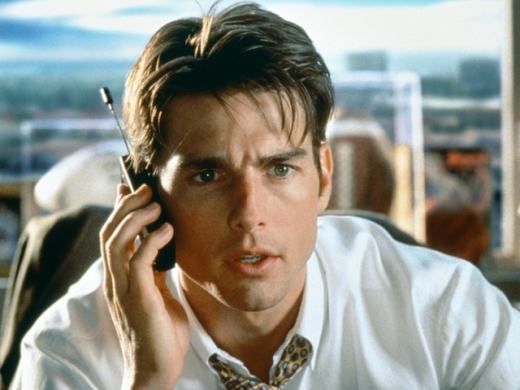
When Tom Cruise played a sleek 35 year-old sports agent19 years ago in the movie Jerry Maguire, society got a glimpse of the cutthroat nature of the sports agent business, and yet the dramatic emotional and psychological elements that go along with the industry. Today, the talent representation business within the sports industry is larger than ever, with such titans like the Creative Artists Agency (CAA) amassing upwards of $5 billion worth of contract dollars under management.

CAA is an example of an agency that started out in the entertainment industry and transitioned into the world of professional sports less than a decade ago. CAA has used its massive football division, specifically going after NFL quarterbacks to make the biggest splash in the sports agency world according to Forbes Magazine.

Behind CAA, Forbes ranks the industry’s newcomer, Relativity Media, as the world’s second largest sports agency, as they negotiate upwards of $2.5 billion in sports contracts. They represent over 300 athletes in the NFL, MLB and the NBA. Like so many sports agencies, Relativity Sports started out primarily as a film studio, where they would take acquire, develop and produce films and then turn them into television shows and distribute them. Relativity Media also engages in content creation across fashion, sports, digital and music, reaching consumers on multiple platforms.

Following behind CAA and Relativity, is the baseball mega agency, the Boras Foundation. Scott Boras, the single most successful sports agent in the industry’s history, founded the Boras Foundation. Some of Boras’ bigger name clients are Stephen Strasburg, Jacoby Ellsbury and Prince Fielder.

Octagon and Wasserman Media Group (WMG) round out the top 5 according to Forbes 2014 rankings. Octagon is the sports business arm of the publicly traded company, Interpublic Group of Companies, on the New York Stock Exchange. Octagon breaks down it’s sports business into two groups, Athletes and Personalities, and Marketing; with Athletes and Personalities are broken down into their respective sports, while Marketing primarily handles corporate sponsorship and events. Wasserman, meanwhile, manages over a $1 billion in NBA contracts alone, led by their super agent, Arn Tellem.

Forbes tallied these valuations in these rankings by the total contract value under management by the maximum agent commission for each sport: NFL (3%), NHL (4%), NBA (4%) and MLB (5%). Forbes chose to exclude sports like tennis and golf from these rankings due to the magnitude of variance of what athletes’ earnings in those sports are from year to year. Professional athletes do make additional money from endorsement and marketing deals. Forbes estimates that the average may make an additional 1-2% of their contract, where their agent(s) would generally just take home 25% of those endorsement and marketing dollars.

Sports agents, in general, do tend to get negatively stigmatized as sleazy salesmen who are more interested in their selfish financial gains rather than always acting in their clients best interests. Like any industry, there are certainly agencies and agents out there that may fit that stereotype, however the industry over the last decade or so has gotten more and more saturated. As industries, such as the sports agency field, tend to get overpopulated, the talent generally rises to the top. In today’s day and age, professional athletes have more opportunities than ever to capitalize on marketing and endorsement dollars through their unique likeness. Besides simply helping their clients negotiate contracts, agents are playing an ever-increasing role of maximizing their clients’ revenue generating capabilities.

The Growth of Major League Soccer

Major League Soccer got underway with its 20th season as a league this spring and the momentum seems to be building. Attendance figures are up, players’ salaries are up, a new television and media rights deal has been launched as has a new collective bargaining agreement, and the team has welcomed two new franchises into the league (New York FC and Orlando City).

With 10 teams in the Eastern Conference and now 10 teams in the Western Conference, the league’s geographical distribution is much more even. Adding New York FC gives the league it’s first true team in New York City (as the NY Red Bull play in Harrison, NJ). The addition of Orlando City gives Florida it’s first team since the 2001 season, after which the Miami Fusion and Tampa Mutiny folded. Orlando City drew an amazing opening attendance figure of 62, 510. The average attendance for the league has steadily climbed over the last 5 years, as the average attendance during the 2010 season was 16,675; while this year so far the average attendance figure for the league has been 20,472.

The league also saw the launch of a new television and media rights deal this season with ESPN, Fox Sports and Univision Desportes. The deal brings the league approximately $90 million/year annually across the three networks, which is about triple what it was getting previously. The MLS is still significantly under the other four major sports league (for example the NHL’s annual deal with NBC brings in about $200 million), but this new deal certainly closes the gap. The deal was announced in May of 2014 and is an 8-year deal, going through the 2022 season.

The deal brings regular weekly game broadcasts on ESPN2 on Sunday afternoons, broadcasts on Fox Sports 1 on Sunday evenings and a regular Friday night match on the Univision Deportes Network. All of the Saturday MLS matches are available via the new out-of-market package on ESPN3 and WatchESPN. The networks will share coverage of the MLS Cup Playoffs, while ESPN and Fox will alternate English language carriage of the MLS All-Star Game and MLS Cup championship match each year. The deal will bring more than 125 MLS matches to air annually across the three networks.

With increased revenue dollars via the media rights and television deal, players salaries have gone up as well. The 2014 season saw the league’s median salary at $92,000 with the league minimum salary being at a modest $36,500. Prior to the start of the season, there was a flurry of activity on the negotiation table between the MLS Players Union and the League, which resulted in a new Collective Bargaining Agreement. The new CBA came right on the heels of the opening of the season, and prevented the first lockout in the league’s history. The new CBA, which will be in effect for the next five years, increases the league’s minimum salary by 64%, bringing the $36,500 figure up to $60,000. Moreover, players who were making over $200,000 are now limited to a 15 percent increase from their previous contract, while those players whose salary fall between $100,000 and $200,000 are eligible for a 20 percent raise, leaving those players making $100,000 or less eligible for the biggest percent raise of 25%.

With the monetary figures increasing, the talent on the field continues to improve as the MLS has been able to continue bringing over talented international players. Orlando City brought in Brazilian star Kaka. New York FC brought in two international superstars; the all-time leading goal scorer from Spain, David Villa as well as Frank Lampard, after he finishes the EPL season with Manchester City. The LA Galaxy, meanwhile, will have Lampard’s fellow English countryman Steven Gerrard join them after he finishes the EPL season with Liverpool. This group replaces the departing David Beckham and Thierry Henry seamlessly and keeps the ever important “star power” to market globally.

Commissioner Don Garber and the league’s front office continue to build a growing brand that is very quickly gaining international respect.

Deflategate … Alternative Motives for Punishment?

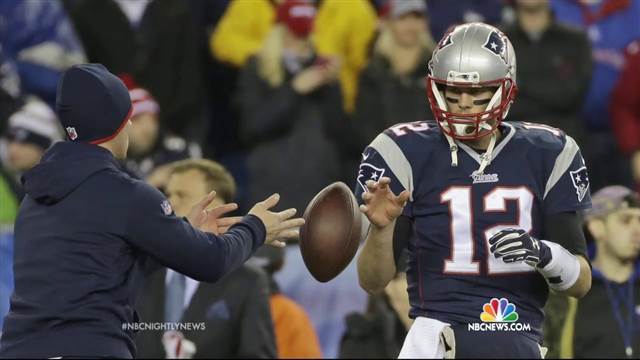
Yesterday, the NFL came down with a punishment for Tom Brady and the New England Patriots that nearly everyone around the League found to be overly harsh. Tom Brady is expected to appeal the League’s decision of a 4 game suspension before the end of the day on Thursday. The League will then assign an official, likely Herald Henderson, to oversee the appeals process which could take up to a couple months.

In breaking down the punishment and the tone of the letter that the League issued, there are a few things that stand out. First, the NFL stripped the NFL of two draft picks, their 2016 1st round pick and their 2017 4th round pick; making the Patriots the first team since 1980 to be stripped of two 1st round picks. Moreover the 4-game suspension to Brady is the longest suspension for an NFL quarterback since Terrelle Pryor who was suspended 5 games for his lack of integrity in accepting gifts to impinge his amateur status as a collegiate athlete. The $1 million fine was the largest fine in NFL history, although is probably the least detrimental component to the punishment.

In a letter to the Patriots, NFL Executive Vice President of Football Operations Troy Vincent wrote that an investigation had found “the footballs used by the Patriots were inflated at a level that did not satisfy the standard set forth in the NFL’s Official Playing Rules and that the condition of the footballs was the result of deliberate actions by employees of the Patriots.”

Looking at the actions, in an of themselves, of the Patriots, the vast majority would say well the punishment does not fit the crime. Not only are we talking about a mere 0.5 difference in the psi of the footballs, but the investigation was not even able to find hard evidence that Brady was aware of this occurring. In the letter to Brady, Vincent wrote that the investigation “established that there is substantial and credible evidence to conclude you were at least generally aware of the actions of the Patriots’ employees involved in the deflation of the footballs and that it was unlikely that their actions were done without your knowledge.” What the league took exception to with Brady and the Patriots were the fact that they were repeat offenders (2007 Spygate) and that they “did not cooperate with the investigation.”

The last time I checked, our legal system is based on the premise, “innocent until proven guilty.”

Well let’s look what this potentially sets up. Now Tom Brady will open his 2015 campaign in Week 6 against the Indianapolis Colts, the very same team that was part of Deflategate … oh, and it’s on Sunday Night Football. The NFL puts another $1 million in their pockets … that I’m sure they’re in desperate need of getting (sarcasm). And the ongoing villain storyline of the New England Patriots continues to build.

When we have issues of domestic abuse with Ray Rice, the bounty scandal with the New Orleans Saints, and the ever-increasing criminal charges NFL players are amounting … the League choses to focus on a locker room official who mistakenly interfered with the weight of a few footballs.

Time will tell how Rodger Goodell and the League tries to bring justice to Deflategate.

The Crossover Clash

On Saturday, May 9th two Top 10 high school lacrosse programs faced off in what was the inaugural “Crossover Clash” featuring the Hill Academy from Toronto, Canada and IMG Academy from Bradenton, FL. The Hill Academy came in ranked #5th in the high school lacrosse rankings, while IMG boasted a #7 ranking. The game featured a total of 35 Division 1 recruits and what would be a total of 41 goals as the Hill Academy edged IMG by a score of 21-20.

The Hill Academy, coached by one of the game’s all-time greats Brodie Merrill, is in its ninth year and has already established as a factory of top college lacrosse products. The Hill Academy teaches very much of a Canadian box-style offense that has proved to be so effective at the International level. Merrill, a Canadian himself, has seen first-hand the rewards of the box style of lacrosse that Team Canada has used to top the US in two out of the last three World Championships.

Similarly, the IMG Academy uses a box intensive style of play that is very much up-tempo. Led by Head Coach Bill Shatz, one of the all-time leading goal scorers at Ithaca College, IMG Academy is only in its third year as a lacrosse program. Already, IMG has become a similar type of division 1 factory that the Hill Academy has developed into over the last few years.

Both the Hill Academy and IMG Academy are uniquely structured in that the typical school day is divided equally between academics and sport training. While they both have their differences, this degree of specialization has already shown its advantages where both of these schools are producing upwards of 70% of its graduates to the Division 1 collegiate lacrosse level. Both prep schools tend to attract the some of the most talented lacrosse student-athletes in North America, but perhaps more importantly, the most dedicated lacrosse student-athletes.

The 21-20 score this past Saturday was very indicative of the styles both programs play … as it seemed whoever had the ball last would win the game. However, this up-tempo, player centric, motion offense both the Hill and IMG implemented is a growing trend at the collegiate level as well. The average goals scored by the eight quarterfinal advancing teams in the NCAA Division 1 men’s lacrosse tournament this weekend were 16 gpg. Comparatively, in the last 5 years the average goals per game of the 8 teams that advanced to the quarterfinals were as follows: 12.88 gpg (2014), 13.75 gpg (2013), 13.25 gpg (2012), 12.62 gpg (2011) and 12.25 gpg (2010). With the introduction of the shot clock and tweaked the substitution rules, the college games is trending to a higher scoring, “up and down” tempo that aligns closely with both the Hill and IMG’s style of play.

This past Saturday was the start of what promises to become one of the best rivalries in high school lacrosse.

The Stars Shined in the 1st Leg of the UEFA Champions League Semis

The biggest thing we learned in the first leg of these two semi-finals matchups is that Lionel Messi and Christiano Ronaldo are the two best players in the world. Messi had two goals (one of which was absolute magic) and an assist in Barcelona’s 3-0 win against Bayern while Ronaldo scored Real Madrid’s lone goal in their 1-2 defeat to Juventus. The two cushioned their lead as the top two all-time Champions League scoring leaders, with Messi on top with 77, and Ronaldo on his heels with 76.

The story of the second of the two semi-finals was Messi, Neymar and Luis Suarez going up against the backline of Jerome Boatang, Rafinha and Mehdi Benatia. The backline of Bayern bended but did not break all the way until the ’77 minute wen Messi got his first. Manuel Neuer did an incredible job in goal keeping the away side in the match; however, Messi and Co. proved to ultimately too much.

The first semi-finals featured Juventus hosting Real Madrid in Turin. In the last 7 meetings between the two sides in Turin, Juventushad won 5 and only lost once. Moreover, Juventus was undefeated at home in European competition this season going into the match … and yet they were still considered the underdog by many.

Alvaro Morata gave Juventus a dream start when he scored against his former club in the opening minutes. Ronaldo answered about 20 minutes later with a punctuating header after a nice buildup through midfield for Madrid. 10 minutes into the second half, Carlos Tevez was hauled down by Madrid defender Dani Carvajal with a rash tackle, resulting in an ensuing penalty and the eventual game winner by Tevez.

The stars came out and shined in the first leg. Madrid still has lots of work left to do at home next week, as a 1-0 win would put them through the finals. While Barcelona feels pretty comfortable with their 3 goal cushion heading into the second leg.

I anticipate the two Spanish powers meeting the Champions League finals when all is said and done, which will give us a dream final of Ronaldo vs. Messi.

The Best Weekend Ever in Sports?

This past weekend was perhaps one of the best weekends in recent sports history. Between the Fight of the Century, the 141st running of the Kentucky Derby, the NFL Draft, Red Sox/Yankees, Spurs/Clippers game 7, and the World Golf Championships in San Francisco, there was definitely plenty to watch. And according to a Harris Poll, many did watch, as 52% of US Adults said they would watch, listen or attend one these events.

Well what did we learn from the weekend?

The Fight of the Century, MayPac, seemed to gain the most hype from the weekend, although it certainly didn’t live up to the billing. In what was a classic defensive masterpiece by perhaps the best defensive boxer of all time, the audience was left largely disappointed. In an event-based sport that has largely become non-existent since the rise of MMA, the sport’s biggest event of the century fell flat on its face. It wasn’t the fight of the century. It was a retirement plan.

In fact, the stories around the fight (Mayweather’s Money Team, Pacquiao’s shoulder, Mayweather’s domestic abuse history, the PPV blackout in the US and the Phillipines) all overshadowed the fight itself. With Mayweather making $15 million a round for a total of $180 million and Pacquiao making $10 million a round, for a total of $120 million, America was left with a bitter taste of paying $100 to watch what might be considered the most overhyped fight in history.

Boxing is dead.

The Kentucky Derby provided more fireworks this past Saturday as Victor Espinoza won his second Derby in a row as American Pharoah narrowly edged out Firing Line with a time of 2:03:02 . A record crowd of 170,513 was on hands at Churchill Downs to witness horseracing’s biggest event of the year.

Bob Baffert, American Pharoah’s trainer, received lots of the media attention following the race as he captured his 4th Kentucky Derby victory. His other horse in the race, Dortmund, finished a not too shabby 3rd. And while the verdict is still out on weather American Pharoah as what it takes to capture the first Triple Crown since 1978, the Derby this past weekend certainly provided plenty of anticipation for the Preakness and the Belmont.

The NFL Draft, while being in Chicago for the first time since 1964, was largely uneventful. Jameis Winston and Marcus Mariota went 1-2 which was largely anticipated. Shane Ray, the Defensive End from Missouri, who lost out on millions due a marijuana possession charge earlier in the week, slid all the way to 23 where the Broncos decided to take a gamble on him.

The Florida State Seminoles took the crown for the school with the most draftees (11), and broke the record for the most amount of draftees in a three year span (29). The only other school to break double digits in number of players drafted this year was Louisville.

The Sox and Yankees was unexpected as the Yanks swept the Red Sox at Fenway for the first time since August 18-21, 2006. Arod hit his 660th home run, tying Willie Mays.

The Spurs and Clippers series came all the way to final second of Game 7 where Chris Paul hitting a running jumper as time expired to eliminate the defending NBA champion San Antonio Spurs. In a game that featured 31 lead changes and 16 ties, the game went back and forth.

And lastly, the world’s undisputed #1 ranked golfer, Rory McIlroy, reclaimed his plateau on top of the golf world after Jordan Spieth stole the spotlight momentarily with his Master’s win. Rory became the 3rd golfer in the last 75 years to have won 10 PGA Tour titles before turning 26, joining the likes of Jack Nicklaus and Tiger Woods. The victory, was Rory’s 18th match win at the WGC-Cadillac Match Play, where he improved to 18-6.

While MayPac may have let us down, the rest of the sports world kept us as entertained as ever.

Create a free website or blog at WordPress.com.

Up ↑