Search

Ben_Slingerland

The Business of Sports

Author

benslingerland

Ben Slingerland is a young sports business entrepreneur, administrator and marketer who has worked at such organizations like Nike, the NCAA and IMG. Most recently, Ben served as the General Manager and Student-Athlete Advisor for the Lacrosse Program at IMG Academy in Bradenton, FL. Over the span of two and a half years as the General Manager, Ben quadrupled the size of the program and developed it into one of the nation's leading boarding prep school lacrosse programs. Prior to taking over the lacrosse program at IMG Academy, Ben headed up the sales efforts of the IMG Academy's $4 million/year soccer camp business. Ben has held past positions at the NCAA Office of Government Relations in Washington, DC where he tracked state and federal legislation on Capitol Hill affecting collegiate athletics. Prior to that, Ben spent a summer in Beaverton, OR working at Nike's World Headquarters. At Nike, Ben worked in the North America Soccer division where he was a sports marketer for the Nike signed professionals, the US Men's and Women's National teams, Nike-affiliated collegiate soccer programs, and Nike-affiliated youth soccer clubs. Growing up in Beverly, MA, Ben was an accomplished athlete himself. After being a three sport athlete (soccer, basketball, and tennis) at St. John's Prep in Danvers, MA, Ben went on to play Division 1 college soccer at Georgetown University. At Georgetown, Ben served as a team captain and led the program to win it's first ever Big East regular season championship title in 2010. Following Georgetown, Ben had stints playing semi-professionally with DC United's U23 team and the Tampa Bay Rowdies. After his soccer career, Ben got his Master's of Professional Studies in Sports Management at Georgetown University.

Deflategate … Alternative Motives for Punishment?

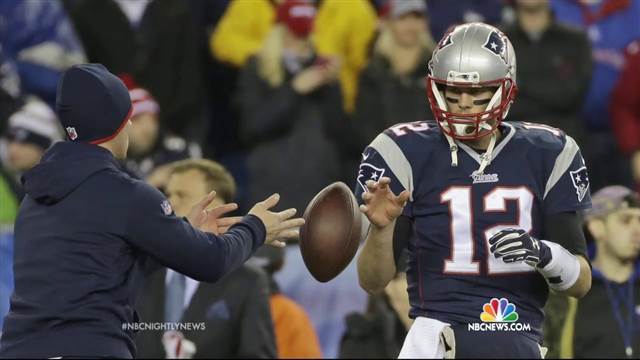
Yesterday, the NFL came down with a punishment for Tom Brady and the New England Patriots that nearly everyone around the League found to be overly harsh. Tom Brady is expected to appeal the League’s decision of a 4 game suspension before the end of the day on Thursday. The League will then assign an official, likely Herald Henderson, to oversee the appeals process which could take up to a couple months.

In breaking down the punishment and the tone of the letter that the League issued, there are a few things that stand out. First, the NFL stripped the NFL of two draft picks, their 2016 1st round pick and their 2017 4th round pick; making the Patriots the first team since 1980 to be stripped of two 1st round picks. Moreover the 4-game suspension to Brady is the longest suspension for an NFL quarterback since Terrelle Pryor who was suspended 5 games for his lack of integrity in accepting gifts to impinge his amateur status as a collegiate athlete. The $1 million fine was the largest fine in NFL history, although is probably the least detrimental component to the punishment.

In a letter to the Patriots, NFL Executive Vice President of Football Operations Troy Vincent wrote that an investigation had found “the footballs used by the Patriots were inflated at a level that did not satisfy the standard set forth in the NFL’s Official Playing Rules and that the condition of the footballs was the result of deliberate actions by employees of the Patriots.”

Looking at the actions, in an of themselves, of the Patriots, the vast majority would say well the punishment does not fit the crime. Not only are we talking about a mere 0.5 difference in the psi of the footballs, but the investigation was not even able to find hard evidence that Brady was aware of this occurring. In the letter to Brady, Vincent wrote that the investigation “established that there is substantial and credible evidence to conclude you were at least generally aware of the actions of the Patriots’ employees involved in the deflation of the footballs and that it was unlikely that their actions were done without your knowledge.” What the league took exception to with Brady and the Patriots were the fact that they were repeat offenders (2007 Spygate) and that they “did not cooperate with the investigation.”

The last time I checked, our legal system is based on the premise, “innocent until proven guilty.”

Well let’s look what this potentially sets up. Now Tom Brady will open his 2015 campaign in Week 6 against the Indianapolis Colts, the very same team that was part of Deflategate … oh, and it’s on Sunday Night Football. The NFL puts another $1 million in their pockets … that I’m sure they’re in desperate need of getting (sarcasm). And the ongoing villain storyline of the New England Patriots continues to build.

When we have issues of domestic abuse with Ray Rice, the bounty scandal with the New Orleans Saints, and the ever-increasing criminal charges NFL players are amounting … the League choses to focus on a locker room official who mistakenly interfered with the weight of a few footballs.

Time will tell how Rodger Goodell and the League tries to bring justice to Deflategate.

The Crossover Clash

On Saturday, May 9th two Top 10 high school lacrosse programs faced off in what was the inaugural “Crossover Clash” featuring the Hill Academy from Toronto, Canada and IMG Academy from Bradenton, FL. The Hill Academy came in ranked #5th in the high school lacrosse rankings, while IMG boasted a #7 ranking. The game featured a total of 35 Division 1 recruits and what would be a total of 41 goals as the Hill Academy edged IMG by a score of 21-20.

The Hill Academy, coached by one of the game’s all-time greats Brodie Merrill, is in its ninth year and has already established as a factory of top college lacrosse products. The Hill Academy teaches very much of a Canadian box-style offense that has proved to be so effective at the International level. Merrill, a Canadian himself, has seen first-hand the rewards of the box style of lacrosse that Team Canada has used to top the US in two out of the last three World Championships.

Similarly, the IMG Academy uses a box intensive style of play that is very much up-tempo. Led by Head Coach Bill Shatz, one of the all-time leading goal scorers at Ithaca College, IMG Academy is only in its third year as a lacrosse program. Already, IMG has become a similar type of division 1 factory that the Hill Academy has developed into over the last few years.

Both the Hill Academy and IMG Academy are uniquely structured in that the typical school day is divided equally between academics and sport training. While they both have their differences, this degree of specialization has already shown its advantages where both of these schools are producing upwards of 70% of its graduates to the Division 1 collegiate lacrosse level. Both prep schools tend to attract the some of the most talented lacrosse student-athletes in North America, but perhaps more importantly, the most dedicated lacrosse student-athletes.

The 21-20 score this past Saturday was very indicative of the styles both programs play … as it seemed whoever had the ball last would win the game. However, this up-tempo, player centric, motion offense both the Hill and IMG implemented is a growing trend at the collegiate level as well. The average goals scored by the eight quarterfinal advancing teams in the NCAA Division 1 men’s lacrosse tournament this weekend were 16 gpg. Comparatively, in the last 5 years the average goals per game of the 8 teams that advanced to the quarterfinals were as follows: 12.88 gpg (2014), 13.75 gpg (2013), 13.25 gpg (2012), 12.62 gpg (2011) and 12.25 gpg (2010). With the introduction of the shot clock and tweaked the substitution rules, the college games is trending to a higher scoring, “up and down” tempo that aligns closely with both the Hill and IMG’s style of play.

This past Saturday was the start of what promises to become one of the best rivalries in high school lacrosse.

The Stars Shined in the 1st Leg of the UEFA Champions League Semis

The biggest thing we learned in the first leg of these two semi-finals matchups is that Lionel Messi and Christiano Ronaldo are the two best players in the world. Messi had two goals (one of which was absolute magic) and an assist in Barcelona’s 3-0 win against Bayern while Ronaldo scored Real Madrid’s lone goal in their 1-2 defeat to Juventus. The two cushioned their lead as the top two all-time Champions League scoring leaders, with Messi on top with 77, and Ronaldo on his heels with 76.

The story of the second of the two semi-finals was Messi, Neymar and Luis Suarez going up against the backline of Jerome Boatang, Rafinha and Mehdi Benatia. The backline of Bayern bended but did not break all the way until the ’77 minute wen Messi got his first. Manuel Neuer did an incredible job in goal keeping the away side in the match; however, Messi and Co. proved to ultimately too much.

The first semi-finals featured Juventus hosting Real Madrid in Turin. In the last 7 meetings between the two sides in Turin, Juventushad won 5 and only lost once. Moreover, Juventus was undefeated at home in European competition this season going into the match … and yet they were still considered the underdog by many.

Alvaro Morata gave Juventus a dream start when he scored against his former club in the opening minutes. Ronaldo answered about 20 minutes later with a punctuating header after a nice buildup through midfield for Madrid. 10 minutes into the second half, Carlos Tevez was hauled down by Madrid defender Dani Carvajal with a rash tackle, resulting in an ensuing penalty and the eventual game winner by Tevez.

The stars came out and shined in the first leg. Madrid still has lots of work left to do at home next week, as a 1-0 win would put them through the finals. While Barcelona feels pretty comfortable with their 3 goal cushion heading into the second leg.

I anticipate the two Spanish powers meeting the Champions League finals when all is said and done, which will give us a dream final of Ronaldo vs. Messi.

The Best Weekend Ever in Sports?

This past weekend was perhaps one of the best weekends in recent sports history. Between the Fight of the Century, the 141st running of the Kentucky Derby, the NFL Draft, Red Sox/Yankees, Spurs/Clippers game 7, and the World Golf Championships in San Francisco, there was definitely plenty to watch. And according to a Harris Poll, many did watch, as 52% of US Adults said they would watch, listen or attend one these events.

Well what did we learn from the weekend?

The Fight of the Century, MayPac, seemed to gain the most hype from the weekend, although it certainly didn’t live up to the billing. In what was a classic defensive masterpiece by perhaps the best defensive boxer of all time, the audience was left largely disappointed. In an event-based sport that has largely become non-existent since the rise of MMA, the sport’s biggest event of the century fell flat on its face. It wasn’t the fight of the century. It was a retirement plan.

In fact, the stories around the fight (Mayweather’s Money Team, Pacquiao’s shoulder, Mayweather’s domestic abuse history, the PPV blackout in the US and the Phillipines) all overshadowed the fight itself. With Mayweather making $15 million a round for a total of $180 million and Pacquiao making $10 million a round, for a total of $120 million, America was left with a bitter taste of paying $100 to watch what might be considered the most overhyped fight in history.

Boxing is dead.

The Kentucky Derby provided more fireworks this past Saturday as Victor Espinoza won his second Derby in a row as American Pharoah narrowly edged out Firing Line with a time of 2:03:02 . A record crowd of 170,513 was on hands at Churchill Downs to witness horseracing’s biggest event of the year.

Bob Baffert, American Pharoah’s trainer, received lots of the media attention following the race as he captured his 4th Kentucky Derby victory. His other horse in the race, Dortmund, finished a not too shabby 3rd. And while the verdict is still out on weather American Pharoah as what it takes to capture the first Triple Crown since 1978, the Derby this past weekend certainly provided plenty of anticipation for the Preakness and the Belmont.

The NFL Draft, while being in Chicago for the first time since 1964, was largely uneventful. Jameis Winston and Marcus Mariota went 1-2 which was largely anticipated. Shane Ray, the Defensive End from Missouri, who lost out on millions due a marijuana possession charge earlier in the week, slid all the way to 23 where the Broncos decided to take a gamble on him.

The Florida State Seminoles took the crown for the school with the most draftees (11), and broke the record for the most amount of draftees in a three year span (29). The only other school to break double digits in number of players drafted this year was Louisville.

The Sox and Yankees was unexpected as the Yanks swept the Red Sox at Fenway for the first time since August 18-21, 2006. Arod hit his 660th home run, tying Willie Mays.

The Spurs and Clippers series came all the way to final second of Game 7 where Chris Paul hitting a running jumper as time expired to eliminate the defending NBA champion San Antonio Spurs. In a game that featured 31 lead changes and 16 ties, the game went back and forth.

And lastly, the world’s undisputed #1 ranked golfer, Rory McIlroy, reclaimed his plateau on top of the golf world after Jordan Spieth stole the spotlight momentarily with his Master’s win. Rory became the 3rd golfer in the last 75 years to have won 10 PGA Tour titles before turning 26, joining the likes of Jack Nicklaus and Tiger Woods. The victory, was Rory’s 18th match win at the WGC-Cadillac Match Play, where he improved to 18-6.

While MayPac may have let us down, the rest of the sports world kept us as entertained as ever.

The Fastest Growing Sport in the United States

What is the fastest growing sport in America today? When you ask most people this question, their minds immediately jump to the NFL, NBA, MLB, NHL, or the MLS. However, very few people actually know the right answer.

It is lacrosse.

That’s right … lacrosse. The game that dates back to the 12th century when Native Americans first played the sport. Lacrosse disseminated across much of Canada and the northeastern part of the United States in the following centuries. New York University was the first college to adopt a men’s lacrosse program in 1877. It took nearly another hundred years before the NCAA would sponsor and host the first Men’s Lacrosse National Championship. Today, this event draws upwards of 50,000 people, making it the third most highly attended NCAA championship after football and basketball.

Professionally, the indoor version of the game called Box Lacrosse got off the ground first in 1987 with the National Lacrosse League (NLL). Box lacrosse is a faster paced version of the game in an indoor arena. The NLL features 9 teams from the US and Canada and is played over the winter months. Major League Lacrosse, the outdoor professional league, got started in 2001. The league features 8 different teams and has signed a 10-year television contract with ESPN in 2007. The MLL can draw some similar growth projections to Major League Soccer in this soccer … although the MLL figures to be about 10-15 years behind the MLS.

On the international side of the sport, lacrosse has grown leaps and bounds. Lacrosse was an Olympic sport way back in 1904 and 1908 and then was demonstrated in the 1928, 1932 and 1948 games as well. In 1968, the quadrennial World Lacrosse Championships were founded which featured the four countries that primarily played the sport, the United States, Canada, Australia and England. Today the World Championships are governed by the Federation of International Lacrosse and feature the Senior Men, Senior Women, U19 Men and U19 Women levels each four years. This past summer, the Men’s World Championships drew teams from over 40 countries.

So the question remains … why is lacrosse relevant in the world of the sports business industry? The first reason goes back to the very first point that was raised – lacrosse is the fastest growing sport in the United States. This year there are 351 men’s programs and 494 women’s college lacrosse program across NCAA Divisions 1, 2, and 3 – making it easily the fastest growing game of all NCAA sports. On the youth side of the sport, the game is growing even faster.

Between 2008-09 and 2012-13 school years in high school lacrosse grew 19% among girls and 15% among boys. Over the past decade, the trend is stronger, with participation more than doubling over that time. Among sports with at least 10,000 high schoolers playing, lacrosse has had the highest growth rate since 2009.

A second reason, why lacrosse is relevant in the sports business world, is the notion of untapped areas. Despite lacrosse’s stigma of being a preppy Northeast sport, the states that have seen the highest growth of the game in the last five years are Georgia, Florida, South Carolina, Michigan, Minnesota and Ohio. As the game continues to grow in many of these “non-hotbed” markets, the demand for youth programs and clubs is getting higher and higher.

Lastly, lacrosse draws a very affluent demographic, similar in many ways to that of hockey. As the sport has grown in this country, lacrosse has gained a reputation of being an upper class sport that has drawn upon a very wealthy Caucasian population. It is no coincidence that the best lacrosse schools in the country are also many of the US colleges and universities with the most academic prestige. This has caused a ripple effect of many past college lacrosse players going on to prestigious professional careers in the fields of law, medicine and finance … in fact, the Wall Street Lacrosse Mafia is a real term used to describe the heavy presence of former college lacrosse players occupying many of the big firms on Wall Street.

In looking at the rate of growth in the sport, the untapped markets for the sport, and the demographics that make up the sport, I predict lacrosse to be a booming new source of sports business in the years to come.

Why Sports Have Become a Business

Sports have existed since the beginning of humanity. Moreover, sports served as one of humanity’s greatest forms of unwritten entertainment for society to enjoy. Starting over 17,000 years ago, cave paintings from the Sumerian civilizations and Ancient Egyptian civilizations depict wrestling and boxing. On May 2nd, Floyd Mayweather will fight Manny Pacquiao in an event that will provide each fighter a combined $200 million.

What does this say? 17,000 years later humanity is still competing in those same sports but now there are very large amounts of money that these same sports are generating. The question is why? Why will people pay $10,000 for a Super Bowl ticket? Why will people gamble hundreds of thousands of dollars on a boxing match? Why are professional athletes signing multi-million dollar contracts and sponsorship deals? The answer is demand.

People like sports. Sorry, people love sports! It goes back to the element of sports serving as a form of unwritten entertainment, making it unique from movies, plays, television shows … the list goes on. Competition sparks passion; that emotion that stems of one human clashing with another whether its in the ring, on the track, on the field, on the court, or on the ice. That passionate emotion starts with the competitors and emanates to the audience. This very nature of sport is what has turned it into what the sports business market is today. Between the food and memorabilia stands at the stadium, to media rights and sponsorship, the industry has been valued today of upwards of $600 billion dollars.

This number certainly disturbs some people. People ask today why do athletes earn so much money comparatively to other people in society? How do people earn so much money of amateur and college athletes who compete simply for “love of the game?” The answer is demand. And comparatively, to all the other various business industries in the world today, the sports business industry, I would argue, is one of the purest industries there is.

Blog at WordPress.com.

Up ↑