Ben Slingerland is a young sports business entrepreneur, administrator and marketer who has worked at such organizations like Nike, the NCAA and IMG. Most recently, Ben served as the General Manager and Student-Athlete Advisor for the Lacrosse Program at IMG Academy in Bradenton, FL. Over the span of two and a half years as the General Manager, Ben quadrupled the size of the program and developed it into one of the nation's leading boarding prep school lacrosse programs.
Prior to taking over the lacrosse program at IMG Academy, Ben headed up the sales efforts of the IMG Academy's $4 million/year soccer camp business. Ben has held past positions at the NCAA Office of Government Relations in Washington, DC where he tracked state and federal legislation on Capitol Hill affecting collegiate athletics. Prior to that, Ben spent a summer in Beaverton, OR working at Nike's World Headquarters. At Nike, Ben worked in the North America Soccer division where he was a sports marketer for the Nike signed professionals, the US Men's and Women's National teams, Nike-affiliated collegiate soccer programs, and Nike-affiliated youth soccer clubs.
Growing up in Beverly, MA, Ben was an accomplished athlete himself. After being a three sport athlete (soccer, basketball, and tennis) at St. John's Prep in Danvers, MA, Ben went on to play Division 1 college soccer at Georgetown University. At Georgetown, Ben served as a team captain and led the program to win it's first ever Big East regular season championship title in 2010. Following Georgetown, Ben had stints playing semi-professionally with DC United's U23 team and the Tampa Bay Rowdies. After his soccer career, Ben got his Master's of Professional Studies in Sports Management at Georgetown University.
Sure it was just a friendly. Sure, the US roster had plenty of new names on it. Sure, the Netherlands held 62% possession and outshot the US 27-19. And yet Jurgen Klinsmann and the United States were able to overcome a 3-1 deficit to beat the Netherlands 4-3 for the very first time in history.
Not only had the US never won in the Netherlands before, but the US had never scored more than a single goal when playing in the Netherlands. Klinsmann put together a group of 22 players for this pair of friendlies against the Netherlands and Wednesday against Germany, that has a mixture of some older veterans and a healthy dose of younger up and coming players. It is a roster that lacks the regular names like Clint Dempsey, Jermaine Jones, Tim Howard, Jozy Altidore, Alejandro Bedoya or Graham Zussi and was replaced by names like Bobby Wood, Gyasi Zardes, Danny Williams and Jordan Morris. The lack of National Team regulars further contributed to the improbability of the result this past Friday.
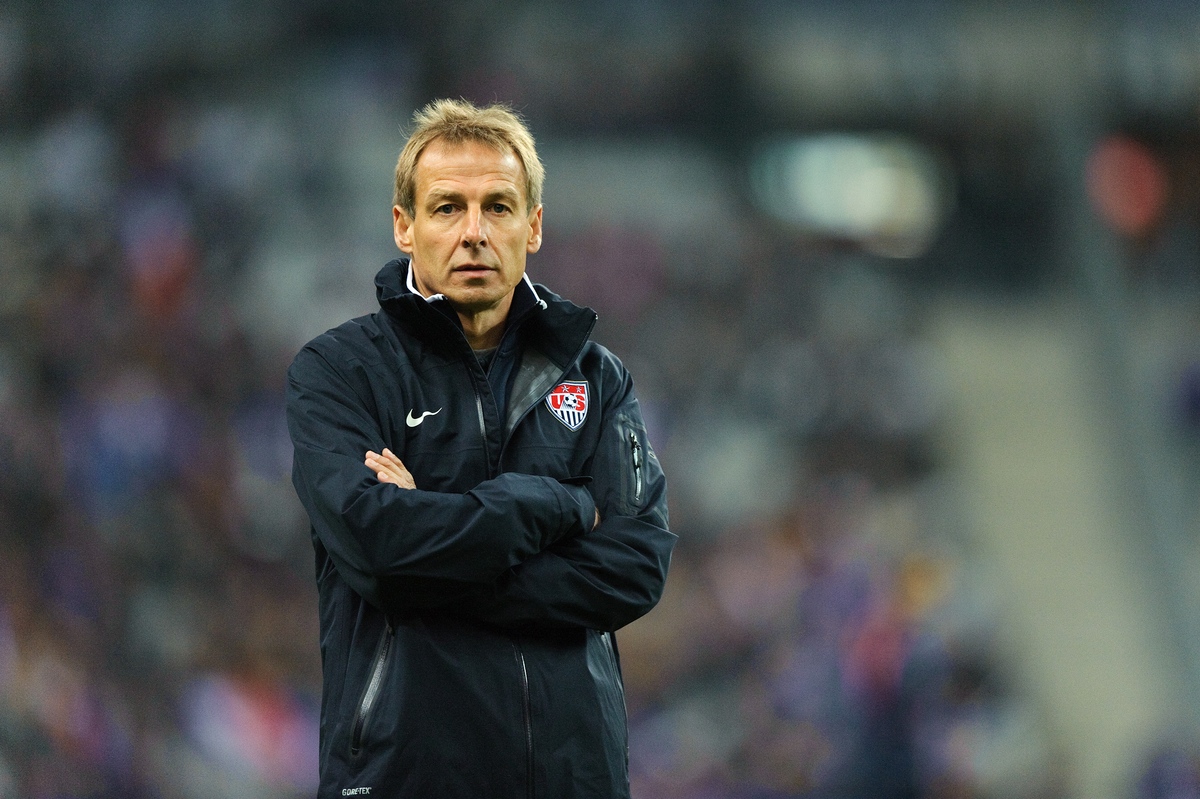
Jurgen Klinsmann has been under enormous pressure as the US Men’s National Team Head Coach … for the most part he has delivered.
Since Klinsmann has taken over the reigns as the US Men’s National Team Head Coach in July of 2011, the team has gone 3-3-2 against teams in the world’s top-10, including wins at Italy, at Mexico and now the Netherlands. With the win, the team improves to 2-0-1 in their last three games, going into Wednesday’s matchup against Germany. Furthermore, this win against the Netherlands speaks to the progress in player development amongst some of the rising young stars in the US. With guys like Clint Dempsey and Jermaine Jones getting well into their 30’s, the performances from such emerging stars like Bobby Wood (22 years old), Gyasi Zardes (23 years old) and Jordan Morris (20 years old) all speak highly towards the future of US Soccer.
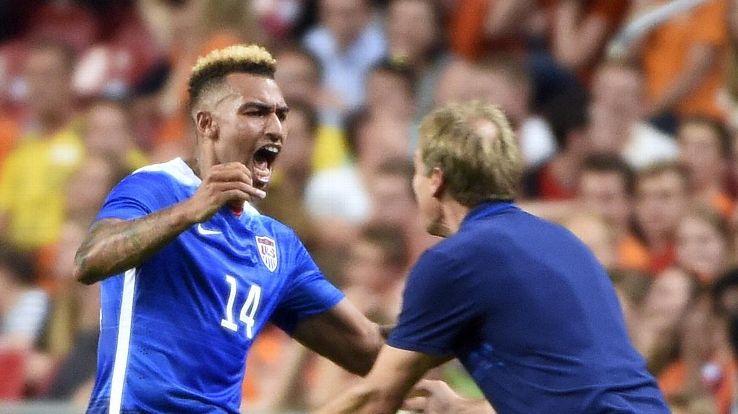
Gyasi Zardes (left) hugs Head Coach Jurgen Klinsmann (right) after scoring his first international goal against the Netherlands. Bobby Wood and Danny Williams also capitalized on their first international goals in the game.
The win over the Netherlands comes in the midst of a successful U20 FIFA World Cup for the Yanks. The US U20 squad has found themselves in the Round of 16, where they’ll take on Columbia on Wednesday after going 2-1 in the group stage. Moreover, the US Women’s National Team will begin play in the Women’s World Cup tonight against Australia. The US Women are among the favorites to win the whole thing. And lastly, the US Men’s National Team will close out an eventful summer for US Soccer with the Gold Cup, as they open up against Honduras on July 7th.
Paul Arriola has helped lead the US U20’s to the Round of 16 in the U20 FIFA World Cup.
While this US win over the Netherlands should not be blown out of proportion, as it was merely a friendly; it certainly does speak to the potential of the future given the personnel they used to get the result they did. This result further demonstrates US Soccer’s improvement towards achieving their goal of becoming one of game’s leading nations. With the Women’s World Cup, the U20 World Cup and the Gold Cup upon us, US Soccer has an incredible opportunity towards significantly chipping away at that goal.
The NBA Finals this year features perhaps the most entertaining matchup since Larry Bird and Magic Johnson in the 1980’s. LeBron James, the 4-time NBA MVP and the 2-time NBA Finals MVP is considered the best basketball player on the planet and certainly has the personality to back up his game. His polarizing presence has made him hated by many and a villain looking to dethrone MJ as the best ever. On the other side of the court is Stephen Curry. The humble, soft-spoken kid who got passed over by all the top college programs, to later prove everyone wrong and become the best shooter of the game’s generation, and perhaps of all-time.
While Cleveland and Golden State are not exactly big market basketball cities, the matchup of James vs. Curry is making this Final one of the more hyped matchups in recent years. It is good versus evil. Two kids both born in Akron, Ohio; one of whom exploded as a youth, was a can’t miss athletic specimen, went from the preps to the pros, and was taken #1 in the NBA draft, while the other was a skinny lanky kid who struggled to make his High School basketball team, was overlooked by almost all big college basketball programs, surprised everyone in the NCAA tourney at Davidson, and then exploded to win the 2014-15 NBA MVP.
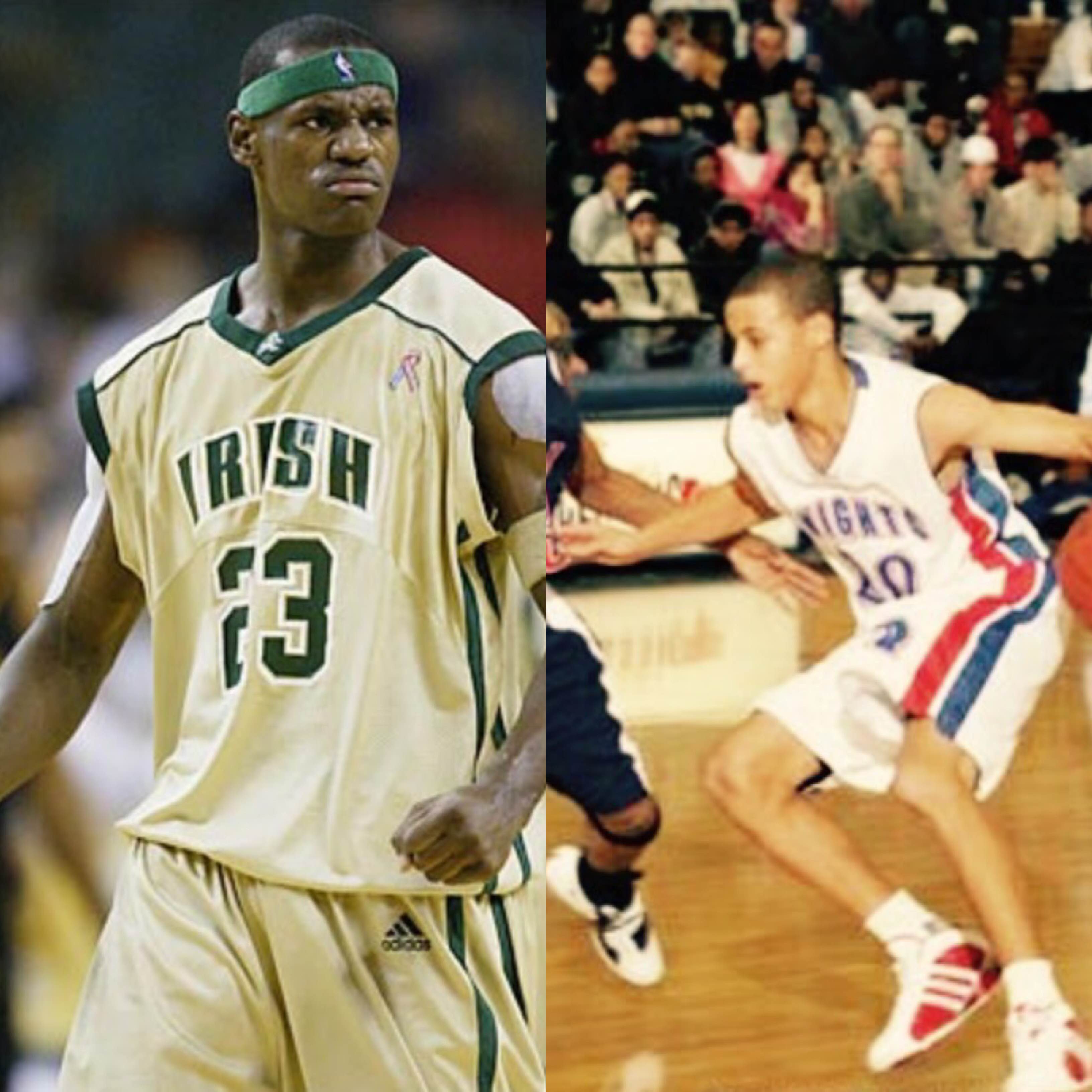
Lebron James (left) at St. Vincent-St. Mary High School and Steph Curry (right) at Charlotte Christian High School.
The story of these two could not be any more different. One is a pure athlete, the other is a pure shooter. Many dislike one, while the other seems to be loved by all. One is supposed to win everything, whereas the other wasn’t supposed to win anything. And yet both were born in the very same town of Akron, Ohio and they meet for the first time in the NBA Finals.
The NBA, as a whole, does an extremely good job at marketing. Their International Global Marketing division has greatly contributed to the league expanding to Latin America, Europe and Asia through various exhibition events, leveraging marquee foreign players, and developing key strategic global partners.
Moreover, the League tends to be opportunistic with moments like this one. Golden State and Cleveland are not exactly huge markets, and yet they have already strategically branded this Final as “James versus Curry.” James and Curry are 1-2 in jersey sales this season, while Curry edged James for the most All-Star votes. Between the two of them, they have been mentioned 28.8 million times since October on Twitter.
Steph Curry has endorsement deals with Under Armour, Degree and Muscle Milk to only name a few.
Both are marketing machines, as James has deals with Nike, Kia, Samsung, among several others, and has his own TV production company. Meanwhile Curry has become one of the most sought-after endorsers in the game today, as he has deals with Under Armour, Muscle Milk and Degree. The baby-faced 25-year-old has about a dozen endorsements that he didn’t have when he was left off last year’s All-Star team and is pulling in about $3.5 million a year off the court.
Simply put, LeBron James and Stephen Curry are the two best in the game today. For that reason alone, the NBA Finals matchup this year is special. On the surface, they are polar opposites: personality, playing style, their paths to this point. And yet here they are, pitted against each other on the game’s largest stage.
The NBA Finals Game 1 is on tonight … and you better believe, people will be watching.
Chicago Blackhawks fans caused a major stir this week because of the ticket policy the Tampa Bay Lightning has incorporated during their 2015 playoff run. The following disclaimer comes from the Tampa Bay Lightning Ticketmaster site:
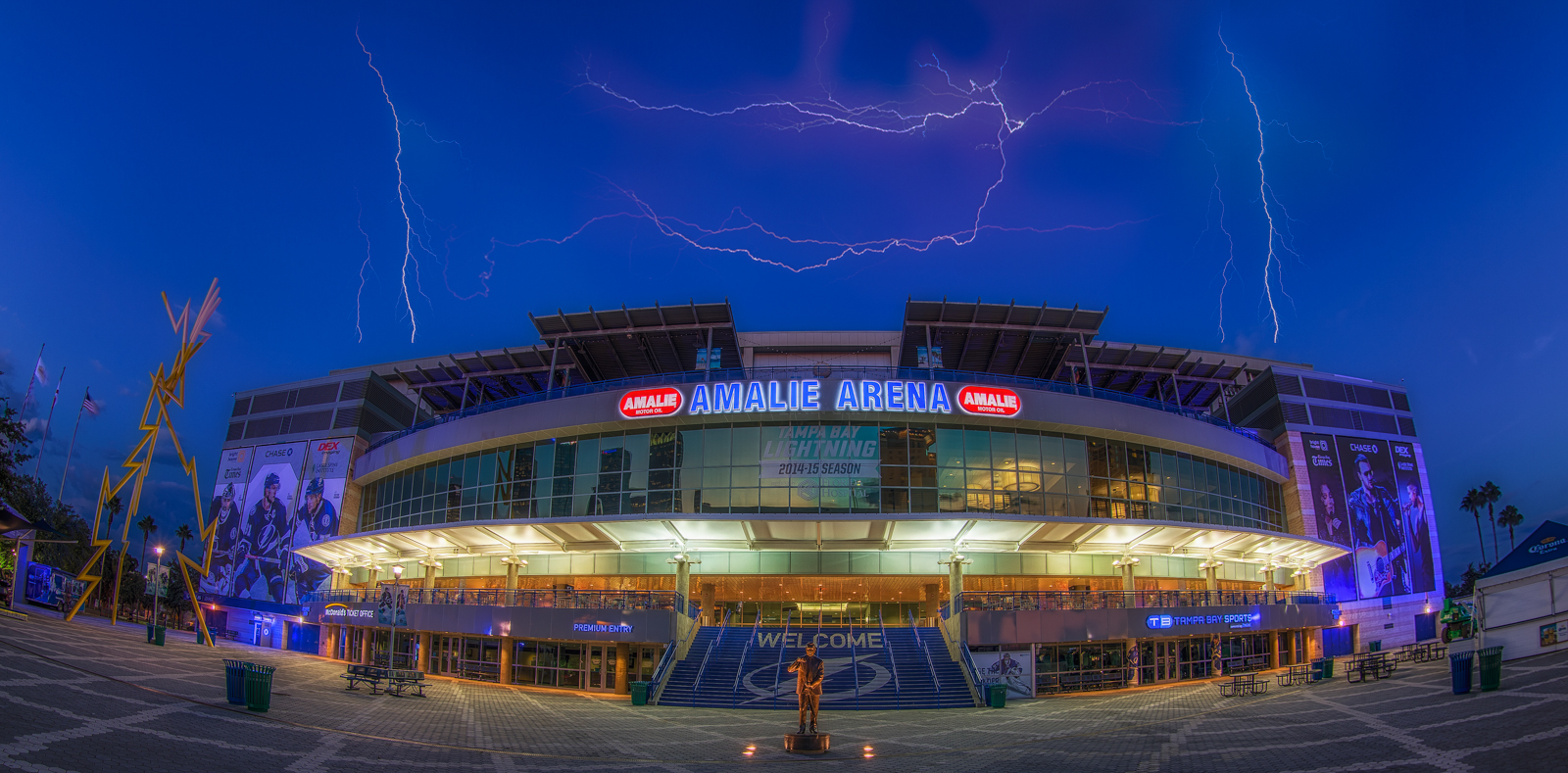
Amalie Arena is located in Tampa, FL. Sales to this event will be restricted to
residents of Florida. Residency will be based on credit card billing address.
Orders by residents outside the selected area will be canceled without notice
and refunds given.
Furthermore, for the entirety of the 2015 NHL Playoffs, the Lightning fans sitting in the Chase Club and Lexus Lounge as well as the adjoining sections, are only permitted to wear Tampa Bay Lightning apparel (or neutral). Fans wearing opposing team apparels will be asked to remove them while in these seats.
The Chase Club within Amalie Arena offers a luxury seating experience that will ban all opposing team apparel during the 2015 Playoffs.
While these policies have seemed to disturb some Chicago fans, the Lightning organization is technically doing wrong, as ticket and seating policies (like this one) are left up to the individual teams rather than the National Hockey League. In fact, the Nashville Predators adopted this same strategy earlier in the playoffs in order to boost their “home-ice” advantage. This ticket policy is very quickly becoming a growing trend amongst small market NHL teams.
Time and time again we’ve seen professional teams get in trouble for enhanced crowd noise. The latest case we saw was the NFL fining the Atlanta Falcons 350k and a draft pick for playing “artificial” crowd noise throughout the 2013 season and into the 2014 season. There have been a number of other small market teams who have been investigated for enhanced crowd noise, including the Jacksonville Jaguars and Detroit Lions.
So the Tampa Bay Lightning are bending their rules on ticket sales, in order to “legally” get to this concept of “increasing home field advantage”. In hockey the concept of “home-ice advantage” has traditionally been less of a true advantage comparatively to other sports like football, baseball and basketball … where crowd noise can be more easily heard and thus used as an advantage. Yet as is the case in all sports in today’s day in age, any advantage whatsoever that can be achieved will be aggressively sought.
In larger sport market cities like Boston, New York, Chicago, and Los Angles, where the issue of visiting team fans’ outnumbering home team fans is never in question such policies don’t come up in discussion. However, in markets like Tampa Bay, a ticket policy like this one not only brings short term success with the crowd noise advantage, but it also incentives the surrounding Greater Tampa area to potentially become life-tie fans.
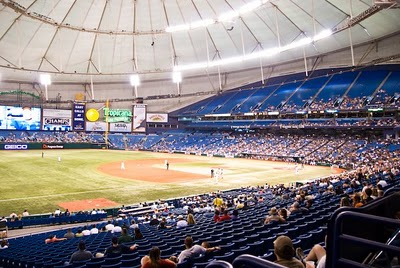
Tropicana Field, home of the Tampa Bay Rays, is often very empty for most Rays home games.
While the narcissist may argue that it’s times like these where the “bandwagoners” come out of the closest. In reality, the organization is reaching out to the local fan base and capitalizing on an opportunity to expand their fan base. Tampa Bay is the city whose baseball team’s (Tampa Bay Rays) attendance figures are traditionally 5,000 less than the next lowest MLB team’s. The football team (Tampa Bay Buccaneers) finished with the league’s worst record last year and has gone through trouble with TV blackouts. The Lightning organization saw an opportunity to capitalize on the team’s success, and the open market space, and has successfully implemented a ticket policy to encourage locals to come to the arena and potentially becomes lifetime fans. This Stanley Cup will be the first since the Lightning lifted the Cup in 2004.
It would not surprise to see this trend become more popularly implemented ticket policy, specifically during the playoff season across all major sports.
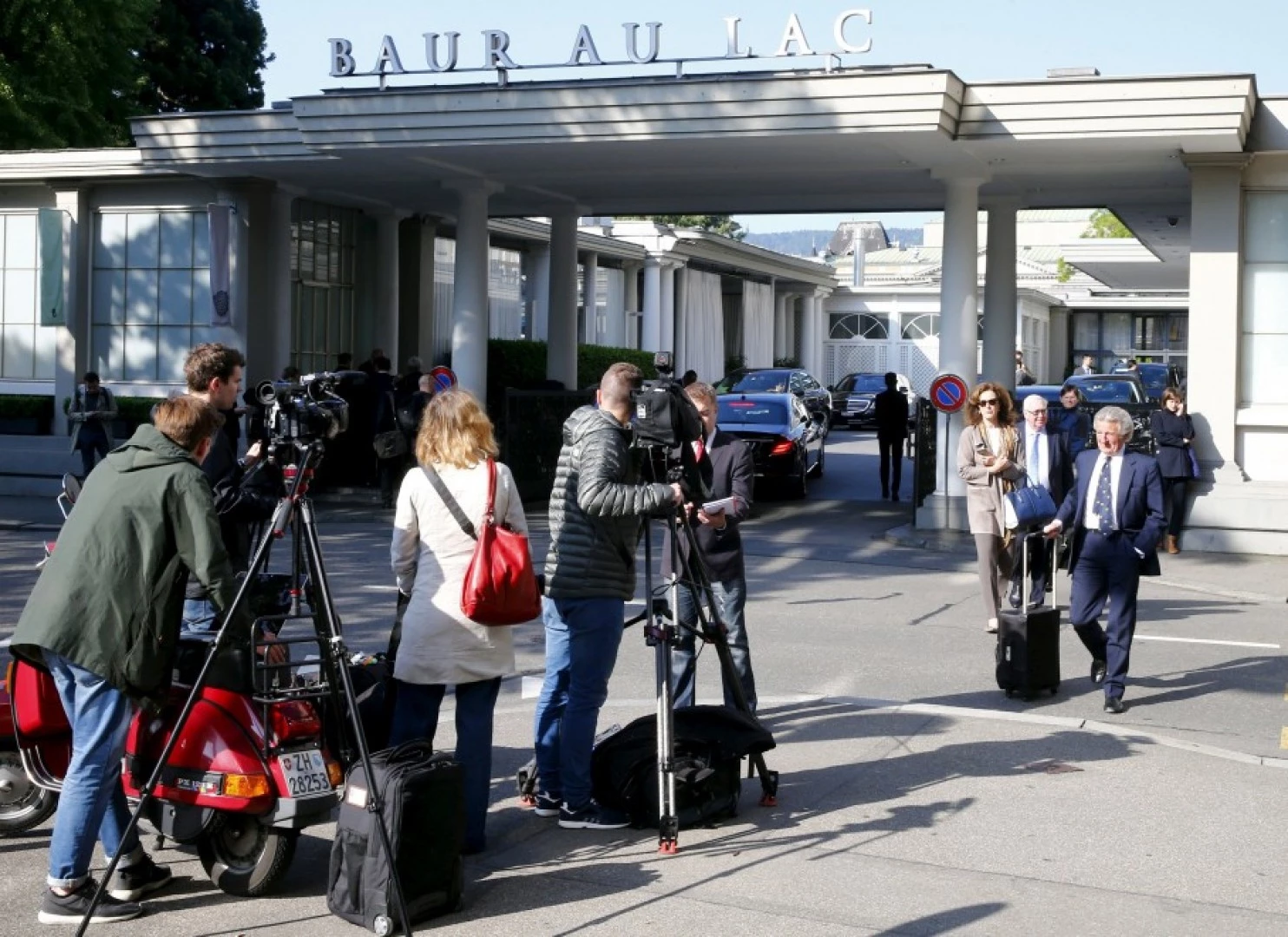
On May 27th nine FIFA officials and four sports management company executives were arrested at the Hotel Baur au Lac in Zurich where they were preparing to attend the 65th FIFA Congress. The investigation, conducted by the US FBI, linked the senior officials to wire fraud, racketeering, and money laundering. The searched linked officials of continental soccer bodies CONMEBOL (South America) and CONCACAF (Caribbean, Central and North America) and sports marketing executives. The nine FIFA officials were extradited to the United States on suspicion of receiving $150 million in bribes, stretching back 24 years.
Baur au Lac Hotel in Zurich
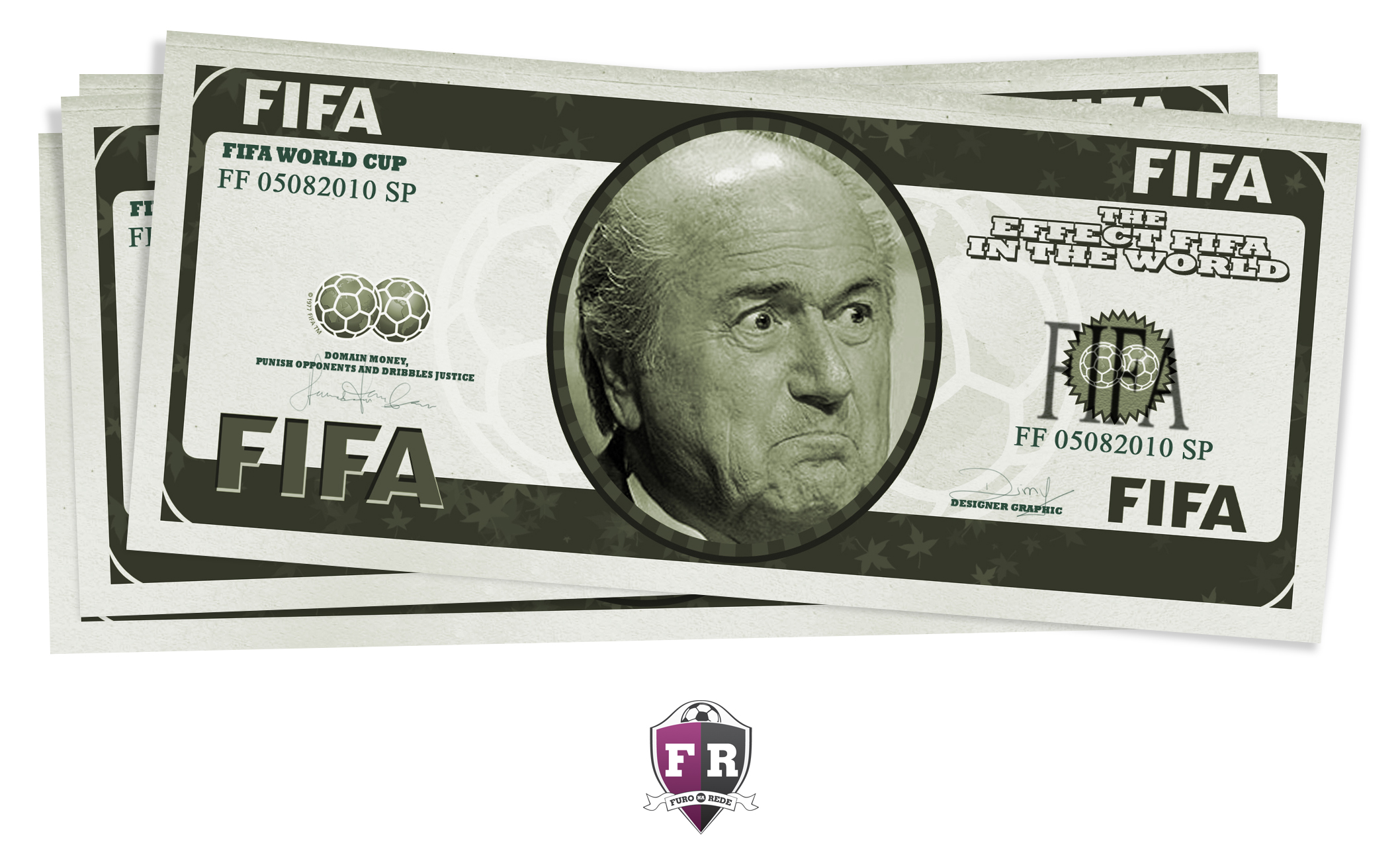
A big centerpiece around this whole scandal has been FIFA president Sepp Blatter, who was not among the accused, and in fact was re-elected to his 5th term as FIFA president. Blatter has spent more than half of his 79-year life with FIFA, as he started as the Director of Development Programs, then General Secretary, and since 1998, he has been the President (standing unopposed in 2007 and 2011). Over that time FIFA has made a fortune through marketing partnerships, sponsorship deals, and television contracts. FIFA boasted revenues of $5.7 billion and $1.5 billion in cash reserves between 2011-2014.
FIFA money.
Although Blatter did win the reelection last week, there is more bad news expected to come his way from the American Justice System. And fallout from his election could bring pressure from football’s European Confederation, UEFA, which has the power to splinter the world’s governing body. Blatter isn’t any stranger to adversity though. In 2004, Blatter was severely criticized for his comments on Women’s Football saying, “Let the women play in more feminine clothes like they do in volleyball. They could, for example, have tighter shorts.” Responding to Qatar laws on homosexuality, he said, “I’d say the [gay fans] should refrain from any sexual activities.” Blatter later apologized for both comments.
Despite that, and the allegations of the fraud within his own organization, Blatter remains. For now, he has survived another crisis, but he will need all of his political tenacity to stay atop the organization for the remainder of his upcoming 5th term.
The suspicion and conspiracy against the FIFA officials started back in 2012 with the Garcia Report. The report was produced by Michael Garcia, a US attorney, who was appointed by Blatter to be the chairman of the investigative branch of the Ethics Committee. The report breaks down the bidding process and decision to award the right to host the 2018 and 2022 FIFA World Cup to Russia and Qatar. Specifically, in May 2011, while before a British parliamentary inquiry, the former chairman of England’s failed 2018 bid, David Triesmann, accused FIFA executive committee members Jack Warner, Worawi Makudi, Nicolas Leoz and Ricardo Teixeira of requesting bribes from the English team in exchange for support. The inquiry also received evidence that FIFA executive committee members Issa Hayatou and Jacques Anouma were reportedly bribed with $1.5 million by the Qatar team.
Russia 2018 FIFA World Cup
The FIFA officials that were indicted last week included:
Jeffrey Webb – President of the Confederation of North, Central America and
Caribbean Association Football (CONCACAF)
Jack Warner – The Former President of CONCACAF
Eduardo Li – current FIFA executive committee president and president of
the Costa Rican soccer federation
Julio Rocha – current FIFA development officer and former head of the
Central American Football Union
Costas Takkas – an attache and former general secretary of the Cayman
Islands Football Association
Eugenio Figueredo – current FIFA vice president and executive Committee Members
Rafael Esquivel – president of the Venezuelan soccer federation
Jose Maria Marin – member of the FIFA organizing committee for the Olympic football tournament
Nicolas Leoz – former FIFA executive committee member
Alejandro Burzaco – a sports marketing executive based in Argentina
Aaron Davidson – president of Traffic Sports USA
Hugo and Mariano Jinkis – principals of Full Play Group, a sports marketing business based in Argentina
These indictments were the result and culmination of a three-year investigation of FIFA. So what does this mean for the future of FIFA? What about the future of the world’s most popular sport?
These are questions that will ultimately play themselves out over time. This scandal is obviously not good press for the sport, as it brings to light many things that the sport’s governing body has tried to hide for decades and decades. Soccer has operated for several years under an ugly cloud of allegations related to match-fixing in professional leagues and bribery in connection with the hosting of the sport’s premier competition, the World Cup.
Having said that, the Garcia Report along with these pending arrests and indictments does, in a way, bring some closure to a long talked about culture of bribery and corruption. The Ethics Committee ultimately did their job in bringing to light the fraud that was occurring and these arrests were a consequence of that. Time will tell, what else will come to light through the judicial process; however Blatter and the remaining top management at FIFA have both a challenge and opportunity to rebrand the world’s most popular sport’s governing body.
With such big soccer events coming up in the next two months like the FIFA U20 World Cup (happening now in New Zealand), the UEFA Champions League Final between Barcelona and Juventus (June 6), the Women’s World Cup in Canada (June 6-July 5), and the CONCACAF Gold Cup in the US (July 6-26), the sport will certainly maintain outlets to shift the focus from the FIFA scandal.
It will undoubtedly be interesting to see how FIFA is able to maintain it’s power and brand through this crisis.
A hot topic right now in sports is the power of branding. “Branding” has been a hot topic in the business world for quite some time; however, it is just recently being introduced as a term in the sports industry with more and more organizations learning how to become better and better at it.
So what is branding? Branding can be defined as a distinctive picture and association positioned in the mind of a consumer to a product or service. When applied to sport, this definition can pertain to a league, an event, a professional team or even an individual athlete. The brand gives an impression on its consumers; it stands for a set of values and reputation in our mindset.
Branding simplifies the ability to distinguish products from amongst a wide range of offerings. Sports is becoming an every growing, over-crowded marketplace, where differentiating yourself in the marketplace is becoming more and more important to outperform your competitors.
Manchester United is one of the most widely recognized brands amongst professional sport clubs in the world.
A strong brand can create the transfer of a brand to new products. It is why Tom Brady can start selling a line of Uggs for Men. Furthermore, a strong brand helps create customer loyalty and trust. Think of the brand of Manchester United FC. The Manchester United logo has come to signify an unbelievable tradition of the highest quality of football in the world, and so fans buy season tickets years and years in advance despite perhaps wavering results or momentary crises. Manchester United is an example of an international brand, as they can claim not only to their expected 7.5 million fans from the United Kingdom, but also 14 million fans in Thailand. A strong brand presents proof of competence for its buyers and bestows prestige to its consumers.
In 2014, Manchester United ranked as the 5th among most valuable professional sports teams at $399 billion, only surpassed by the Dallas Cowboys, Barcelona FC, Real Madrid, and the New York Yankees (who are estimated at approximately $521 million). In looking at the most valuable event in brands the top five is: the NCAA Men’s Final Four, the Fifa World Cup, the Winter Olympics, the Summer Olympics and then the Super Bowl ($500 million). The top five business brands in sports included Under Armour, Sky Sports, Adidas, ESPN and then Nike ($19 billion). And lastly the top five athlete brands in 2014 consisted of Mahendra Singh Dhoni, Phil Mickleson, Rodger Federer, Tiger Woods, and Lebron James (leading the way at $37 million). These above mentioned brands all have a huge following over the world and command a significant monetary premium to their rivals due to a combination of their size and profitability.
Nike is the most valuable brand in all of sports, estimated at $19 billion.
In managing a brand, the main objective is to maintain a strong position within the mindset of consumers. In order to do this, you have to do a couple things first. One, what you are good at? Whether you’re a sports league, a club, an agency, or even an athlete yourself, you have to do what your strengths and weaknesses are. Then you need to figure out what it is exactly you want to brand and where you want to market it whether it be regional, national or even international. After this, you want to do an analysis on where your competitors are positioned in this specific market. And lastly you need to figure out where your customers ideally perceive you on this map.
As you can see branding is a process and takes a close self-examination to understand not only your branding image but also your brand awareness (that is, how many people know your brand. If the image (product’s reputation) is clear and the communication (marketing) is effective, the awareness that is consequently created will be of great value for whatever the sports entity we are talking about.
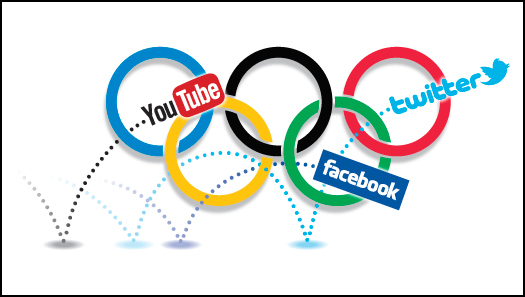
A huge branding tool recently for many leagues, teams, agencies and athletes has been social media (Facebook, Instagram, Twitter, LivingSocial, YouTube, and SnapChat). Dan Reed, Head of Global Sports Partnerships at Facebook, says, “We like to refer to Facebook as the world’s largest stadium, because about half of the 1.35 billion people who use our product declare themselves sports fans.” In fact just six months after Facebook produced personalized auto-play sports video content on their News Feed, they were receiving over one billion views per day. Furthermore, I believe video content will be the best path to digital and social media monetization for sports teams.
Today, with a wider variety of social media platforms than ever, Mary Scott (President, Sports and Experimental Marketing, United Entertainment Group) explains, “The media landscape is rapidly evolving to meet the ever-growing demands of the next-generation sports fans who expect their content to be highly relevant, up to the minute and digitally driven.” In the future I think it can be expected that the term “social media” will transform into “digital media” as sports organizations will begin to focus more on content rather than directly communicating with their consumers.
The Olympics have already begun using various social media platforms to connect with audiences across the world.
Scott adds, “In order to stay current and break through, leagues, teams, companies and brands must adapt how they tell their story to match the environments in which their consumers consume media.” Today, there are 400 social media platforms worldwide and there are more launching every day; thus, consumer attention span is shrinking, as it is averaged to be a mere 7 seconds. Lia Vakoutis (Senior Digital Marketing Manager, Adidas America) explains Adidas’ strategy in 2015, “As social environments become overloaded with content, Adidas will continue to focus on creating quality stories that are backed by strategic media plans and distribution partners.”
Of the five major sports leagues in the United States, the NFL has gained the most equity in brand value through recent years. The NFL leads in television ratings and gets $3 billion a year in media rights, another $3 billion in licensing, average attendance of nearly 70,000 a game, and leading sponsors like Motorola paying over $20 million a year to simply associate with the League.
The NFL leads all United States professional sports leagues in regards to brand value.
Branding is obviously extremely important in terms of creating value in the sports landscape today. Social, or “digital”, media has become one of the most common ways to help shape that branding. Looking at trending topics in sports business, I believe that using social media to shape brand value will be increasingly important through the next year.
Having been a Division 1 college athlete myself in a non-revenue generating sport (men’s soccer), I have an inherent respect for those collegiate sports that are able to generate revenue and consequently support the rest of the school’s athletic department. The only two collegiate sports that produce any sort of revenue, traditionally, are men’s basketball and football. Moreover, the biggest athletic programs among universities in the US are those that can create significant revenue in both of those sports.
The Southeastern Conference (SEC) dominates the top 5 of highest grossing revenue collegiate athletic programs, with Florida at #5, Georgia at #4, Auburn at #3, and Alabama at #2 (all ranging in the $80 million figures). The highest money making program in collegiate athletics comes out of the Big 12 conference, and that is the University of Texas with a combination of $96 million coming from their football program and another $16 million coming from their man’s basketball program for a total of $112 million in total revenue.
The University of Texas is the highest revenue generating collegiate athletic department.
The concept of supply and demand could not be any better illustrated in these two revenue generating college sports. People across the country; whether it’s the students themselves, proud alumni, or simply fans of the teams, love college football and college basketball. “March Madness” and “Bowl Season” have become multi-billion dollar events via sponsorship deals, media right deals, and ticket sales (among various other things). Head Coaches contracts are in the multi-million dollar range, with Urban Meyer being the highest paid college football coach at $5.8 million/year and John Calipari holding the title as the highest paid men’s college basketball coach at $6.4 million a year.
John Calipari is the highest earning men’s college basketball coach at $5.8 million a year.
College education in general has become more of a business in the recent decades. Tuition has risen to the point where you are looking at a quarter of a million dollars to go through college at any top college or university. Similarly, the rate at which college athletic departments have been both generating and spending dollars has dramatically increased.
The NCAA has had to play a more intensive role in their role of regulating athletes, conferences, and institutions. The Power 5 college football conferences (ACC, Big Ten, Big Twelve, Pac-12 and the SEC) have all endorsed the proposal to the NCAA to be able to pass legislation without the support of other Division 1 conferences. Those conferences have endorsed changes that would increase benefits to student-athletes:
Funding athletic scholarships that would cover the full cost of tuition
Guaranteeing multiyear scholarships for athletes
Lifetime scholarship guarantees that would allow former athletes to return to school at any time and complete their degrees
Providing long term health care and insurance to former athletes.
As they say, “the rich get richer” … and in this case it is creating a power imbalance in college athletics. The parity of college athletics has decreased over the years as the business, so to speak, has increased. And yet, in my opinion, the passion and fervor for college athletics has maintained its course, which is ultimately what makes college athletics so special.
Yesterday, Los Angeles Football Club (LAFC) formally announced plans of building a new $250 million, 22,000 seat soccer specific stadium in southern Los Angeles. With the historic Coliseum serving as a picturesque backdrop, the stadium will be just 12 miles north of LA Galaxy’s StubHub Center in Carson, CA.
Don Garber, the Commissioner of Major League Soccer, said in a statement yesterday “In 2003, the original cathedral of soccer was built, now the StubHub Center down in Carson. To think that we would be here in downtown Los Angeles, looking at this environment, thinking about what could be our 17th or 18th soccer-specific stadium, is absolutely unthinkable.” LAFC could join the MLS as early as the 2017 season, or as late as the 2018 season, while Minnesota’s new franchise is slated for the same time frame as well, giving the MLS its 21st and 22nd teams.
The stadium would certainly be historic, as it would be the first open-air stadium constructed in Los Angeles since Dodger Stadium in 1962 and the most expensive privately financed soccer stadium in the country. Magic Johnson, one of the club’s minority owners, said in a statement on Monday:
We’ve already got all the permits. The public and private sectors got to come together when you’re building a stadium of this size. This is going to cost about $250 million, but everybody came together and made it happen. USC, we’re right on their campus, they got involved, they wanted to see the stadium here. So everybody came together and worked hard to make sure the stadium was going to come to fruition, and that’s what’s going to happen.
The new club and stadium will certainly stimulate economic activity as it will provide 1,200 construction jobs and another, 1,800 permanent positions. Furthermore, the new project will bring an infusion of private investment to South Los Angeles.
Magic Johnson, one of the Club’s 17 investors.
The Club’s ownership group is certainly a star studded one as it is headed by venture capitalist Henry Nguyen, entrepreneur Peter Guber and former NBA executive Tom Penn. Other investors include Magic Johnson, Nomar and Mia Hamm-Garciaparra, Chad Hurley and Tony Robbins.
Los Angeles already has a great reputation among the soccer community in this country, as the Los Angeles Galaxy has been the perennial power of the MLS through its first 20 seasons. On the collegiate side, many of the top programs are in the nearby area: UCLA, Cal Berkley, UC Irvine and UC Santa Barbara. From the youth perspective, the surrounding area hosts 10 of the top 79 Academy teams in the country (Arsenal FC, Chivas USA, FC Golden State, LA Galaxy, Nomads SC, Pateadores, Real Salt Lake AZ, Real So Cal, San Diego Surf and Strikers FC.
This latest announcement furthers Major League Soccer’s strategic growth and development plans by seemingly adding teams in pairs from both big markets and smaller markets. This season, with the addition of New York FC and Orlando City, the league continued growth in perhaps the biggest sports market in the country (NYC) and yet brought the game back to Florida where it had been lacking a presence since 2002. It appears as though Garber and his staff will do something similar in 2017/18 with the addition of Minnesota and LAFC.
LAFC’s new stadium and the surrounding area.
Not only is this a huge win for the city of Los Angeles, but Major League Soccer as a whole.
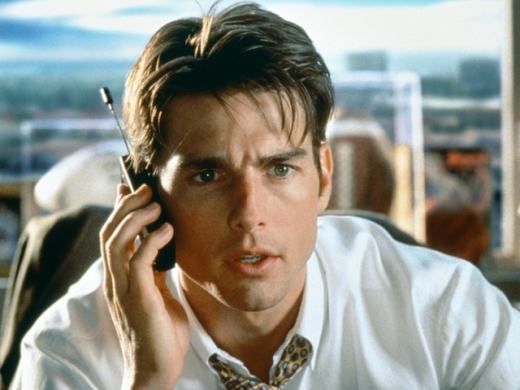
When Tom Cruise played a sleek 35 year-old sports agent19 years ago in the movie Jerry Maguire, society got a glimpse of the cutthroat nature of the sports agent business, and yet the dramatic emotional and psychological elements that go along with the industry. Today, the talent representation business within the sports industry is larger than ever, with such titans like the Creative Artists Agency (CAA) amassing upwards of $5 billion worth of contract dollars under management.
CAA is an example of an agency that started out in the entertainment industry and transitioned into the world of professional sports less than a decade ago. CAA has used its massive football division, specifically going after NFL quarterbacks to make the biggest splash in the sports agency world according to Forbes Magazine.
Behind CAA, Forbes ranks the industry’s newcomer, Relativity Media, as the world’s second largest sports agency, as they negotiate upwards of $2.5 billion in sports contracts. They represent over 300 athletes in the NFL, MLB and the NBA. Like so many sports agencies, Relativity Sports started out primarily as a film studio, where they would take acquire, develop and produce films and then turn them into television shows and distribute them. Relativity Media also engages in content creation across fashion, sports, digital and music, reaching consumers on multiple platforms.
Following behind CAA and Relativity, is the baseball mega agency, the Boras Foundation. Scott Boras, the single most successful sports agent in the industry’s history, founded the Boras Foundation. Some of Boras’ bigger name clients are Stephen Strasburg, Jacoby Ellsbury and Prince Fielder.
Octagon and Wasserman Media Group (WMG) round out the top 5 according to Forbes 2014 rankings. Octagon is the sports business arm of the publicly traded company, Interpublic Group of Companies, on the New York Stock Exchange. Octagon breaks down it’s sports business into two groups, Athletes and Personalities, and Marketing; with Athletes and Personalities are broken down into their respective sports, while Marketing primarily handles corporate sponsorship and events. Wasserman, meanwhile, manages over a $1 billion in NBA contracts alone, led by their super agent, Arn Tellem.
Forbes tallied these valuations in these rankings by the total contract value under management by the maximum agent commission for each sport: NFL (3%), NHL (4%), NBA (4%) and MLB (5%). Forbes chose to exclude sports like tennis and golf from these rankings due to the magnitude of variance of what athletes’ earnings in those sports are from year to year. Professional athletes do make additional money from endorsement and marketing deals. Forbes estimates that the average may make an additional 1-2% of their contract, where their agent(s) would generally just take home 25% of those endorsement and marketing dollars.
Sports agents, in general, do tend to get negatively stigmatized as sleazy salesmen who are more interested in their selfish financial gains rather than always acting in their clients best interests. Like any industry, there are certainly agencies and agents out there that may fit that stereotype, however the industry over the last decade or so has gotten more and more saturated. As industries, such as the sports agency field, tend to get overpopulated, the talent generally rises to the top. In today’s day and age, professional athletes have more opportunities than ever to capitalize on marketing and endorsement dollars through their unique likeness. Besides simply helping their clients negotiate contracts, agents are playing an ever-increasing role of maximizing their clients’ revenue generating capabilities.
Major League Soccer got underway with its 20th season as a league this spring and the momentum seems to be building. Attendance figures are up, players’ salaries are up, a new television and media rights deal has been launched as has a new collective bargaining agreement, and the team has welcomed two new franchises into the league (New York FC and Orlando City).
With 10 teams in the Eastern Conference and now 10 teams in the Western Conference, the league’s geographical distribution is much more even. Adding New York FC gives the league it’s first true team in New York City (as the NY Red Bull play in Harrison, NJ). The addition of Orlando City gives Florida it’s first team since the 2001 season, after which the Miami Fusion and Tampa Mutiny folded. Orlando City drew an amazing opening attendance figure of 62, 510. The average attendance for the league has steadily climbed over the last 5 years, as the average attendance during the 2010 season was 16,675; while this year so far the average attendance figure for the league has been 20,472.
The league also saw the launch of a new television and media rights deal this season with ESPN, Fox Sports and Univision Desportes. The deal brings the league approximately $90 million/year annually across the three networks, which is about triple what it was getting previously. The MLS is still significantly under the other four major sports league (for example the NHL’s annual deal with NBC brings in about $200 million), but this new deal certainly closes the gap. The deal was announced in May of 2014 and is an 8-year deal, going through the 2022 season.
The deal brings regular weekly game broadcasts on ESPN2 on Sunday afternoons, broadcasts on Fox Sports 1 on Sunday evenings and a regular Friday night match on the Univision Deportes Network. All of the Saturday MLS matches are available via the new out-of-market package on ESPN3 and WatchESPN. The networks will share coverage of the MLS Cup Playoffs, while ESPN and Fox will alternate English language carriage of the MLS All-Star Game and MLS Cup championship match each year. The deal will bring more than 125 MLS matches to air annually across the three networks.
With increased revenue dollars via the media rights and television deal, players salaries have gone up as well. The 2014 season saw the league’s median salary at $92,000 with the league minimum salary being at a modest $36,500. Prior to the start of the season, there was a flurry of activity on the negotiation table between the MLS Players Union and the League, which resulted in a new Collective Bargaining Agreement. The new CBA came right on the heels of the opening of the season, and prevented the first lockout in the league’s history. The new CBA, which will be in effect for the next five years, increases the league’s minimum salary by 64%, bringing the $36,500 figure up to $60,000. Moreover, players who were making over $200,000 are now limited to a 15 percent increase from their previous contract, while those players whose salary fall between $100,000 and $200,000 are eligible for a 20 percent raise, leaving those players making $100,000 or less eligible for the biggest percent raise of 25%.
With the monetary figures increasing, the talent on the field continues to improve as the MLS has been able to continue bringing over talented international players. Orlando City brought in Brazilian star Kaka. New York FC brought in two international superstars; the all-time leading goal scorer from Spain, David Villa as well as Frank Lampard, after he finishes the EPL season with Manchester City. The LA Galaxy, meanwhile, will have Lampard’s fellow English countryman Steven Gerrard join them after he finishes the EPL season with Liverpool. This group replaces the departing David Beckham and Thierry Henry seamlessly and keeps the ever important “star power” to market globally.
Commissioner Don Garber and the league’s front office continue to build a growing brand that is very quickly gaining international respect.















 Ben_Slingerland