Search

Ben_Slingerland

The Business of Sports

Category

Uncategorized

From NIL to ROI: Why Value Driven Tech is Winning in College Athletics

With the kickoff of the college football season this weekend, conversation will undoubtedly turn to the big recent changes in college athletics. This past June, there was a landmark decision when the House v NCAA settlement was approved, opening the door for revenue sharing with college athletes.

There have already been massive trickle down effects from this decision, but one of the biggest has been the significant new financial burden put on college athletic departments’ budgets.

Division 1 schools can now distribute up to $20.5 mil/yr with that figure expected to rise to around $32.9 mil by 2034-35. This has caused massive deficits even at the top echelon of college sports.

For example, even a high major powerhouse like the University of Michigan has already been scrambling to make immediate adjustments. Michigan had to make budget cuts and introduce supplemental revenue streams through alcohol sales and concerts to balance their budget after projecting an estimated $27 million deficit for 2025-26 following the House settlement.

That said, smaller and mid-major schools are feeling the impact the most, as many Group of Five and similar programs don’t even have $20 million in athletic revenue to begin with. This is posing a legitimate existential financial threat to college sports as we’ve known them. The disparity will increase, as Power 5 juggernauts fully fund athlete salaries, on top of already effectively buying out the top mid major performers each year through NIL money in the transfer portal.

All of this has caused schools to reevaluate their approach to athletics – budget cuts, reallocations, finding new avenues to bringing money into their programs (including private equity). Texas A&M is eliminating nearly $10 million via staff reductions, trimmed team budgets, fewer disbursements and restructuring scholarships. The sad reality here is that Olympic sports are on the chopping block at many institutions, due to limited funding and shifting priorities.

Tying this back to the world I live in, the world of sport performance technology … I have quickly found that college athletic departments, across the board (Sports Medicine & Rehab, Video & Analytics, Data Management, Strength & Conditioning, etc), are looking to save where they can, for all the reasons listed above.

One of the bigger line items for many D1 athletic departments is wearable technology, which has rapidly transitioned from a luxury item to a core pillar for the vast majority. The value of this data in reducing injuries and optimizing performance has been well-documented over the last decade. And the competitive landscape has intensified.

Five to ten years ago, there were 1-2 reliable GPS providers that monopolized the marketplace, given the quick rise in demand and the limited supply of trusted solutions.

Today, the marketplace has become a bit more saturated which has started to drive pricing down. Think of the TV industry over the last 10 years … a 55’ 4K Smart TV that cost $1,500+ in 2014 can now be found for under $400, due to mass production and scale, while LED and LCD panels became cheaper with improvements in production efficiency, increased market competition and feature standardization.

It’s been a similar story for the wearable technology industry. Through that process, there has been one company that has risen to the top in regards to value, with pricing that is a quarter of the cost; and accuracy that has equaled or exceeded that of the incumbents … all while providing a simpler workflow. That company is PlayerData.

As PlayerData continues to become more of a household name in this space and budgets continue to get tighter in today’s NCAA climate, I anticipate an increasing pressure on athletic department administrations to be more efficient with their tech budget allocation, while taking a closer look at PlayerData.
Why This Game 3 is a Little Bigger

I can’t think of another Game 3 in the 2nd round of the NBA Playoffs that will have as many eyes on the one we’re about to see this Saturday at Madison Square Garden between the Boston Celtics and New York Knicks.

Yes, it’s Boston vs New York (one of the most heated rivalries in all of sports). Yes, it’s a Saturday matinee game in the Mecca where the ticket prices look closer to Super Bowl ticket prices than a Game 3 in the 2nd round of the NBA Playoffs. But the primary reason we’ll likely see record viewership numbers on Saturday is because of what has happened in the first 2 games of the series.

Game 3 on Saturday is the most expensive New York Knicks game ever recorded where $860 is the cheapest ticket being sold at the moment.

The defending NBA Champs, the Boston Celtics, came into the series as heavy favorites despite it being a 2 vs 3 matchup. Boston went 4-0 against New York through the regular season with an average margin of victory of over 16 points per game. The Knicks had a 0-10 record against the league’s top 3 teams (Boston, Cleveland and OKC) through the year, and were seemingly a notch below the league’s elite.

And despite coming into Games 1 and 2 as 9+ point favorites on their home floor in both games, the Celtics find themselves down 0-2 as they head to New York Saturday for Game 3. However, it’s the style in which they have lost both games that has everyone talking. Never before has a team squandered two second half 20 point leads in an NBA series. In fact, the Celtics held a 98% chance to win both games during the 4th quarter, and managed to squander both games away.  

The Celtics, who have shot (and made) a historic amount of 3-pointers this season, came out and had their 2 worst shooting performances of the season, shooting it at 35.1% in Game 1 and 36.2% in Game 2, a wild statistical coincidence. But this is particularly improbable given the Knicks have allowed their opponents to shoot at 47.4% in the regular season (which ranks towards the bottom at 25th in the league). Furthermore, during the 4 games the Celtics beat the Knicks during the regular season, they scored on average 125 ppg, shot it at 50% from the field (and 43.5% from 3), but during the first two games in this series they’ve only averaged 97.5 ppg, while shooting it at 35.6% from the field (and 25% from 3).

Now normally, when a team loses their first two games at home in a best of 7 series, you say “game, set, match”. Only 5 teams have come back in the history of the league in those situations, which equates to 7.3%. With that said, Vegas has this series’ at even money, with the Celtics being 5 point favorites on the road in Game 3. Part of that is because the Boston Celtics have the best road record in the NBA at 33-8, which is 5 games better than their 28-13 home record. Furthermore, when trailing in playoff series in the 21-22 and 22-23 playoffs, they are 10-1. Quite simply, when they go down, they have responded extremely well in recent history.

Beyond all the analytical improbabilities of these first two games, there seems to be a fascinating element of sport psychology going on as well. The Celtics have gone ice cold in the 4th quarter, scoring a combined 33 points in the 4th quarter in their first two games. Their two best players, Jayson Tatum and Jaylen Brown, have gone ice-cold in key moments, earning severe criticism for settling for outside shots rather than driving to the hoop. Meanwhile, on the flip side, Jalen Brunson for New York, has earned a reputation as being the best “closer” in the league, with his uncanny clutch shots.

Boston had all the pressure coming into this series, being the favorites trying to repeat as NBA Champions, while facing a looming roster breakup due to financial realities this off-season. That pressure has seemingly impacted their performance specifically in the 4th quarters of the first two games. While the pressure to win Game 3 for the Celtics is high, the Knicks know if they drop this next one, the momentum will quickly shift.  

Between the analytics, the psychology, and the heated rivalry, this Game 3 has all the makings of an instant classic.

Shifting the Lens from Physical to Mental in College Athletics

This August I shifted my focus from the physical side of college athletics to the mental health side, leaving Catapult after seven rewarding years to join OnBalance.

I made that decision for a few different reasons.

Number one is the changing need within college athletics. Ten years ago, athlete tracking technology was the new frontier within performance departments. Coaches were just beginning to identify averages for volume and intensity of movement among their athletes while developing periodization models to optimize performance. Today, that vertical of performance has been tackled as most college teams are all using some sort of wearable device to identify those metrics.

The second is the changing landscape of the NCAA. We have never seen the magnitude of changes within the NCAA than what we’re seeing today. With the emergence of the transfer portal, NIL, roster size limits, legalized gambling and pending monetary settlements with the NCAA, the goal posts have been moved on student-athletes. Instead of focusing on playing their sports, 17-22 year olds are now forced to deal with a slew of outside stressors that have added a significant psychological weight.

And the last reason for my move was the mental health crisis that our society currently finds ourselves in today. Specifically within our Gen Z population, we have seen depression and anxiety increase at exponential rates over the last decade, unlike that of any other time in modern human history. The widespread belief of the leading cause of this has been social media, with a handful of other factors mixed in as well, including the after-effects of the recent global pandemic.

With that as a backdrop, here is what I have learned thus far after my first 90 days meeting with folks involved in the mental health side of college athletics.

First, there is no standardization among any two schools as it comes to structure, processes or personnel surrounding mental health. Some athletic departments will have dedicated counselors to athletics, while many do not. For those that do not, the integration of those mental health resources for their student-athletes into the university counseling system takes several different forms. Many cases are outsourced to outside providers with varying degrees of visibility to the athletic department.

Second, just about every school are experiencing cases continue to go up at a rate that is outpacing their personnel resources. Meaning, the wait times for student-athletes to be seen are getting longer and longer unfortunately.

Another observation is that this field is largely reactive. My previous world at Catapult, coaches and care teams would be prescriptive in their approach and much more proactive. They would leverage metrics to make intelligent decisions on practice plans and return to play protocols to optimize performance and recovery in calculated ways. Whereas this behavioral health world within college athletics operates in a much more reactionary way.

Lastly, there is a giant stigma around mental health as it comes to athletics. In training rooms, there is no judgment if a student-athlete is getting an ankle taped or a shoulder examined, but if a student-athlete is seeing a psychologist, there is an immediate unspoken judgment that pervades locker rooms causing many to hide their issues.

I believe mental health is the next frontier of college athletics. The quickest road to development within the behavioral health space of college athletics, is through data and intelligence so care teams can make better calculated decisions on how to properly treat … Just as we saw on the physical side a decade ago.  

NBA Trade Deadline Eve for Celtics Nation

The last two weeks have made this one of the most exciting NBA trade deadlines in recent years for Celtics Nation. Winners of their last 6, the Celtics now sit in 7th in the Eastern Conference, only 4.5 games out of 1st. And what makes this trade deadline a bit more enticing is that there are no clear favorites to win the East, as only 1 game separates the top 4 teams (Heat, Bucks, Bulls and Cavs).

Prior to the Celtics current 6 game winning streak, the C’s had not been able to string more than 3 wins together all season. What has been the formula to the team’s recent success? Simply put, the team’s health. Many thought that from a personnel standpoint, this was the most talented Celtics team in recent years … and now with all pieces available to first year Head Coach Ime Udoka, it seems as though that is finally playing out to be true.

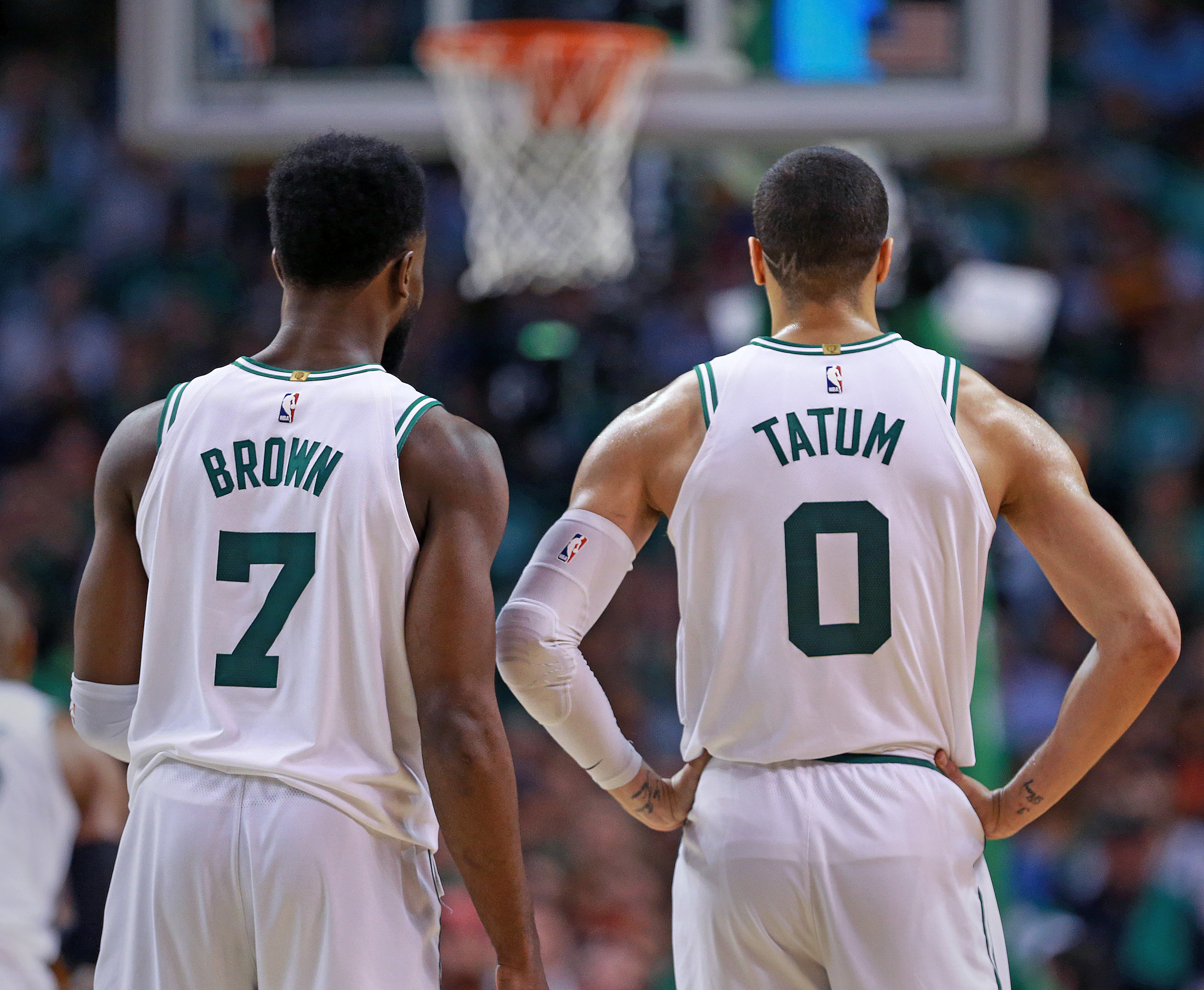
Nevertheless, the team suffered lots of criticism in the early part of the season, with many calling to break up the Tatum-Brown duo, which currently ranks as the 2nd highest scoring pair in the League.

During much of the first half of the season, many have
called for the breakup of the duo Brown and Tatum.

What makes this deadline even more interesting is the fact that it is Brad Stevens first as the Celtics’ President of Basketball Operations, a role formerly occupied by Danny Ainge.

So given all this recent excitement, what are the main things Celtics fans should keep an eye on during the eve of the NBA trade deadline?

Some potential trade deadline targets linked to the Celtics. Upper left: John Collins (PF, Atlanta); Lower left: Dante DiVincenzo (PG, Milwaukee); Upper right: Malcolm Brogdon (PG, Indiana); Lower right Terrence Ross (SG, Orlando).

Potential Targets:

  • Terrence Ross (SG/SF, Orland Magic): The 31 year old shooter from Orlando is averaging 10.9 pts this year in a reserve role for the Magic. The C’s would likely need to give up Schroder and either Langford or Nesmith to make this work. He was one of the proven shooters available at the deadline.
  • Dante DiVincenzo (PG, Milwaukee Bucks): This has been one of the more rumored deals, where the Celtics would make a Schroder-DiVincenzo swap. The issue with this has been the Bucks have been rumored to want to include Grant Williams in this, which many believe to be a non-starter for the Celtics. While DiVincenzo is having a down year from the field, he has proven to be an effective two -way player pre ankle injury.
  • Malcom Brogdon (PG, Indiana Pacers): After Indiana acquired Tyrese Haliburton from the Kings on Tuesday, it became apparent that Brogdon may be a moveable piece for them. Brogdon is averaging 19 ppg, 6 apg, and 5 rbg and would be an undeniable upgrade at the PG position compared to Marcus Smart. To get Brogdon, many believe the C’s could still keep Smart, but instead give up Richardson, Schroder and one of their 2019-20 1st round draft choices.
  • John Collins (PF, Atlanta Hawks): The 6’9’’, 24 year old PF is on the same “timeline” as Tatum and Brown and could give the C’s a true big 3 (similar to the Garnet, Pierce, Allen grouping that won them a title). This offseason the Hawks signed Collins to a 5 yr, $125 mil contract, however after the Hawks have gone 26-28, reports have surfaced about Collins being disgruntled. To get him, the C’s would likely need to give up Horford, Smart and potentially one other piece.

Best Case Scenario: I think most of Celtics Nation would agree that the untouchable pieces are Tatum, Brown and Robert Williams. If there was some way to land Brogdon and Collins, the C’s would have a starting 5 of Brogdon, Brown, Tatum, Collins and Williams, with an average starting age of 25. While you would deplete your bench a bit in achieving that, you’d probably still be able to maintain a 2nd unit that would include Pritchard (who many believe is a more than competent backup PG), Enes Freedom, and probably either Nesmith or Grant Williams. Leaving the C’s probably needing to sign one more capable bench piece. That starting 5 would easily be the best positioned group in the Eastern Conference over the next several years.

Other notable things to keep an eye on around the league tomorrow include whether James Harden is moved out of Brooklyn, what Philadelphia decides to do with Ben Simmons, and how far will the Trail Blazers fire-sale go.

Of course, more times than not, the Trade Deadline disappoints and rarely lives up to the hype. But as fans, we naturally love to dream … only time will tell what type of stamp Brad Stevens puts on his first NBA trade deadline.

GPS Wearable Technology in the NCAA

When I was playing college soccer at Georgetown 12 years ago, there wasn’t one team in the country using GPS wearable technology. 7 years ago, while I was working at IMG Academy in Bradenton, FL, the performance coaches had just started to experiment with wearables. Today, having worked at Catapult Sports for the last 4 years, I have found just about every single professional team use some form of GPS technology across the NFL, MLS, NBA, and NHL. While the majority of teams in college football and soccer use it as well, and a healthy percentage of teams in college basketball, field hockey, lacrosse, volleyball and ice hockey.

So, why are all these athletes wearing sports bras that hold these blinking devices between their shoulder blades? How does this technology help athletic performance and why do coaches care about this data?

The GPS device is secured with a compression-fitting device in between the athlete’s shoulder blades.

In this piece, I’ll talk about the evolution of GPS wearable technology specifically within the NCAA landscape and how it has become such a central piece to athletic performance.

What does GPS wearable technology do and how can it improve athletic performance?

If you don’t know what the specific physical demands are in your competitions, it’s impossible to optimize your training to prepare for those demands.

Athlete monitoring allows coaches to effectively measure the volume and intensity of their athlete’s training and competitions with an actual measuring stick to reduce soft tissue injuries, optimize performance and develop more robust return to play protocols. The ancillary benefits of using a GPS system allow coaches to use the data as a communication tool, as well as a recruiting tool reflecting the coaching staff’s commitment to student-athlete wellness, and ultimately instilling a level of professionalism within the team.

Where did wearable technology come from and who were the early adopters?

In what now is a very saturated marketplace, there were a few companies that were first to the table with GPS wearable technology, starting with Catapult. The Australian government decided to invest in the newly created Australian Institute of Sport (AIS) after a poor performance in the 1976 Olympic games.

Shaun Holthouse and Igor van de Griendt, eventual Catapult founders, began a project with the AIS in 1999. Taking a unique approach to evidence-based science improving sport, they began to measure all facets of athlete performance. Wearable sensors were then created to make science more accessible to athletes, and more routinely deployable across training and match situations. They were implemented for the 2004 Athens games, and then Catapult was born in late 2006.

Aussie Rules Football began using the sensors before the technology expanded globally to rugby, soccer and American Football in the following years.

How has it been adopted in the NCAA?

Inevitably this technology made its way over to the United States around 2012 as performance coaches started adopting it in their training. Florida State Women’s Soccer was one of the first Catapult NCAA clients, using the GK devices on a couple of their goalies. Jimbo Fisher, the Head Coach of Florida State’s football team at the time saw an antenna on the field at a Women’s Soccer practice. After doing a quick investigation of the tech, he started using it with his own team.

Florida State Women’s Soccer were one of the first NCAA Olympic teams to begin using GPS wearable technology. Here, they celebrate their 2018 NCAA Division 1 Women’s Soccer National Championship.

GPS tech quickly spread to football teams in the SEC Conference and then to the other Power 5 conferences. In a press conference after Alabama’s 24-7 win in the 2016-17 Peach Bowl, Nick Saban, the Head Coach of Alabama, went on record saying how much Catapult helped with their conditioning. Today, every single SEC Conference football team, but one, uses Catapult technology. Many athletic departments have taken a wholistic approach, doing multi-sport agreements, enabling cross sport communication between performance coaches.

“We use the Catapult system that gives us a scientific picture of where players are. After the season we did a total analysis of how we went through the season from a physical standpoint. We made some changes on how we practiced and how we monitored this systematically through the season … That has helped us manage our way through and keep our team a little more physically fresh.”

Nick Saban, Head Coach Alabama Football

Today, this technology has trickled down beyond D2 and D3, into high school programs and even youth academies. The largest growth of wearable technology in the college space in recent years has been in the mid-major/FCS level of the NCAA.

What do you need to look for in a GPS wearable system?

The Catapult Vector system includes the pod itself, a vest, a charging case and dock, and a live receiver.
  1. Reliability – Even on the cheaper side of the market, wearable tech is still a significant investment and therefore making sure the technology has been validated (white papers, etc) in its measuring accuracy is critical.
  2. Functionality – Depending on training environment and what the coaching staff values, there are a few features that you will want to vet out:
    • Live capability – If looking at information live is important, you want to make sure the system has that capability (some do, many do not). Live tracking is good for return-to-play and rehabilitation protocols as well as in-game decision making.
    • Indoor and Outdoor functionality.
    • Dual external & internal tracking capability (i.e. heart rate functionality)
  3. Support – GPS wearable companies have a wide range of sizes. Some are equipped to provide meaningful support while others only have a handful of employees. Every team is unique in their personnel structure, but for many, having sport science support is essential in making actionable insights from the data.

What is the next wave of innovation in the GPS wearable space?

Catapult acquired SBG, a video analysis software company for $40m in the Summer of 2021 to help enhance the integration of wearables and video.

While half of Catapult’s business is built around GPS wearable technology, the other half is built around video editing software. This past summer Catapult acquired a company called SBG, a UK-based video company that specializes in Formula 1 motorsport and elite soccer video solutions. The acquisition was a strategic one, as the SBG software has enabled Catapult to accelerate their ability to integrate wearable metrics onto video, allowing coaches to get more visual context to the physical data. With the wearable technology, you may know that your center forward made 40 high velocity sprints during the match, but now with this wearable-video integration, you see exactly when those 40 high velocity sprints happen and what has happening in the match. With the performance data married to the tactical information, the technology’s value has grown exponentially and has become more digestible to your average coach.

The New Look Boston Celtics – 2021-22 Season Preview

The 2020-21 season was a disappointing one for the Boston Celtics. A team that many picked to contend for the Eastern Conference last year ended up getting hampered by ongoing injuries as they were forced to play in the play-in series as the 7th seed, before losing to the Nets in 5 games in the first round.

Fast forward to now. Danny Ainge was replaced by Brad Stevens as the new President of Basketball Operations, and Ime Udoka replaced Stevens as the 18th head coach in the organization’s 75 year history.

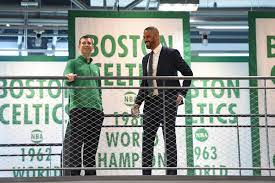
New Celtics President of Basketball Operations Brad Stevens (left) and new Head Coach Ime Udoka (right) are aimed to get the Boston Celtics banner #18.

The first trade of the Stevens era happened quickly as the Celtics swapped their starting point guard and four time All-Star, Kemba Walker, for a former Celtics legend, five time All-Star Al Horford. While no one will doubt Kemba’s ability as a playmaker and scorer, his nagging knee injury kept him out of the lineup frequently … and most noticeably, the knee only allowed him to play 3 of the 5 games in the Nets playoff series. He’s 31 years old, and several speculate his best years are behind him. With Tatum and Brown as the Celtics primary scorers, many believed the Celtics didn’t need a score first, point guard, which is what Kemba represented. Moreover, Kemba’s inability to defend made him a liability down the stretch in crucial games. A weakness that was exploited heavily when the Miami Heat eliminated the Celtics in the 2020 playoffs.

Celtics Nation knows what they’re getting in Al Horford, who was a fan favorite in his first stint in Boston. Horford’s best attribute is his passing ability from the frontcourt. Last year the Celtics played lots of isolation basketball given their 3 playmakers in Tatum, Brown and Walker, which resulted in them finishing near the bottom of the league in Offensive efficiency and assists (26th and 25th respectively in the NBA last season). Horford, will certainly help with that, as his best ability is to connect the other four players he’s sharing the court with at any given moment.

Towards the end of July, the Celtics decided to use the remainder of the trade exception created by the sign-and-trade deal that sent Gordon Hayward to the Charlotte Hornets, on 27 year old, versatile swingman Josh Richardson from the Dallas Mavericks. While the Celtics will represent the 4th team Richardson has played on in the last 4 years, Richardson is defensive-minded, like Horford, which was much needed. The Celtics had their worst defensive rating in the 8 year coaching era under Stevens last season. It’s also worth mentioning, that both Richardson and Horford have spent time with new Celtics Head Coach Ime Udoka in their previous stints in Philadelphia.

This offseason, the Celtics added the four new additions on top, left to right, PF Al Horford, SG Josh Richardson, PG Dennis Schorder, and C Enes Kanter (as well as PG Kris Dunn not pictured). While they lost, left to right on the bottom, PG Kemba Walker, SF Evan Fournier, C Tristan Thompson and SF Semi Ojeleye.

On top of the Josh Richardson signing, the Celtics also acquired point guard Kris Dunn, center Bruno Fernando and a 2nd round pick from the Atlanta Hawks in exchange for Tristan Thompson. The goal here was for Boston to shed the money they owed Thompson, while bringing back some minor but cheaper contributors, namely being Dunn.

Many remember that on the infamous 2016 draft night, Celtics fans rioted when they chose to take Jaylen Brown over Kris Dunn. With that said, Jaylen has turned out to have the far superior NBA career up until this point. Dunn will likely be a third string ball handler who was also primarily brought in for his production on the defensive side of the ball. He has some of the most active hands in the league, as he averaged 2 steals a game in 25 minutes per game off the bench in Atlanta in the 19-20 season. Expectations aren’t overly high, especially because he was injured all of last year, but I would anticipate him being assigned to the opposing team’s best ball handler when they need to give Marcus Smart or Jaylen Brown a rest.

As Jaylen Brown and Jayson Tatum continue to grow as players and leaders on this Celtics team, the organization will continue to climb the Eastern Conference ladder.

Just last week, the Celtics made one of the final big splashes of the NBA offseason, scooping Dennis Schroder to a one-year $5.9 million contract. The big news around this signing was that Celtics are paying him $78 million less than an extension figure he infamously declined with the Lakers last season. After Lowry wen to Miami, Conley stayed in Utah, Lonzo signed with the Bulls, and Pelicans replaced him with Devonte Graham, Schroder and Boston ended up being the final pair; one a point guard and the other being a team in need of one for cheap.  

For the Celtics, the value of this deal is insane, as they’re getting a guy who was valued at over $20 mil/yr just a couple of months ago for now just a hair below $6 mil. While this deal won’t make the Celtics title contenders in and of itself, it’s a low risk deal as it’s only a one year deal for low money. You now have 3 guards in Schroder, Smart and Richardson all playing on expiring years of their contract this upcoming season, which should make for a very competitive backcourt.

The changes in personnel, present several potential interesting starting lineup possibilities:

#1: (Big Frontcourt + Schroder @ PG): Schroder, Brown, Tatum, Horford & Williams III

#2: (Big Frontcourt + Smart @ PG) Smart, Brown, Tatum, Horford & Williams III

#3 (Defensive-Minded): Smart, Richardson, Brown, Tatum.& Williams III

#4 (Athletic): Schroder, Smart, Brown, Tatum & Williams III

#5 (Experience): Schroder, Smart, Brown, Tatum, & Horford

My guess would be the first lineup will be the one they eventually land on with Smart, Richardson, Kanter, Nesmith, Pritchard, Dunn and Langford all coming off the bench.

Most people have the Celtics around #5-7 in the Eastern Conference preseason power rankings with the Nets, Bucks, 76ers, and Heat comfortably ahead of them, and then the Hawks, Celtics and Knicks in that 5-7 group. With that said, this Celtics team is probably one of the most exciting rosters to monitor heading into this upcoming season, given the coaching change, the several personnel changes, and the anticipated growth of Brown, Tatum and Robert Williams III.

It seems with the late addition of Schroder, that Stevens was able to improve this team through this offseason. I do believe they will be competitive this season, and may have an outside chance, if the new pieces gel the right way, to get to the Eastern Conference Final this season.

Is Cam New England’s Stairway to 7?

There are only a few free agent signings in the last 20 years of sport (Lebron James to the Heat, Barry Bonds to the Giants, Shaq to the Lakers, A-Rod to the Rangers, Rice to the Raiders) that rival what I believe will become the most impactful signing in the history of the NFL … Cam Newton coming to the New England Patriots.

LebronJames_Heat
There have been a few blockbuster free agent signings over the last 20 years … Lebron James to the Miami Heat may very well top the list. 

The storylines are endless.

  • You have probably the most dominant franchise in the history of modern sport in the Pats, seemingly abruptly halted with a wild card weekend defeat followed by the departure of their fearless leader and greatest of all time, Tom Brady.
  • Never once in the history of the NFL has a team lost a league MVP and acquired a league MVP in the same offseason.
  • There is now a QB race in New England between two former Auburn Tigers who couldn’t be any more different.
  • There may not be a more boisterous, off-the-field headache of a QB in the league in Cam Newton, coming into a more business-like team first environment in New England.
  • And on top of all this, you will have Bill Belichick who will be coaching a team for the first time in 20 years without Tom Brady, who will inevitably answer everyone’s question by season’s end … was it the Belichick system or the Goat TB12 responsible for the 6 rings?

Jarett StidhamQB
Jarrett Stidham has only thrown 4 NFL passes and one of them was a pick 6. Compounded by the fact that he was a 4th round selection and is only 23 years old, many believe Stidham may not be ready. While others, especially close to the organization, maintain Stidham may very well still be the starter when the 20-21 season begins.  

Why this is a great signing for the Patriots:

  1. Jarett Stidham isn’t ready to start. Stidham has thrown a total of 4 passes in the NFL, one of which was a “Pick-six” interception. By all accounts, the New England coaching staff is very high on Stidham, but coming in at 23 years old trying to replace the GOAT is a formidable task.
  2. Cam Newton is an upgrade over Brian Hoyer. While Tom was the GOAT, he was not mobile whatsoever. Josh McDaniels and the offense are likely going to change things up quite a bit schematically with a more mobile QB leading the way. The positive about Hoyer was that he knew the Patriots system … but unfortunately for Hoyer, that system is likely changing now given the personnel.
  3. Cam gives them the best chance to win this season. If healthy, Newton is undeniably the more talented QB (and it’s not close). Cam was a former #1 Overall Pick, 3x Pro Bowler and a former MVP. Belichick is a win first type of coach, and Newton (again, if healthy) gives them the best chance to win this season.

    CamNewtonAuburn
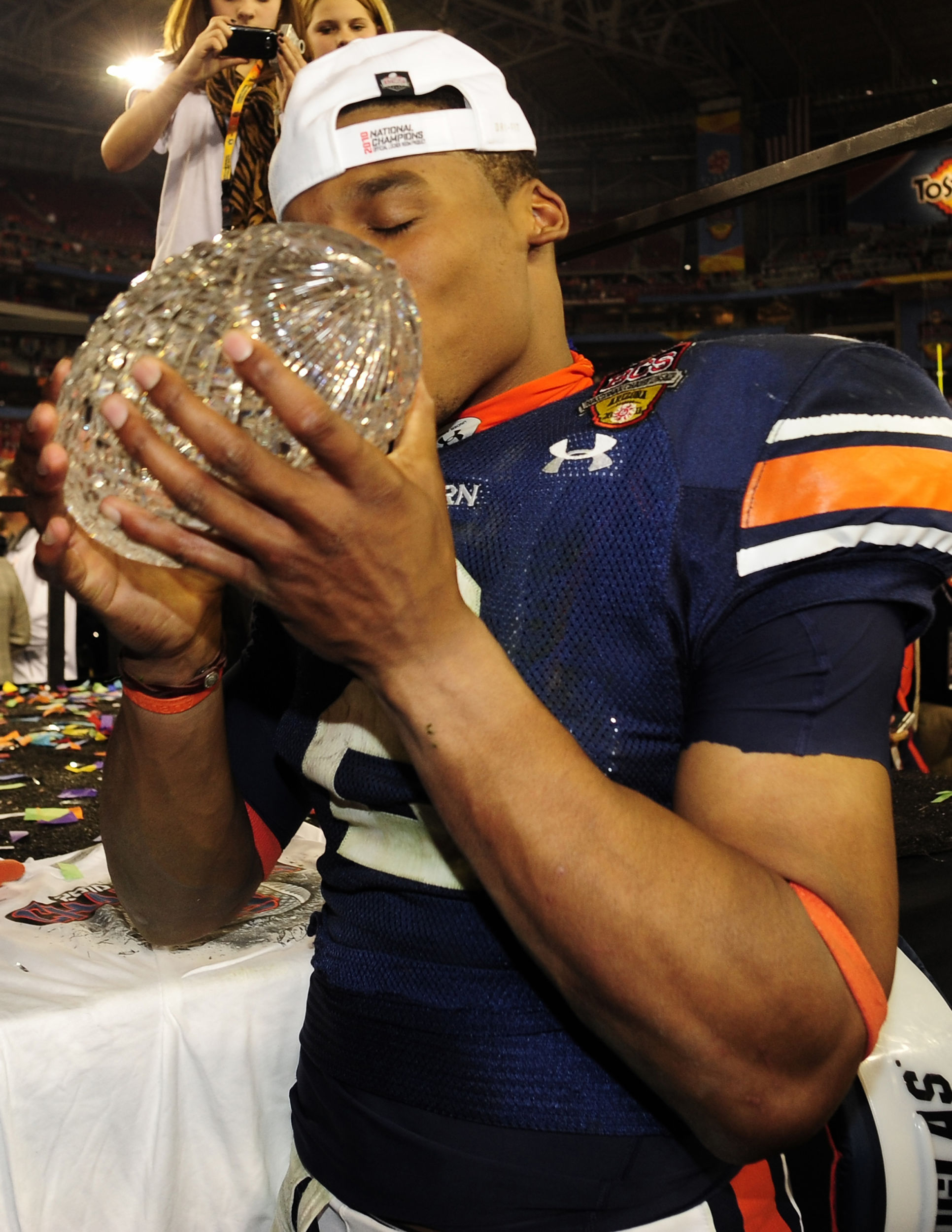
    Cam Newton was a National Champion and Heisman Trophy Winner at Auburn (coincidentally Stidham’s same alma matter), as well as a NFL MVP and 3x Pro Bowler with the Carolina Panthers. If healthy, Newton will be the most talented QB ever to wear a Patriots uniform. 
  4. True QB competition this offseason. Many people thought the Pats were going to draft a QB in the draft and yet they held tight. Many thought they were going to make a move earlier in free agency for a guy like Jameis Winston. Competition breeds success and having two legitimate QBs in the mix will make them both better.
  5. The Value was absolutely insane. Newton agreed to a one-year deal with a base of $1.05 mill, the minimum salary for a player with his amount of experience (9 years) in the league … and only half of that money is guaranteed. Now with all the incentives, Newton can earn an additional $5.75 million, creating a max value of the contract of $7.5 million. Low risk, high reward … it doesn’t get any better than that.

AB
Antonio Brown played in one game as a New England Patriot and cost them $9 million. Needless to say that was an investment did not pay the expected dividends. 

The Patriots have a history of bringing in controversial, yet talented players over the years . Some have worked (Corey Dillon, Aquib Talib, Randy Moss) and some haven’t (Chad “Ochocinco” Johnson, Adalius Thomas and most notably and most recently Antonio Brown).


It’s the most important position in all of sport. It has been the most dominant franchise in the history of sport. And now you have one of the most polarizing talents in the National Football League who has been handed the keys to replace the GOAT.

The Draft Came and Went … and the C’s are Still Confused

Rewind the clock 365 days … the Celtics were a team that was one game away from the NBA Finals (despite playing without their best player and another All-Star). With the loan pick of their 2018 draft used to secure big man depth with Robert Williams, the Celtics (on paper) were poised to runaway with the East. My my, do things change quickly.

An All-NBA Point Guard in Kyrie Irving, two proven NBA All-Stars in Al Horford and Gordon Hayward, two of the biggest emerging young talents with Jayson Tatum and Jaelyn Brown, a deep bench, a Head Coach/GM combo that many would say is the best in the league, and future draft picks that would even make a trust fund baby excited … a birth in the finals or bust was the expectation of Titletown USA for the 2018-19 Celtics season. Spoiler alert: it was a bust.

AingeStevensKyrie.jpg
Head Coach Brad Stevens (left) had pressed all the right buttons up until this last year for the Boston Celtics. Danny Ainge (center) has been heralded as the best GM in the NBA today. Yet with star PG Kyrie Irving (right) seemingly out the door, Ainge and Stevens are focused on re-tooling for the 19-20 campaign in a more challenging fashion then originally anticipated. 

Finishing 4th in the East, and a near sweep in round 2, the Celtics vastly underachieved. That much is not up for debate. With the World Series and Super Bowl trophies in hand, and one game shy of the Stanley Cup … the spoiled Boston fandom, while disappointed in the C’s season, still seemed to have an unwavering trust in the Ainge & Stevens team. Names like Anthony Davis, Kevin Durant, Jimmy Butler, Kristis Porzingis had danced in Celtics fans’ heads as the future draft picks accumulated. Danny Ainge had the keys to the Ferrari … while Celtics Nation feverishly awaited the master plan.

But as visions of cherry-plums transformed into these nightmare headlines, the tune in Titletown took a shift:

“The Celtics belief they can re-sign their All-Star point guard [Kyrie Irving] has “eroded” amid increasing speculation he wants to join the Brooklyn Nets” (Bleacher Report).

“Contract talks have now apparently shifted toward Horford exiting Boston as news of Horford’s imminent departure from the Celtics was also reported by ESPN’s Adrian Wojnarowski as well.” (ESPN)

“I put up with a lot this year. I said what I said after the season, and I think we all know that I’m not trying to step into that again” (Terry Rozier).

With what originally looked like a potential dynasty to run the East for many years to come, the Celtics all of a sudden headed into draft night like a lost puppy … as an organization looking for an identity. 3 first round picks, a 2nd rounder, a 2020 Memphis 1st rounder, and a roster riddled with talent … it seemed like a blockbuster deal was inevitable … but it never came. And so this is how the anticlimactic draft night unfolded for the Celtics:

#14: Romeo Langford (SG, Indiana) – An oversized 2 that has drawn comparisons to Evan Turner … likely a role player in year 1, that has a high ceiling.

Lanford
The Celtics selected SG Romeo Langford from Indiana University with their first selection at #14. 

*Two-for-One: Celtics trade pick #20 to the 76ers for picks #24 and #33

#22: Grant Williams (PF, Tennessee) – The two-time SEC Player of the Year, Williams is an undersized PF, yet freakishly strong. Highly intelligent, Williams has been compared to P.J. Tucker and seemingly would fit well as a role player within the Celtics current roster.

*Bye Baynes: Celtics deal Baynes to the Suns in exchange for the Bucks 2020 1st Round Pick (1-7 protected)

#33: Carsen Edwards (PG, Purdue) – Undersized at 6 feet, Edwards still was one of the nation’s top scorers with 24 ppg. Despite being limited defensively, Edwards does provide depth at what could be a very empty point guard position come free agency.

Screen Shot 2019-06-21 at 4.21.41 AM.png

#51: Tremont Waters (PG, LSU) – See Edwards’ description above. Battle with Edwards to see who gets a roster spot.

In a draft that is drawing immediate comparisons to the underwhelming Fab Mello (RIP), Jared Sullinger, Kelly Olynyk, and James Young draft … this draft was largely disappointing for the Celtics, especially given the plethora of picks and the lack of addressing immediate needs. Having said that, you now have a Boston team that has the potential of 25-26 mil in cap space heading into free agency. The most rumored target at the moment is the first time All-Star, Orlando Center Nikola Vucevic.

Best Guess 2019-20 C’s Depth Chart:

PG: Terry Rozier, Marcus Smart, Carsen Edwards

SG: Jaylen Brown, Romeo Langford

SF: Gordon Hayward, Grant Williams

PF: Jayson Tatum, Marcus Morris, Daniel Theis

C: Nikola Vucevic, Robert Williams


If you’ve read my writing before or you know my general outlook, I’m relentlessly optimistic … and that optimism holds true with this roster. Listen, on paper, this is a team that is less talented than the 2018-19 roster, there is no question about that. However maybe not as much as people think. You replace Al Horford with another All-Star Center who is younger if we can pull off the Vucevic signing.

Vucevic
All-Star Center Nikola Vucevic of the Orlando Magic seems to be the new prized target for the Celtics Free Agency. 

You have a “changing of the guards” at point with Irving being replaced by Rozier. The C’s played better with Rozier running point, as many believe he deserves an opportunity to show the league he is an elite starting PG (the insurance policy was drafted tonight with Edwards and Waters). Most importantly, you maintain your best youth talent in Tatum and Brown.

Looking at Brad Stevens, he has always over-achieved with less talent … between bringing mid-major Butler to two National Championships and transitioning that ability to the NBA in bringing a Irving/Hayward-less C’s team to game 7 of the Eastern Finals in 2018.

Is this best case scenario, probably … is it unlikely though, I’m not sure it is. If this team gels like they did two years ago in the front half of next year (and with appealable trading assets in hand), this team could be one deal away from being a title contender again as soon as the trade deadline of next season.

Breaking into the Sports Business Industry: A Note from my 30-Year-Old Self to my 20-Year-Old Self

Everyone loves sports.

Our culture is predicated around them for better or for worse. Sport has served as humanity’s greatest form of unwritten entertainment from it’s very beginning. And since then, sport has transcended humanity, snowballing into a captivating phenomenon over the centuries into what we know it to be today.

I am one of those people who became unequivocally enthralled by the power of sport from the very beginning. At 5, I was religiously reading the Sports Section of the Boston Globe. By 10, I was tapping my toes and fidgeting with my batting gloves in the Little League batter’s box emulating my favorite Boston Red Sox, Nomar Garciaparra.  When I was 15, my all-boys catholic prep school gave us the day off school so students could attend the parade and celebrate the New England Patriots winning their 2nd Super Bowl, which has now turned into 6 (and counting).  And at 20, I accepted a summer internship to work at Nike’s World Headquarters in Beaverton, OR … marking the day I officially transformed my passionate fandom into making it a career and launching my path into the sports business industry.

As a young, eager junior at Georgetown University, the sports business industry was something I dove into passionately, yet somewhat by chance. And now, after having just turned 30 this past year, it has caused me to think back on everything I’ve learned in my] career as a sports business professional. I will get approached from time to time by college students or recent college grads asking for advice about the industry … and so I figured I would reflect on a few things (many of which I failed miserably at and others that I did okay with) that I wish I could tell my 20 year old-self who had just accepted that first sports business internship.

Be Opportunistic. It may sound like a cliché, it may even sound blatantly obvious … but I believe it’s the single greatest factor that distinguishes people who succeed in this industry versus people who don’t. That first Nike internship I got was somewhat of an odd happening. I received an email from a Georgetown email domain that looked identical to the hundreds of other spam emails I receive … however for some reason I opened it.

Nike was a company that I resonated with from being an athlete … it was the company I chose when my dad told me I could pick any one stock to invest in as just a little kid (it turned out to be an ok pick). Needless to say, I followed through with the application process and sure enough became the one Georgetown student-athlete that Nike chose that year to be part of their Summer Internship Program. It was only until after I was out in Beaverton, OR that I realized how lucky I had gotten. Nike received about 10,000 applications for their Summer Internship Program that year and only 90 were selected (45 student-athletes from Nike sponsored universities and 45 “at-large” candidates).  After doing the math and realizing that was a 0.09% acceptance rate, my sense of opportunity heightened.

While I had been opportunistic to have secured that internship, I look back at that experience and realize I could’ve been more opportunistic in my time at Nike. While I was definitely doing some cool things like playing hoops with LeBron James and showing Manchester City around the Nike campus, I underestimated how valuable an opportunity that was to network and build more meaningful relationships with key people within the company. Several people in that intern class with me (many of whom I’m still friends with today) have advanced through the ranks at Nike over the last 10 years and are in various Senior Director roles, due in large part to the networking and relationship-building they did during the course of their two months on the Nike campus that summer.

nike-campus-1
Nike’s World Headquarters in Beaverton, OR. 

Never underestimate the power of your current situations (no matter what it might be) and take advantage of the resources you have at your disposal.


Be Patient. The sports industry is an interesting one given the discrepancy between earnings of athletes and everyone else in the industry. Manny Machado signs a $300 million deal yesterday in becoming the San Diego Padres newest shortstop and simultaneously you have an extremely competitive application process to get selected to be one of the San Diego Padres unpaid summer interns. Because its sports, people are willing to work for next to nothing to be in the industry. Consequentially, entry level salaries fall below many other industries.

When I had graduated from Georgetown in 2012 (after having gotten both my BA in English and my MS in Sports Management), I had a good majority of friends go straight into Finance. Meanwhile, I chose to head down to sunny (yet somewhat desolate) Bradenton, FL to work at IMG Academy … making a fraction of what my friends were making at any of the big banks or consulting firms.

IMGAcademy.jpg
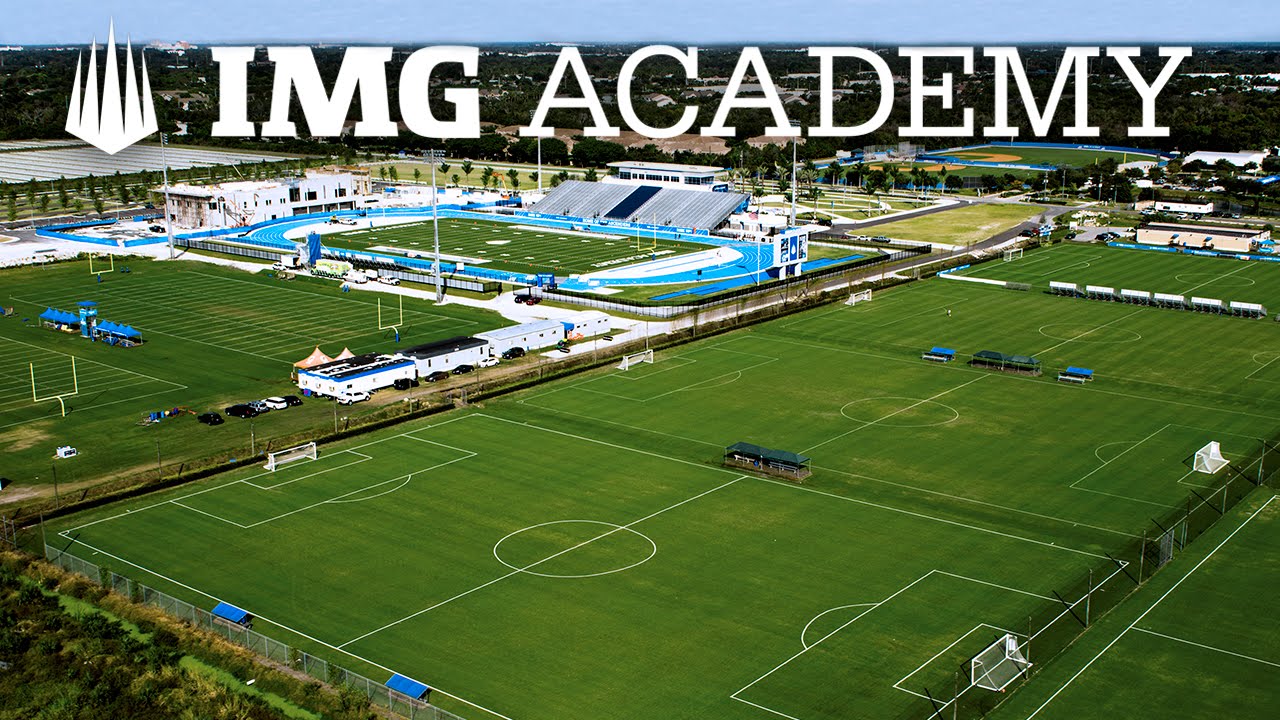
IMG Academy is one of the world’s biggest and most renown sports academies in Bradenton, FL. The campus is over 500 acreas, costs over $80,000/yr to attend and hosts many of the world’s top professional athletes throughout the course of the year. 

I occasionally had fleeting thoughts of whether I had made the right decision with my career, but my day-to-day work of being at one of the world’s best sports academies and largest global sports companies made it worth it.  And while that was certainly a humble beginning, I very quickly got promoted within 6 months from running the Academy’s Soccer camp/team business to overseeing their brand-new Lacrosse program. In growing the program from 15 Floridians to 50 boys from all over North America and becoming a nationally ranked lacrosse program, my experience at IMG Academy was incredibly rewarding.

The sports business industry is not a race, especially at the beginning given the nature of the industry. Find the right environment, with a path for growth and your patience will pay dividends sooner rather than later.


Find a Mentor. Most people want to help other people … it’s human nature. This is a concept that extends far beyond just the sports industry; however, it was something I didn’t fully grasp early on. I think I had a do-it-yourself mentality for much of my early career, perhaps due to my competitive nature of being a former athlete or perhaps simply due to lack of experience.

I would encourage all people new to the sports business industry to try to find one (or a few) people whose careers they regard highly and whose footsteps they want to follow. Get to know that person or people and build a relationship with them.

For me, these mentors I developed during my earlier years In the industry introduced me to key people, gave me advise on important career steps I was considering, and ultimately opened doors to more opportunity within the industry. Just like sales, people buy from people … and when a well-regarded person in the industry can endorse your own abilities and character, more doors will quickly open up.

Surround yourself with the right people and find the one or two you really connect with on a personal level, whose career path you identify with, and cultivate those relationships.


Put Yourself Out There. The sports and entertainment industry is perhaps more of a people industry than any other industry in business. And while yes, there are some technical-based jobs within sport, the very nature of the industry is predicated on people. The cliché holds true: “It’s who you know, not necessarily what you know.” People are often the commodity within sports business, whether it be an athlete you’re trying to sign, a sponsor you’re trying to land, or an audience you’re trying to market to.

CatapultWorkshop
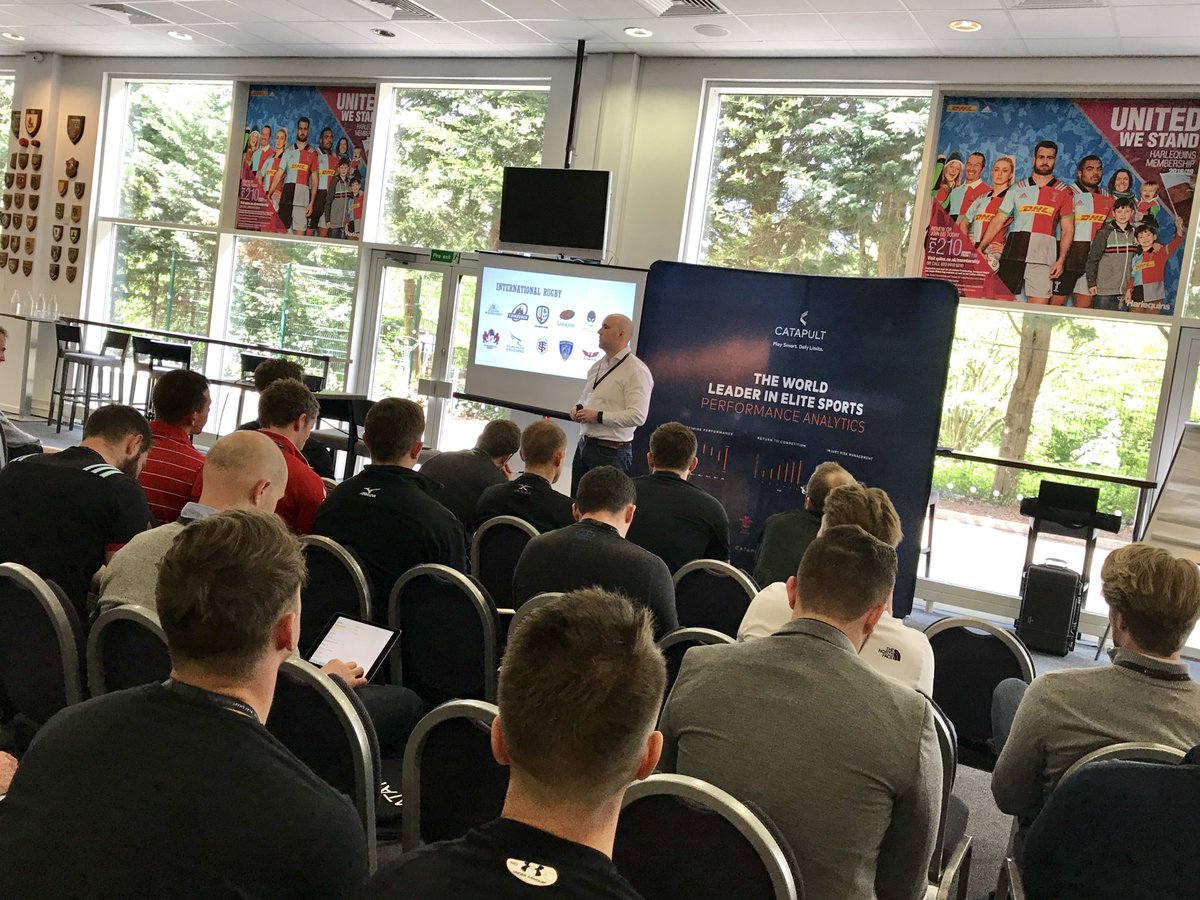
Catapult hosts workshops throughout the world for coaches and users to learn and better utilize their wearable technology. 

This has never been truer for me than in my most recent endeavor with Catapult Sports. When I transitioned over to the sports technology field about a year and a half ago, I had lots to learn quickly about the industry while simultaneously trying to hit my number and do my job as a Business Development Manager. Much of my time was spent early on attending conferences and conventions, meeting with the major players in the space (both externally and internally at Catapult). Sometimes it would mean staying up late and having a drink with an expert Catapult client/user after a long day at a convention, another time it might be listening to a panelist speaker at a workshop and being compelled to engage with that person in deep conversation afterwards.

You can’t be afraid to swing and miss … that’s part of being a professional. Roll up your sleeves, talk to people, go to conferences, and put yourself out there to not only listen but also to be heard.

Create a free website or blog at WordPress.com.

Up ↑