Ben Slingerland is a young sports business entrepreneur, administrator and marketer who has worked at such organizations like Nike, the NCAA and IMG. Most recently, Ben served as the General Manager and Student-Athlete Advisor for the Lacrosse Program at IMG Academy in Bradenton, FL. Over the span of two and a half years as the General Manager, Ben quadrupled the size of the program and developed it into one of the nation's leading boarding prep school lacrosse programs.
Prior to taking over the lacrosse program at IMG Academy, Ben headed up the sales efforts of the IMG Academy's $4 million/year soccer camp business. Ben has held past positions at the NCAA Office of Government Relations in Washington, DC where he tracked state and federal legislation on Capitol Hill affecting collegiate athletics. Prior to that, Ben spent a summer in Beaverton, OR working at Nike's World Headquarters. At Nike, Ben worked in the North America Soccer division where he was a sports marketer for the Nike signed professionals, the US Men's and Women's National teams, Nike-affiliated collegiate soccer programs, and Nike-affiliated youth soccer clubs.
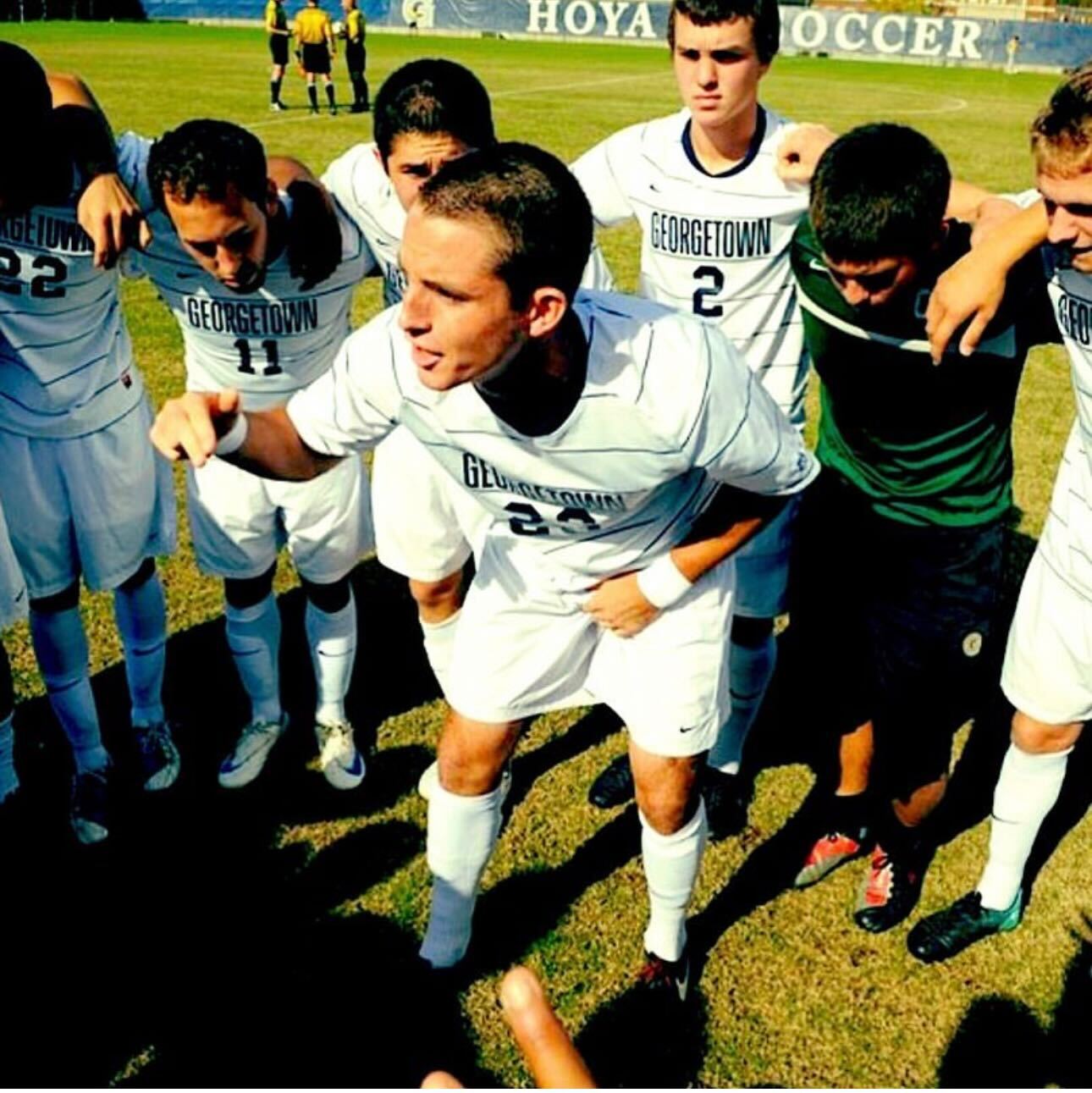
Growing up in Beverly, MA, Ben was an accomplished athlete himself. After being a three sport athlete (soccer, basketball, and tennis) at St. John's Prep in Danvers, MA, Ben went on to play Division 1 college soccer at Georgetown University. At Georgetown, Ben served as a team captain and led the program to win it's first ever Big East regular season championship title in 2010. Following Georgetown, Ben had stints playing semi-professionally with DC United's U23 team and the Tampa Bay Rowdies. After his soccer career, Ben got his Master's of Professional Studies in Sports Management at Georgetown University.
With the kickoff of the college football season this weekend, conversation will undoubtedly turn to the big recent changes in college athletics. This past June, there was a landmark decision when the House v NCAA settlement was approved, opening the door for revenue sharing with college athletes.
There have already been massive trickle down effects from this decision, but one of the biggest has been the significant new financial burden put on college athletic departments’ budgets.
Division 1 schools can now distribute up to $20.5 mil/yr with that figure expected to rise to around $32.9 mil by 2034-35. This has caused massive deficits even at the top echelon of college sports.
For example, even a high major powerhouse like the University of Michigan has already been scrambling to make immediate adjustments. Michigan had to make budget cuts and introduce supplemental revenue streams through alcohol sales and concerts to balance their budget after projecting an estimated $27 million deficit for 2025-26 following the House settlement.
That said, smaller and mid-major schools are feeling the impact the most, as many Group of Five and similar programs don’t even have $20 million in athletic revenue to begin with. This is posing a legitimate existential financial threat to college sports as we’ve known them. The disparity will increase, as Power 5 juggernauts fully fund athlete salaries, on top of already effectively buying out the top mid major performers each year through NIL money in the transfer portal.
All of this has caused schools to reevaluate their approach to athletics – budget cuts, reallocations, finding new avenues to bringing money into their programs (including private equity). Texas A&M is eliminating nearly $10 million via staff reductions, trimmed team budgets, fewer disbursements and restructuring scholarships. The sad reality here is that Olympic sports are on the chopping block at many institutions, due to limited funding and shifting priorities.
Tying this back to the world I live in, the world of sport performance technology … I have quickly found that college athletic departments, across the board (Sports Medicine & Rehab, Video & Analytics, Data Management, Strength & Conditioning, etc), are looking to save where they can, for all the reasons listed above.
One of the bigger line items for many D1 athletic departments is wearable technology, which has rapidly transitioned from a luxury item to a core pillar for the vast majority. The value of this data in reducing injuries and optimizing performance has been well-documented over the last decade. And the competitive landscape has intensified.
Five to ten years ago, there were 1-2 reliable GPS providers that monopolized the marketplace, given the quick rise in demand and the limited supply of trusted solutions.
Today, the marketplace has become a bit more saturated which has started to drive pricing down. Think of the TV industry over the last 10 years … a 55’ 4K Smart TV that cost $1,500+ in 2014 can now be found for under $400, due to mass production and scale, while LED and LCD panels became cheaper with improvements in production efficiency, increased market competition and feature standardization.
It’s been a similar story for the wearable technology industry. Through that process, there has been one company that has risen to the top in regards to value, with pricing that is a quarter of the cost; and accuracy that has equaled or exceeded that of the incumbents … all while providing a simpler workflow. That company is PlayerData.
As PlayerData continues to become more of a household name in this space and budgets continue to get tighter in today’s NCAA climate, I anticipate an increasing pressure on athletic department administrations to be more efficient with their tech budget allocation, while taking a closer look at PlayerData.
I can’t think of another Game 3 in the 2nd round of the NBA Playoffs that will have as many eyes on the one we’re about to see this Saturday at Madison Square Garden between the Boston Celtics and New York Knicks.
Yes, it’s Boston vs New York (one of the most heated rivalries in all of sports). Yes, it’s a Saturday matinee game in the Mecca where the ticket prices look closer to Super Bowl ticket prices than a Game 3 in the 2nd round of the NBA Playoffs. But the primary reason we’ll likely see record viewership numbers on Saturday is because of what has happened in the first 2 games of the series.
Game 3 on Saturday is the most expensive New York Knicks game ever recorded where $860 is the cheapest ticket being sold at the moment.
The defending NBA Champs, the Boston Celtics, came into the series as heavy favorites despite it being a 2 vs 3 matchup. Boston went 4-0 against New York through the regular season with an average margin of victory of over 16 points per game. The Knicks had a 0-10 record against the league’s top 3 teams (Boston, Cleveland and OKC) through the year, and were seemingly a notch below the league’s elite.
And despite coming into Games 1 and 2 as 9+ point favorites on their home floor in both games, the Celtics find themselves down 0-2 as they head to New York Saturday for Game 3. However, it’s the style in which they have lost both games that has everyone talking. Never before has a team squandered two second half 20 point leads in an NBA series. In fact, the Celtics held a 98% chance to win both games during the 4th quarter, and managed to squander both games away.
The Celtics, who have shot (and made) a historic amount of 3-pointers this season, came out and had their 2 worst shooting performances of the season, shooting it at 35.1% in Game 1 and 36.2% in Game 2, a wild statistical coincidence. But this is particularly improbable given the Knicks have allowed their opponents to shoot at 47.4% in the regular season (which ranks towards the bottom at 25th in the league). Furthermore, during the 4 games the Celtics beat the Knicks during the regular season, they scored on average 125 ppg, shot it at 50% from the field (and 43.5% from 3), but during the first two games in this series they’ve only averaged 97.5 ppg, while shooting it at 35.6% from the field (and 25% from 3).
Now normally, when a team loses their first two games at home in a best of 7 series, you say “game, set, match”. Only 5 teams have come back in the history of the league in those situations, which equates to 7.3%. With that said, Vegas has this series’ at even money, with the Celtics being 5 point favorites on the road in Game 3. Part of that is because the Boston Celtics have the best road record in the NBA at 33-8, which is 5 games better than their 28-13 home record. Furthermore, when trailing in playoff series in the 21-22 and 22-23 playoffs, they are 10-1. Quite simply, when they go down, they have responded extremely well in recent history.
Beyond all the analytical improbabilities of these first two games, there seems to be a fascinating element of sport psychology going on as well. The Celtics have gone ice cold in the 4th quarter, scoring a combined 33 points in the 4th quarter in their first two games. Their two best players, Jayson Tatum and Jaylen Brown, have gone ice-cold in key moments, earning severe criticism for settling for outside shots rather than driving to the hoop. Meanwhile, on the flip side, Jalen Brunson for New York, has earned a reputation as being the best “closer” in the league, with his uncanny clutch shots.
Boston had all the pressure coming into this series, being the favorites trying to repeat as NBA Champions, while facing a looming roster breakup due to financial realities this off-season. That pressure has seemingly impacted their performance specifically in the 4th quarters of the first two games. While the pressure to win Game 3 for the Celtics is high, the Knicks know if they drop this next one, the momentum will quickly shift.
Between the analytics, the psychology, and the heated rivalry, this Game 3 has all the makings of an instant classic.
It’s a really tough time to be a good high school soccer player.
The upcoming NCAA D1 roster cap rule, limiting Division 1 soccer programs (outside of the Ivy’s) to carry a maximum of 28 players in the 2025-26 season, has caused a massive trickle-down effect.
To start, many programs are now cutting players to make room for their incoming classes. This has caused a record number of players to enter the transfer portal (+3500 on the men’s and women’s sides). In addition to players entering the transfer portal due to being cut, several others are entering the transfer portal to simply “level up.” Meaning, for example, if a student-athlete was at an all-conference selection within a mid-major conference, many of those players are now looking for opportunities to make it at a Power 4 school. And many coaches at those Power 4 schools, like the idea of a proven player at the college level rather than rolling the dice on a high school freshman.
This is a true story line across most NCAA sports.
With that said, I have seen this impact the 2025 recruiting class the hardest … As now there are simply fewer spots to go around. This has caused several student-athletes to reclassify as 2026’s, and either take a gap year or enroll this fall, but join the soccer program after the 2025 fall season.
While I’ve estimated the top ~10% of D3 teams in college soccer could beat the bottom 10% of D1 programs on any given day, I suspect this percentage to increase a bit more in the upcoming year as more and more highly talented players get pushed to D3. With that said, there is often natural human psychology for talented 16-18 year athletes to want to go D1 at whatever cost, as most prospects are inherently competitive people. If you are a fringe low D1/high D3 prospect, it has become harder to “fight” your way onto a D1 roster in today’s current college landscape.
My general recommendation for prospects that fit that profile, is to take a real hard look at some of the top D3 programs. I advise this for a couple of reasons. The chances are if you’re a fringe prospect, you’ll sit on the bench your freshman year at the D1 program versus getting the opportunity to play right away with a top D3 program. Given the college soccer season is 3 months, if you’re not playing in games, you’re player development is getting significantly stagnated. Secondly, if D1 is in fact the end goal, having college playing experience (and film to go along with it), puts most players in a much better position to transfer up at the end of their freshman year versus not getting any minutes at a D1 a prospect likely won’t be happy at.
Needless to say, it’s a rapidly changing environment.
This August I shifted my focus from the physical side of college athletics to the mental health side, leaving Catapult after seven rewarding years to join OnBalance.
I made that decision for a few different reasons.
Number one is the changing need within college athletics. Ten years ago, athlete tracking technology was the new frontier within performance departments. Coaches were just beginning to identify averages for volume and intensity of movement among their athletes while developing periodization models to optimize performance. Today, that vertical of performance has been tackled as most college teams are all using some sort of wearable device to identify those metrics.
The second is the changing landscape of the NCAA. We have never seen the magnitude of changes within the NCAA than what we’re seeing today. With the emergence of the transfer portal, NIL, roster size limits, legalized gambling and pending monetary settlements with the NCAA, the goal posts have been moved on student-athletes. Instead of focusing on playing their sports, 17-22 year olds are now forced to deal with a slew of outside stressors that have added a significant psychological weight.
And the last reason for my move was the mental health crisis that our society currently finds ourselves in today. Specifically within our Gen Z population, we have seen depression and anxiety increase at exponential rates over the last decade, unlike that of any other time in modern human history. The widespread belief of the leading cause of this has been social media, with a handful of other factors mixed in as well, including the after-effects of the recent global pandemic.
With that as a backdrop, here is what I have learned thus far after my first 90 days meeting with folks involved in the mental health side of college athletics.
First, there is no standardization among any two schools as it comes to structure, processes or personnel surrounding mental health. Some athletic departments will have dedicated counselors to athletics, while many do not. For those that do not, the integration of those mental health resources for their student-athletes into the university counseling system takes several different forms. Many cases are outsourced to outside providers with varying degrees of visibility to the athletic department.
Second, just about every school are experiencing cases continue to go up at a rate that is outpacing their personnel resources. Meaning, the wait times for student-athletes to be seen are getting longer and longer unfortunately.
Another observation is that this field is largely reactive. My previous world at Catapult, coaches and care teams would be prescriptive in their approach and much more proactive. They would leverage metrics to make intelligent decisions on practice plans and return to play protocols to optimize performance and recovery in calculated ways. Whereas this behavioral health world within college athletics operates in a much more reactionary way.
Lastly, there is a giant stigma around mental health as it comes to athletics. In training rooms, there is no judgment if a student-athlete is getting an ankle taped or a shoulder examined, but if a student-athlete is seeing a psychologist, there is an immediate unspoken judgment that pervades locker rooms causing many to hide their issues.
I believe mental health is the next frontier of college athletics. The quickest road to development within the behavioral health space of college athletics, is through data and intelligence so care teams can make better calculated decisions on how to properly treat … Just as we saw on the physical side a decade ago.
Let me begin by saying that I believe everyone has a slightly different perspective on the college soccer recruiting process based on their own experiences. With that said, let me give you my perspective, which has been shaped by the following experiences:
Going through this process 16 years ago, and foregoing several top D3 program offers to be a “recruited walk-on” at a D1 program in Georgetown University
Having worked at IMG Academy from 2012-15, and experiencing a unique soccer academy approach to the recruiting process with high school student-athletes
Working for a college athletics recruiting agency called Student-Athlete Showcase from 2017-2020, which took more of a bulk client approach similar to a NCSA, utilizing website profiles and mass emailing strategies
Working independently with about a dozen high school soccer student-athletes on a personalized approach from 2021-present
My senior year at Georgetown, before beating UConn to clinch the program’s 1st Big East Reg Season title.
So let’s begin with the question, “Is it worth it?” For me, the answer was simple, 100% yes. However, that answer is conditional, and is dependent on whether the student-athlete is all in. If he/she is not, it will lead to burnout, frustration, and ultimately be a waste of time. That is why one of the first questions I ask the high-school athletes I work with is, “On a 1 to 5 scale, how important is playing college soccer to you?” If the answer Is not a 5, we may have an issue.
What did I gain from my college soccer experience? From the start, I believe it helped me gain a college degree at a top 20 university. While I was a 50/50 candidate to get into Georgetown, soccer is what ultimately helped pushed me over the edge with admissions. And while I didn’t receive a scholarship in my early years at Georgetown, I eventually earned one that resulted in a “full-ride” for my 5th year of eligibility and a Master’s Degree. Secondly, it taught me some crucial life lessons around time-management, hard work, and leadership. Waking up at 6am for lifts and early morning practices, dedicating 20+ hours a week to one common mission, and then learning to balance all of that with a rigorous academic course-load at the age of 18, is extremely challenging. Lastly, the college soccer experience gave me a “fraternity” of brothers who have been in my corner for life after college, whether that be coaches who have been mentors or references for jobs, or teammates who have gone on to be groomsmen in my wedding … it gave me a support system of people that have gone to bat for me over the last 10+ years of my life. That is only the case given the experiences we shared together for the 4 (or in my case 5) years of the most formative period of our lives.
While highlight videos are a good way to catch a college coach’s initial interest, prospects will almost always need to pass the “eye test” live.
So what is the secret to getting recruited? Let me begin by saying, every prospect has a different path, and there are no two exact same situations. Student-athletes come from different financial situations, have different academic scores and abilities, are exposed to different levels of youth soccer academies/clubs depending on where they’re from, which all work together to create a unique “story” for each student-athlete. Here are my general pieces of advice to high school student-athletes who recognize that they are “all in” to chase their dream of playing college soccer:
Cast Your Initial Net Wide. If you’re not opened-minded, you’re setting yourself up for failure. I can’t tell you how many folks reach out to me and say “I want to go to one of these top Ivy’s, Stanford, Duke, or Notre Dame.” If I could guarantee that, I would have the job title of “Miracle Worker” and likely be retired by now. There are over 200+ Division 1 men’s college soccer programs out there, and even more Division 3 programs, and there are a lot of quality ones. If you’re receptive to conversations with coaches who may not be on your initial list, you’ll set yourself up for success down the road. Interest breeds interest. If/when a coach on your “top list” asks you who else has been recruiting you, you’ll be able to reference those earlier conversations. Those early conversations will also give you quality practice with coaches who may be higher on your list. With that said, always be genuine and truthful with your intentions/desires, as the recruiting world is small, and word gets out quickly if you develop a bad reputation of misleading coaches.
Put Yourself Out There. College soccer recruiting is very much a two-way street. Those prospects that are communicating with coaches earlier on generally are rewarded come decision time. The most tangible way to put yourself out there is in the form of a recruiting video. It’s one of the first things I do with the student-athletes I work with, as getting quality footage is one of the easiest ways to present yourself to coaches who may not necessarily be able to see you play in person. It oftentimes is the “first impression” a college coach has on prospects. The highlight tape can jumpstart communication and lead to invitations to ID camps or requests from the coach to see the prospects’ upcoming playing schedule.
ID Camps. There are several good ones out there that are legitimate recruiting opportunities, and there are also several others that are used as “money-makers” where little to zero genuine evaluation/recruiting takes place. The key here is for prospects to ask the right questions in advance of the camp, such as “Where are you in the process of your 2024 recruiting class,” “Where do you project me fitting into your program,” or “What percentage of your recruiting class generally attends a camp?” There are several camps where multiple college coaches attend, that often can provide a better “bang for your buck” depending where you are in the process. If you’re further along in the recruiting process and have the opportunity to attend one of your top choice program’s’ ID camps, and want to check out the campus a bit more, than those could also be wise ones to attend.
Play with the best players you can. This is a lesson I picked up from experience in going through the process myself. I played on the best club in the state of Massachusetts from U11 to U14, however when some of the more meaningful recruiting years came around from U15-U17, the club quickly faded from the top. I eventually realized that for me to play in more recruiting showcase tournaments and with better players who shared my vision of playing college soccer, I either had to drive an hour south into Boston to play for the Boston Bolts, or drive an hour north to play with Seacoast United in an effort to not only get sufficient opportunities to be recruited but also to properly develop as a player. When you play with others who are better than you, it forces you to think quicker, play quicker and ultimately become that much better. This is true about most sports, but I’m not sure it’s more true in any other sport than soccer.
Time is your greatest asset. It’s simple but true … The longer you wait to begin initiating with college coaches, the less likely you are to play college soccer. While every program is different, most D1 programs generally close their recruiting class in the late fall of the preceding calendar year, while D3 programs will trickle into the preceding spring. The only way to manipulate time in this process is to reclassify with a PG year (which is not an option for most prospects or their families), so I generally recommend prospects to begin getting serious about the process at some point in their sophomore year. On June 15th after their sophomore year, college coaches are allowed to start communicating back to them.
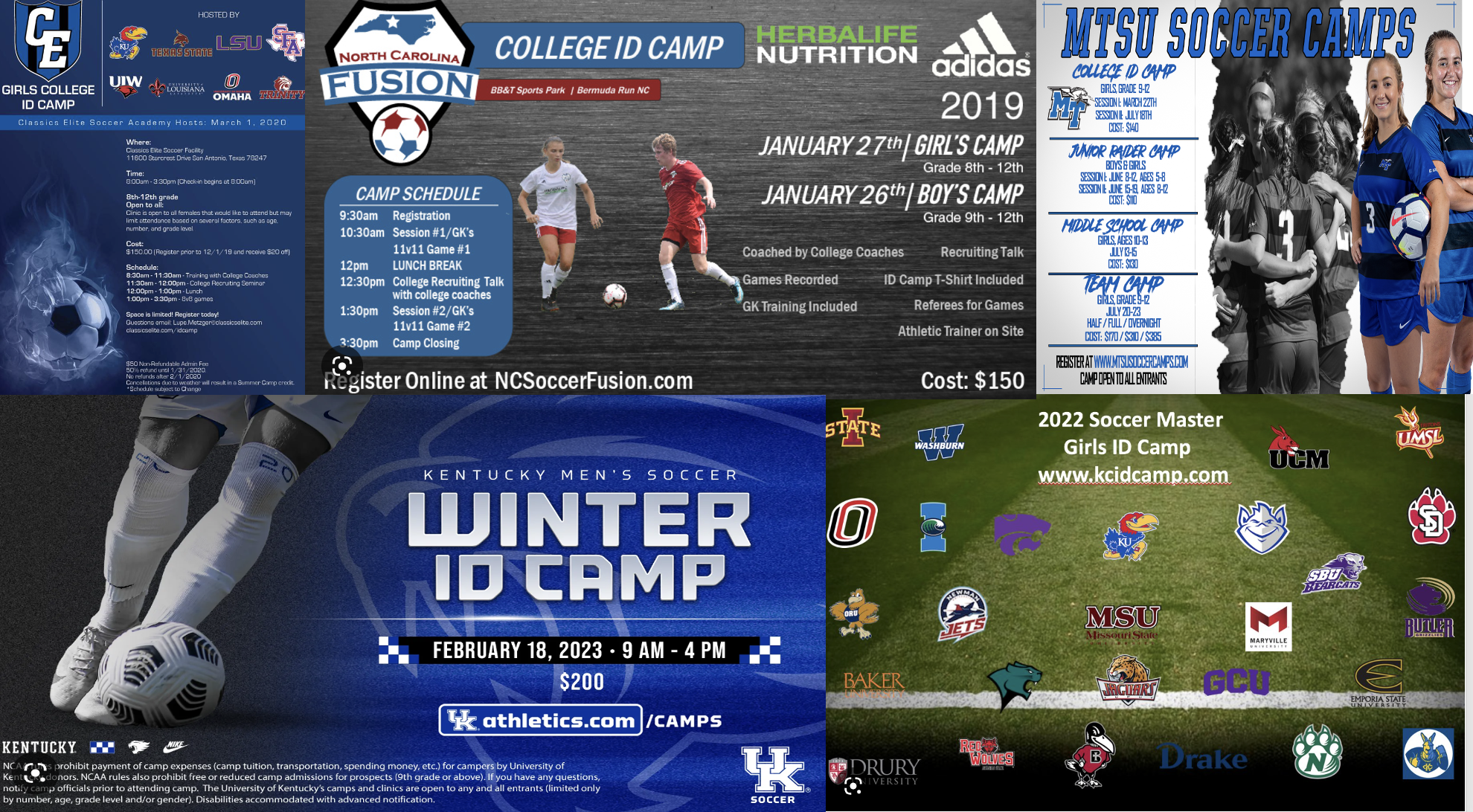
There are hundreds of Recruiting ID Soccer camps out there, make sure to ask the right questions before going.
The last part I’ll mention here is to enjoy the process. It’s easy to get anxious, stressed out, and disheartened if things are not happening as quickly as you’d like them to. Deciding where you’re going to college is a huge decision, and often that decision does not happen quickly, as finding the right fit takes some time and should be a process. With all that said, the reason I’ve stayed involved in this space over the years, is because of how meaningful of an experience college soccer was for me, and how strongly I believe it can positively impact young men and women’s lives.
The last two weeks have made this one of the most exciting NBA trade deadlines in recent years for Celtics Nation. Winners of their last 6, the Celtics now sit in 7th in the Eastern Conference, only 4.5 games out of 1st. And what makes this trade deadline a bit more enticing is that there are no clear favorites to win the East, as only 1 game separates the top 4 teams (Heat, Bucks, Bulls and Cavs).
Prior to the Celtics current 6 game winning streak, the C’s had not been able to string more than 3 wins together all season. What has been the formula to the team’s recent success? Simply put, the team’s health. Many thought that from a personnel standpoint, this was the most talented Celtics team in recent years … and now with all pieces available to first year Head Coach Ime Udoka, it seems as though that is finally playing out to be true.
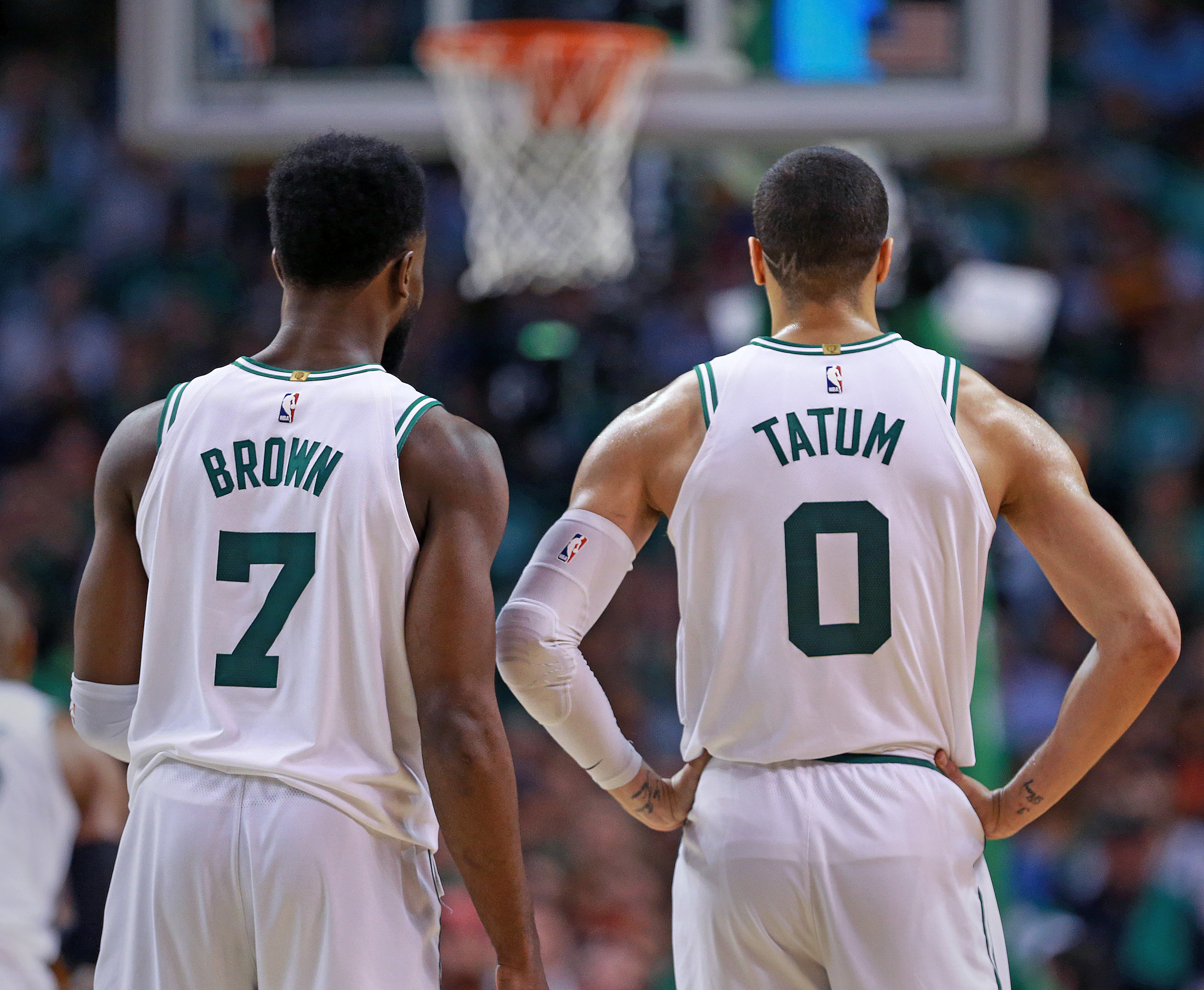
Nevertheless, the team suffered lots of criticism in the early part of the season, with many calling to break up the Tatum-Brown duo, which currently ranks as the 2nd highest scoring pair in the League.
During much of the first half of the season, many have called for the breakup of the duo Brown and Tatum.
What makes this deadline even more interesting is the fact that it is Brad Stevens first as the Celtics’ President of Basketball Operations, a role formerly occupied by Danny Ainge.
So given all this recent excitement, what are the main things Celtics fans should keep an eye on during the eve of the NBA trade deadline?
Some potential trade deadline targets linked to the Celtics. Upper left: John Collins (PF, Atlanta); Lower left: Dante DiVincenzo (PG, Milwaukee); Upper right: Malcolm Brogdon (PG, Indiana); Lower right Terrence Ross (SG, Orlando).
Potential Targets:
Terrence Ross (SG/SF, Orland Magic): The 31 year old shooter from Orlando is averaging 10.9 pts this year in a reserve role for the Magic. The C’s would likely need to give up Schroder and either Langford or Nesmith to make this work. He was one of the proven shooters available at the deadline.
Dante DiVincenzo (PG, Milwaukee Bucks): This has been one of the more rumored deals, where the Celtics would make a Schroder-DiVincenzo swap. The issue with this has been the Bucks have been rumored to want to include Grant Williams in this, which many believe to be a non-starter for the Celtics. While DiVincenzo is having a down year from the field, he has proven to be an effective two -way player pre ankle injury.
Malcom Brogdon (PG, Indiana Pacers): After Indiana acquired Tyrese Haliburton from the Kings on Tuesday, it became apparent that Brogdon may be a moveable piece for them. Brogdon is averaging 19 ppg, 6 apg, and 5 rbg and would be an undeniable upgrade at the PG position compared to Marcus Smart. To get Brogdon, many believe the C’s could still keep Smart, but instead give up Richardson, Schroder and one of their 2019-20 1st round draft choices.
John Collins (PF, Atlanta Hawks): The 6’9’’, 24 year old PF is on the same “timeline” as Tatum and Brown and could give the C’s a true big 3 (similar to the Garnet, Pierce, Allen grouping that won them a title). This offseason the Hawks signed Collins to a 5 yr, $125 mil contract, however after the Hawks have gone 26-28, reports have surfaced about Collins being disgruntled. To get him, the C’s would likely need to give up Horford, Smart and potentially one other piece.
Best Case Scenario: I think most of Celtics Nation would agree that the untouchable pieces are Tatum, Brown and Robert Williams. If there was some way to land Brogdon and Collins, the C’s would have a starting 5 of Brogdon, Brown, Tatum, Collins and Williams, with an average starting age of 25. While you would deplete your bench a bit in achieving that, you’d probably still be able to maintain a 2nd unit that would include Pritchard (who many believe is a more than competent backup PG), Enes Freedom, and probably either Nesmith or Grant Williams. Leaving the C’s probably needing to sign one more capable bench piece. That starting 5 would easily be the best positioned group in the Eastern Conference over the next several years.
Other notable things to keep an eye on around the league tomorrow include whether James Harden is moved out of Brooklyn, what Philadelphia decides to do with Ben Simmons, and how far will the Trail Blazers fire-sale go.
Of course, more times than not, the Trade Deadline disappoints and rarely lives up to the hype. But as fans, we naturally love to dream … only time will tell what type of stamp Brad Stevens puts on his first NBA trade deadline.
When I was playing college soccer at Georgetown 12 years ago, there wasn’t one team in the country using GPS wearable technology. 7 years ago, while I was working at IMG Academy in Bradenton, FL, the performance coaches had just started to experiment with wearables. Today, having worked at Catapult Sports for the last 4 years, I have found just about every single professional team use some form of GPS technology across the NFL, MLS, NBA, and NHL. While the majority of teams in college football and soccer use it as well, and a healthy percentage of teams in college basketball, field hockey, lacrosse, volleyball and ice hockey.
So, why are all these athletes wearing sports bras that hold these blinking devices between their shoulder blades? How does this technology help athletic performance and why do coaches care about this data?
The GPS device is secured with a compression-fitting device in between the athlete’s shoulder blades.
In this piece, I’ll talk about the evolution of GPS wearable technology specifically within the NCAA landscape and how it has become such a central piece to athletic performance.
What does GPS wearable technology do and how can it improve athletic performance?
If you don’t know what the specific physical demands are in your competitions, it’s impossible to optimize your training to prepare for those demands.
Athlete monitoring allows coaches to effectively measure the volume and intensity of their athlete’s training and competitions with an actual measuring stick to reduce soft tissue injuries, optimize performance and develop more robust return to play protocols. The ancillary benefits of using a GPS system allow coaches to use the data as a communication tool, as well as a recruiting tool reflecting the coaching staff’s commitment to student-athlete wellness, and ultimately instilling a level of professionalism within the team.
Where did wearable technology come from and who were the early adopters?
In what now is a very saturated marketplace, there were a few companies that were first to the table with GPS wearable technology, starting with Catapult. The Australian government decided to invest in the newly created Australian Institute of Sport (AIS) after a poor performance in the 1976 Olympic games.
Shaun Holthouse and Igor van de Griendt, eventual Catapult founders, began a project with the AIS in 1999. Taking a unique approach to evidence-based science improving sport, they began to measure all facets of athlete performance. Wearable sensors were then created to make science more accessible to athletes, and more routinely deployable across training and match situations. They were implemented for the 2004 Athens games, and then Catapult was born in late 2006.
Aussie Rules Football began using the sensors before the technology expanded globally to rugby, soccer and American Football in the following years.
How has it been adopted in the NCAA?
Inevitably this technology made its way over to the United States around 2012 as performance coaches started adopting it in their training. Florida State Women’s Soccer was one of the first Catapult NCAA clients, using the GK devices on a couple of their goalies. Jimbo Fisher, the Head Coach of Florida State’s football team at the time saw an antenna on the field at a Women’s Soccer practice. After doing a quick investigation of the tech, he started using it with his own team.
Florida State Women’s Soccer were one of the first NCAA Olympic teams to begin using GPS wearable technology. Here, they celebrate their 2018 NCAA Division 1 Women’s Soccer National Championship.
GPS tech quickly spread to football teams in the SEC Conference and then to the other Power 5 conferences. In a press conference after Alabama’s 24-7 win in the 2016-17 Peach Bowl, Nick Saban, the Head Coach of Alabama, went on record saying how much Catapult helped with their conditioning. Today, every single SEC Conference football team, but one, uses Catapult technology. Many athletic departments have taken a wholistic approach, doing multi-sport agreements, enabling cross sport communication between performance coaches.
“We use the Catapult system that gives us a scientific picture of where players are. After the season we did a total analysis of how we went through the season from a physical standpoint. We made some changes on how we practiced and how we monitored this systematically through the season … That has helped us manage our way through and keep our team a little more physically fresh.”
Nick Saban, Head Coach Alabama Football
Today, this technology has trickled down beyond D2 and D3, into high school programs and even youth academies. The largest growth of wearable technology in the college space in recent years has been in the mid-major/FCS level of the NCAA.
What do you need to look for in a GPS wearable system?
The Catapult Vector system includes the pod itself, a vest, a charging case and dock, and a live receiver.
Reliability – Even on the cheaper side of the market, wearable tech is still a significant investment and therefore making sure the technology has been validated (white papers, etc) in its measuring accuracy is critical.
Functionality – Depending on training environment and what the coaching staff values, there are a few features that you will want to vet out:
Live capability – If looking at information live is important, you want to make sure the system has that capability (some do, many do not). Live tracking is good for return-to-play and rehabilitation protocols as well as in-game decision making.
Support – GPS wearable companies have a wide range of sizes. Some are equipped to provide meaningful support while others only have a handful of employees. Every team is unique in their personnel structure, but for many, having sport science support is essential in making actionable insights from the data.
What is the next wave of innovation in the GPS wearable space?
Catapult acquired SBG, a video analysis software company for $40m in the Summer of 2021 to help enhance the integration of wearables and video.
While half of Catapult’s business is built around GPS wearable technology, the other half is built around video editing software. This past summer Catapult acquired a company called SBG, a UK-based video company that specializes in Formula 1 motorsport and elite soccer video solutions. The acquisition was a strategic one, as the SBG software has enabled Catapult to accelerate their ability to integrate wearable metrics onto video, allowing coaches to get more visual context to the physical data. With the wearable technology, you may know that your center forward made 40 high velocity sprints during the match, but now with this wearable-video integration, you see exactly when those 40 high velocity sprints happen and what has happening in the match. With the performance data married to the tactical information, the technology’s value has grown exponentially and has become more digestible to your average coach.
The 2020-21 season was a disappointing one for the Boston Celtics. A team that many picked to contend for the Eastern Conference last year ended up getting hampered by ongoing injuries as they were forced to play in the play-in series as the 7th seed, before losing to the Nets in 5 games in the first round.
Fast forward to now. Danny Ainge was replaced by Brad Stevens as the new President of Basketball Operations, and Ime Udoka replaced Stevens as the 18th head coach in the organization’s 75 year history.
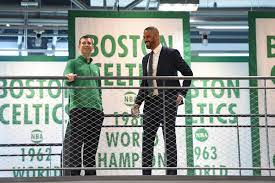
New Celtics President of Basketball Operations Brad Stevens (left) and new Head Coach Ime Udoka (right) are aimed to get the Boston Celtics banner #18.
The first trade of the Stevens era happened quickly as the Celtics swapped their starting point guard and four time All-Star, Kemba Walker, for a former Celtics legend, five time All-Star Al Horford. While no one will doubt Kemba’s ability as a playmaker and scorer, his nagging knee injury kept him out of the lineup frequently … and most noticeably, the knee only allowed him to play 3 of the 5 games in the Nets playoff series. He’s 31 years old, and several speculate his best years are behind him. With Tatum and Brown as the Celtics primary scorers, many believed the Celtics didn’t need a score first, point guard, which is what Kemba represented. Moreover, Kemba’s inability to defend made him a liability down the stretch in crucial games. A weakness that was exploited heavily when the Miami Heat eliminated the Celtics in the 2020 playoffs.
Celtics Nation knows what they’re getting in Al Horford, who was a fan favorite in his first stint in Boston. Horford’s best attribute is his passing ability from the frontcourt. Last year the Celtics played lots of isolation basketball given their 3 playmakers in Tatum, Brown and Walker, which resulted in them finishing near the bottom of the league in Offensive efficiency and assists (26th and 25th respectively in the NBA last season). Horford, will certainly help with that, as his best ability is to connect the other four players he’s sharing the court with at any given moment.
Towards the end of July, the Celtics decided to use the remainder of the trade exception created by the sign-and-trade deal that sent Gordon Hayward to the Charlotte Hornets, on 27 year old, versatile swingman Josh Richardson from the Dallas Mavericks. While the Celtics will represent the 4th team Richardson has played on in the last 4 years, Richardson is defensive-minded, like Horford, which was much needed. The Celtics had their worst defensive rating in the 8 year coaching era under Stevens last season. It’s also worth mentioning, that both Richardson and Horford have spent time with new Celtics Head Coach Ime Udoka in their previous stints in Philadelphia.
This offseason, the Celtics added the four new additions on top, left to right, PF Al Horford, SG Josh Richardson, PG Dennis Schorder, and C Enes Kanter (as well as PG Kris Dunn not pictured). While they lost, left to right on the bottom, PG Kemba Walker, SF Evan Fournier, C Tristan Thompson and SF Semi Ojeleye.
On top of the Josh Richardson signing, the Celtics also acquired point guard Kris Dunn, center Bruno Fernando and a 2nd round pick from the Atlanta Hawks in exchange for Tristan Thompson. The goal here was for Boston to shed the money they owed Thompson, while bringing back some minor but cheaper contributors, namely being Dunn.
Many remember that on the infamous 2016 draft night, Celtics fans rioted when they chose to take Jaylen Brown over Kris Dunn. With that said, Jaylen has turned out to have the far superior NBA career up until this point. Dunn will likely be a third string ball handler who was also primarily brought in for his production on the defensive side of the ball. He has some of the most active hands in the league, as he averaged 2 steals a game in 25 minutes per game off the bench in Atlanta in the 19-20 season. Expectations aren’t overly high, especially because he was injured all of last year, but I would anticipate him being assigned to the opposing team’s best ball handler when they need to give Marcus Smart or Jaylen Brown a rest.
As Jaylen Brown and Jayson Tatum continue to grow as players and leaders on this Celtics team, the organization will continue to climb the Eastern Conference ladder.
Just last week, the Celtics made one of the final big splashes of the NBA offseason, scooping Dennis Schroder to a one-year $5.9 million contract. The big news around this signing was that Celtics are paying him $78 million less than an extension figure he infamously declined with the Lakers last season. After Lowry wen to Miami, Conley stayed in Utah, Lonzo signed with the Bulls, and Pelicans replaced him with Devonte Graham, Schroder and Boston ended up being the final pair; one a point guard and the other being a team in need of one for cheap.
For the Celtics, the value of this deal is insane, as they’re getting a guy who was valued at over $20 mil/yr just a couple of months ago for now just a hair below $6 mil. While this deal won’t make the Celtics title contenders in and of itself, it’s a low risk deal as it’s only a one year deal for low money. You now have 3 guards in Schroder, Smart and Richardson all playing on expiring years of their contract this upcoming season, which should make for a very competitive backcourt.
The changes in personnel, present several potential interesting starting lineup possibilities:
#1: (Big Frontcourt + Schroder @ PG): Schroder, Brown, Tatum, Horford & Williams III
#2: (Big Frontcourt + Smart @ PG) Smart, Brown, Tatum, Horford & Williams III
#3 (Defensive-Minded): Smart, Richardson, Brown, Tatum.& Williams III
#4 (Athletic): Schroder, Smart, Brown, Tatum & Williams III
My guess would be the first lineup will be the one they eventually land on with Smart, Richardson, Kanter, Nesmith, Pritchard, Dunn and Langford all coming off the bench.
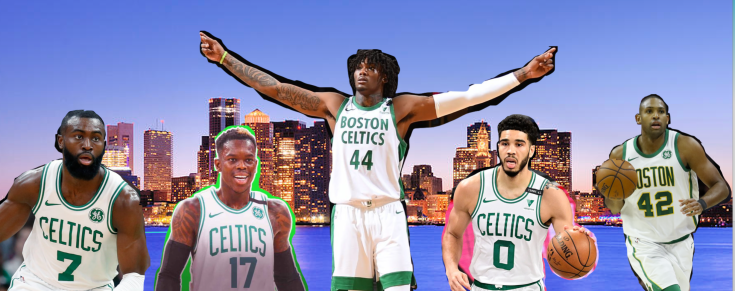
Most people have the Celtics around #5-7 in the Eastern Conference preseason power rankings with the Nets, Bucks, 76ers, and Heat comfortably ahead of them, and then the Hawks, Celtics and Knicks in that 5-7 group. With that said, this Celtics team is probably one of the most exciting rosters to monitor heading into this upcoming season, given the coaching change, the several personnel changes, and the anticipated growth of Brown, Tatum and Robert Williams III.
It seems with the late addition of Schroder, that Stevens was able to improve this team through this offseason. I do believe they will be competitive this season, and may have an outside chance, if the new pieces gel the right way, to get to the Eastern Conference Final this season.
In less than 24 hours, the New England Patriots guaranteed over $127.5 million, placing them second in NFL history for most guaranteed money in a free-agent signing period … and free agency hasn’t even officially began yet (starts later today at 4pm ET). The Patriots are only about $10 million shy of last year’s Dolphins who spent $147.2 million. Needless to say, it’s been a historic past couple of days in Foxboro.
Bill Belichick and Robert Kraft had a plan all along. They alluded to it often over the last year. The New England Patriots made moves last year to maximize their availability for this year. They’ve been planning for this off-season for quite some time … and now it’s here. So let’s break down the moves.
THE BOSTON TE PARTY
Within 24 hours, the Patriots went from having arguably the worst tight end core in the AFC, to probably having the best with the signings of Jonnu Smith (4 Yr, $50 Million) from the Tennessee Titans and Hunter Henry (3 Yr, $37.5 Million) from the Los Angeles Chargers. Quite simply, the Patriots have had the NFL’s lowest pass catching production from the tight end position over the last two seasons … and so they went out and got the two best tight ends in free agency. While Henry is the more prolific pass-catcher (196 catches vs Smith’s 114), Smith’s ceiling is much higher as he is only 25 years old. Cam Newton relied heavily on Greg Olson in Carolina, and it seems as though the Patriots are trying to recreate that same TE connection here in New England.
The signing of Hunter Henry on Tuesday, March 16th, coupled with the Jonnu Smith signing, turns the Patriots Tight End core instantaneously from the worst in the AFC to the best.
Of all the signings within the last 48 hours, the Smith one has been perceived as the most controversial, mainly because, he has just become one of the league’s highest paid tight ends despite his numbers (41 catches, 448 yards, 8 TDs). In fact, it’s the most expensive per-year deal the Patriots have ever given to a pass-catcher, topping past contracts for legends such as Randy Moss and Rob Gronkowski … which is hard to believe. And the recent drafting of N’Keal Harry (and ensuing disappointing production) has led some Patriot nay-sayers to question the organization’s ability to evaluate pass-catching talent.
Here, is where we need to pause … because if you look a bit more underneath the hood, I think most of Patriot nation might be a bit surprised.
At 6’3”, 247 lbs, Jonnu Smith is one of the most athletically gifted TE’s in the league and has been called the “best after the catch [TE] in the league” by Belichick.
His 6’3’’, 247 lb frame coupled with nearly a 40 inch vertical and 4.6 40 time, make him as athletic a tight end as there is in the league. He often lines up as tailback, a la Aaron Hernandez back in the Patriot glory years. Smith’s red zone stats since the ’19 season are remarkable, with 10 TD catches (4th among TE’s) coupled with an astonishing 0 drops. His production was lower than it should’ve been in a run-heavy Tennessee offense that featured the best running back perhaps of the last decade in Derrick Henry.
Before the 2020 AFC Wild Card game against the Titans, Belichick sang the highest praises of Smith, “He can do a lot of things: blocks well, runs well, is a good receiver. I mean, hell, they played him at tailback. He looked pretty good back there. So, he’s a very athletic player, hard to tackle, catches the ball well. He’s great after the catch — probably the best in the league. I mean, I can’t imagine anybody better than him after the catch.”
The duo of Henry and Smith has drawn early comparisons to the old dual TE Belichick offense that featured Gronk and Hernandez. Both come from run-heavy offenses, which figures to be the case again this year for the Patriots.
A #2 AND A #3 WR
In the recently acquired Raiders Nelson Agholar (2 yr, $26 million) and the 49ers, Kendrick Borne (3 yr, $22.5 million) the Patriots have just acquired their likely #2 and #3 wide receivers respectively. Agholar, the former 1st round pick from USC, ranked 29th in the league after having his best season last year with 896 yards on 48 catches and 8 TDs. Unlike Agholar, Borne went undrafted, but similar to Agholar is also coming off his best season last year with 667 yards on 49 catches and 2 TDs. While Agholar is one of the league’s best deep threats (think a poor man’s Tyreek Hill), Borne is one of the better third down receivers, which was a glaring weakness for the 2020 Patriots.
In regards to these WR signings, the Patriot pessimists are saying we don’t need a #2 and a #3, and that instead we really needed a #1. Additionally, similar to Smith, those same pessimists are saying we’re overpaying based on not enough documented success. In reality, Smith will likely be our #1 receiver now, unless somehow one of the ‘Bama studs in Waddle or Smith falls to us at #15 (or we trade up), which I believe to be highly unlikely. But when you take a step back and look at the additions of Agholar and Borne to a receiving core that gets Julian Edelman back, you all of a sudden have a very deep group that is rounded out with former 1st round pick N’Keal Harry, Jakobi Myers and Damiere Byrd.
DEFENSIVELY
From a personnel perspective, if you combine the return of the COVID holdouts (Dont’a Hightower and Patrick Chung) along with the signings of the Ravens LB/DE Matthew Judon (4 yr, $56 million), the Eagles S Jalen Mills (4 yr, $24 million) and the Dolphins DT Davon Godchaux (2 yr, $16 million), and then throw in the resigning of Deatrich Wise (4 yr, $30 million) you have the most improved defense, THUS FAR, this offseason.
The biggest name here is of course Judon, who should provide a huge lift in the pass rushing game. Over 80 games with the Ravens, he’s notched 35.5 sacks while proving to be incredibly durable (only missing 4 games). Judon will be the Pats #1 edge rusher, followed by Chase Winovich, Josh Uche, and Afernee Jennings. While Bentley and Hightower should hold down the Inside Linebacker starting spots.
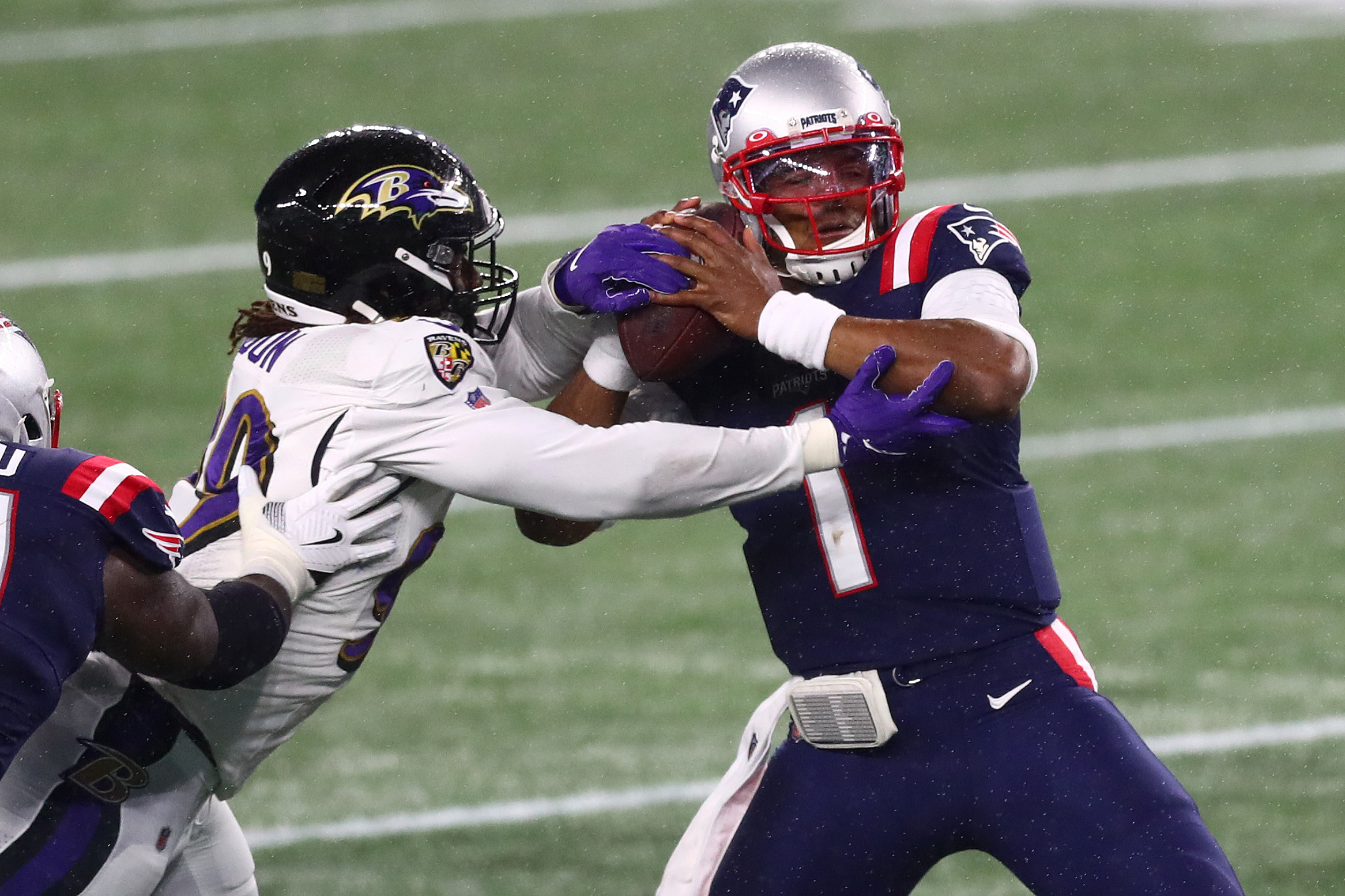
Matthew Judon is the highest profile defensive addition to the Patriots this off-season, as he ranked 5th among all edge rushers last season in pressure rate. He’s totaled 35.5 sacks through his 5 year NFL career.
Godchaux, from the Dolphins, shores up the nose for what was the 26th ranked run defense last year. Wise was a key keep for his position versatility in Belichick’s front. Anderson, Mills and Bethel are all Patriots’ types of rotational role players. Between all their defensive youngsters and veterans Dont’a Hightower and Patrick Chung returning from opt outs, there are lot of pieces on the board for Belichick to manipulate in his hybrid scheme.
With the return of Patrick Chung to compliment Kyle Dugger, Stephon Gillmore, J.C. Jackson, Devon and Jason Mccourty, Jalen Mills, Adrian Phillips and Jonathan Jones in an all-of-a-sudden over-crowded secondary, some are speculating that Gillmore (given he’s on the last year of his contract anyway) could become trade collateral to move up in the draft.
MILLION DOLLAR QUESTION – WHO IS QB?
Last year was an absolute disaster for Cam Newton who averaged an embarrassing 177 ypg and threw for a mere 8 TDs. But again, if you look a bit closer as to what played into that, you begin to understand why. Newton was signed extremely late in the off-season and didn’t really have the preferred ramp up time to learn a relatively complicated McDaniels’ offense. Combine that with COVID shutting him down for 2 weeks of the season and one of the historically worst receiving cores in recent NFL history, it does add up. For a former #1 overall pick and a former NFL MVP, the relatively small resigning cost should be seen as a win for the Patriots, who really had no other immediate option at the QB position as they headed into free agency.
Nonetheless, I think everyone is in agreement that there is going to have to be another QB brought in who isn’t named Jarrett Stidham or Brian Hoyer who can properly challenge Cam Newton for the QB1 job. The most obvious place to look for that person is in what is a particularly strong top-end QB draft class this year with Justin Fields, Trey Lance and Mac Jones being the most talked about targets for the Pats. Each one of those guys is slightly different and does different things well. Lance and Fields are most like Cam as dual-threat guys who could likely learn really well under him; whereas Mac resembles more of the pocket-passer that TB12 was.
Justin Fields (left) from Ohio State, Trey Lance (center) from North Dakota St, and Mac Jones (right) from Alabama, are all believed to be the three most likely targets should the Patriots draft a QB in the 1st round of this year’s 2021 Draft.
Another option is free agency. While Dak Prescott, Tyrod Taylor, Jameis Winston, Andy Dalton, Jacoby Brissett and Ryan Fitzpatrick’s names have already been taken off the board, Mitchell Trubisky is still unsigned and could certainly provide a potential QB battle if signed to compete with Cam.
The last option would be to trade for Jimmy G, which has been an ongoing rumors for the last year. While Jimmy knows McDaniels offensive schemes well, his durability has been a major concern over the last 2 years.
Needless to say it’s been an eventful off-season already for the Patriots. The Patriots need players, and they’ve gotten players. And if the aggression is any indication of what the Patriots might do on draft day, well buckle up your seatbelts.
There is a saying in New England, “In Bill We Trust” … and for good reason, the man is undeniably the best coach in the history of the sport. With that said, the last piece of puzzle is still unsolved at the moment. Depending on how that final piece is managed, that very well could largely decide the final chapter in Bill Belichick’s coaching legacy.












 Ben_Slingerland