
It’s a really tough time to be a good high school soccer player.
The upcoming NCAA D1 roster cap rule, limiting Division 1 soccer programs (outside of the Ivy’s) to carry a maximum of 28 players in the 2025-26 season, has caused a massive trickle-down effect.
To start, many programs are now cutting players to make room for their incoming classes. This has caused a record number of players to enter the transfer portal (+3500 on the men’s and women’s sides). In addition to players entering the transfer portal due to being cut, several others are entering the transfer portal to simply “level up.” Meaning, for example, if a student-athlete was at an all-conference selection within a mid-major conference, many of those players are now looking for opportunities to make it at a Power 4 school. And many coaches at those Power 4 schools, like the idea of a proven player at the college level rather than rolling the dice on a high school freshman.

This is a true story line across most NCAA sports.
With that said, I have seen this impact the 2025 recruiting class the hardest … As now there are simply fewer spots to go around. This has caused several student-athletes to reclassify as 2026’s, and either take a gap year or enroll this fall, but join the soccer program after the 2025 fall season.
While I’ve estimated the top ~10% of D3 teams in college soccer could beat the bottom 10% of D1 programs on any given day, I suspect this percentage to increase a bit more in the upcoming year as more and more highly talented players get pushed to D3. With that said, there is often natural human psychology for talented 16-18 year athletes to want to go D1 at whatever cost, as most prospects are inherently competitive people. If you are a fringe low D1/high D3 prospect, it has become harder to “fight” your way onto a D1 roster in today’s current college landscape.
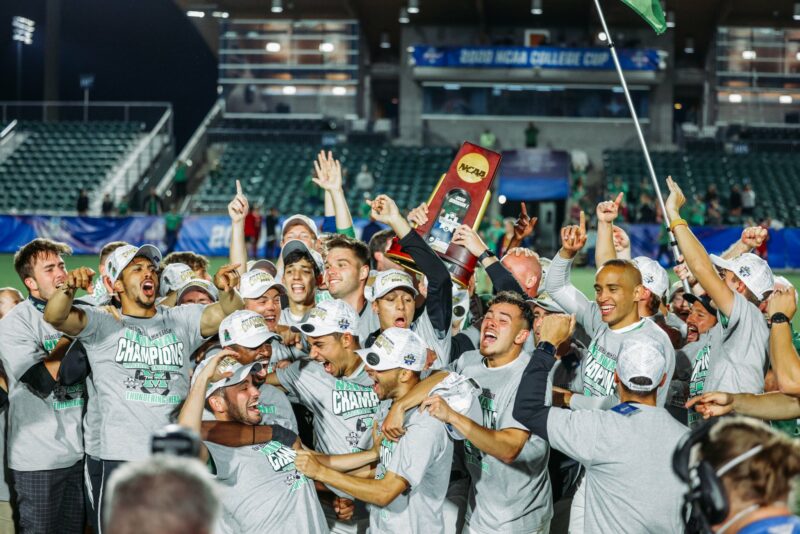
My general recommendation for prospects that fit that profile, is to take a real hard look at some of the top D3 programs. I advise this for a couple of reasons. The chances are if you’re a fringe prospect, you’ll sit on the bench your freshman year at the D1 program versus getting the opportunity to play right away with a top D3 program. Given the college soccer season is 3 months, if you’re not playing in games, you’re player development is getting significantly stagnated. Secondly, if D1 is in fact the end goal, having college playing experience (and film to go along with it), puts most players in a much better position to transfer up at the end of their freshman year versus not getting any minutes at a D1 a prospect likely won’t be happy at.
Needless to say, it’s a rapidly changing environment.
 Ben_Slingerland
Leave a comment